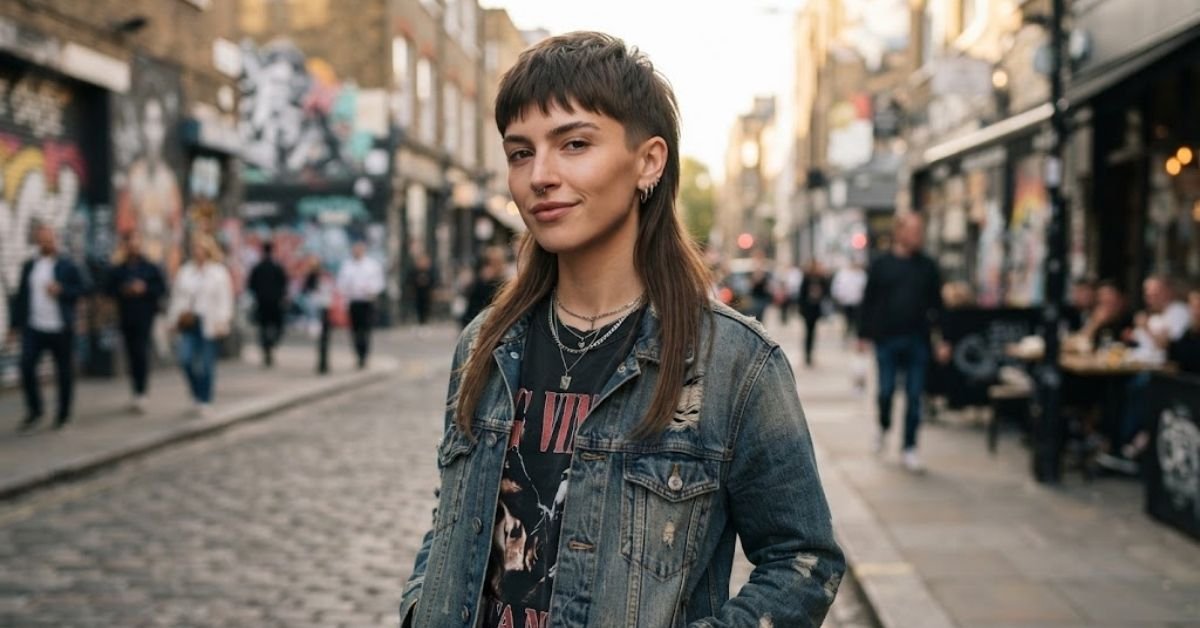
Straight hair has a reputation for being hard to style, but it happens to be one of the best textures for pulling off a mullet. Clean lines, sharp fades, and a smooth transition from short to long all show up clearly on flat, straight strands, which is exactly why the straight hair mullet has become one of the most requested cuts at barbershops in 2026.
This guide breaks down everything you need to know: the different mullet variations that work on straight hair, how to style it at home, which products actually help, what to say to your barber, and how to keep the cut looking sharp between appointments. Whether you’re a man, a woman, or a parent looking into a mullet for a girl, you’ll find a version that fits.
What Is a Straight Hair Mullet?
A straight hair mullet is a haircut that keeps the front, top, and sides short or tapered while leaving noticeably more length through the crown and back. On straight hair, that contrast reads as crisp and intentional because there’s no natural curl or wave to soften the transition.
The defining feature isn’t the exact length. It’s the ratio between the short section and the long section, plus how that boundary is blended. A tight fade on the sides paired with a longer, layered back is the most common formula, though the amount of drama can be adjusted for work, school, or a bolder personal style.
Why Straight Hair Is Perfect for a Mullet
Straight hair shows off precision cutting in a way that curly or wavy hair simply can’t.
- Straight strands lie flat, so fade lines, layering, and length changes stay visible all day.
- There’s less natural volume at the root, which means the shorter sections on top and sides create real shape instead of getting lost in texture.
- The back layers fall in a clean line rather than clumping, giving the mullet its signature “flow.”
- Straight hair usually needs less product to hold a shape, which makes daily styling faster.
The trade off is that straight hair reveals cutting mistakes more easily, so a mullet on this texture depends heavily on how well it’s cut rather than how well it’s styled afterward.
Straight Hair Mullet Variations
There isn’t one single straight hair mullet. Small changes to fringe length, fade height, layering, and back length create very different results. Here are the most popular versions right now.
Classic Straight Hair Mullet
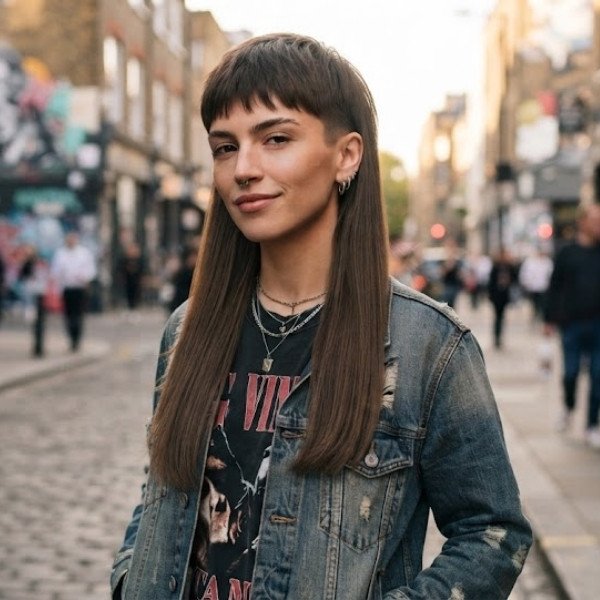
The classic version sticks close to the original 1980s shape but with cleaner sides. Hair stays short and tidy above the ears, the top gets light texture, and the back sits around collar length with soft layering so it doesn’t look like a blunt block of hair. This is a solid starting point for anyone trying a mullet for the first time.
Modern Mullet for Straight Hair
The modern mullet trades the harsh 80s edges for a blended, more wearable shape. Sides are tapered rather than choppy, the top is left slightly longer (around two to four inches) so it can be styled forward or textured, and the back is layered for movement instead of left as one heavy length. It’s the version most barbers default to when a client just says “give me a mullet.”
Straight Hair Mullet with Taper Fade
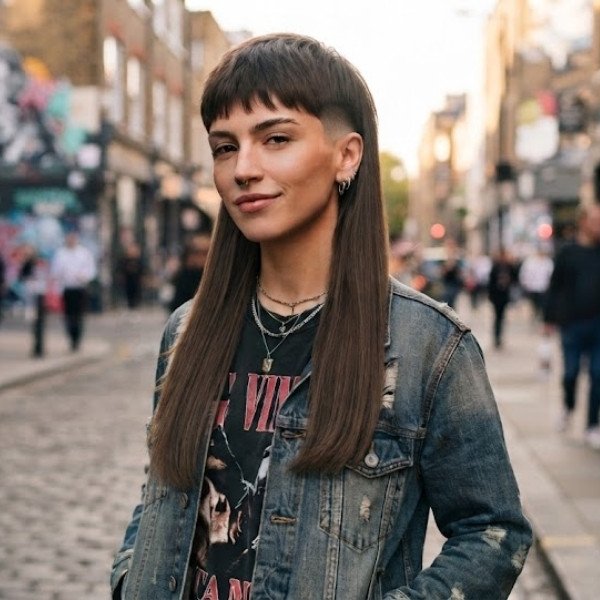
A taper fade gradually shortens the hair from the crown down to the neckline without exposing much skin. Paired with straight hair, this creates a soft, gradual gradient rather than a sharp line, which suits offices and more conservative settings while still giving the mullet its shape.
Low Taper Straight Hair Mullet
The low taper keeps the fade close to the hairline and ears, leaving more length above it compared to a mid or high fade. This is the most subtle fade option and works well for anyone who wants a mullet that doesn’t scream for attention at first glance.
Straight Hair Mullet Fade
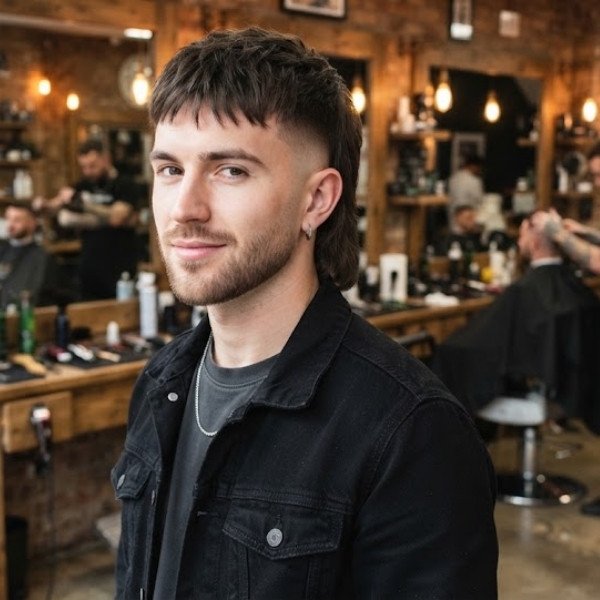
This is the broader category covering any mullet that uses a skin or near skin fade on the sides, from low to high. A defined fade sharpens the contrast between the short sides and the long back, and on straight hair the fade line stays crisp because there’s no curl pattern to blur it.
Short Straight Hair Mullet
For a lower maintenance option, the short mullet keeps the back length minimal, often just past the collar, with a tighter fade on the sides. It’s easier to manage day to day and grows out more gracefully, making it a good fit for fine or thin straight hair that can look sparse with too much length.
Long Straight Hair Mullet
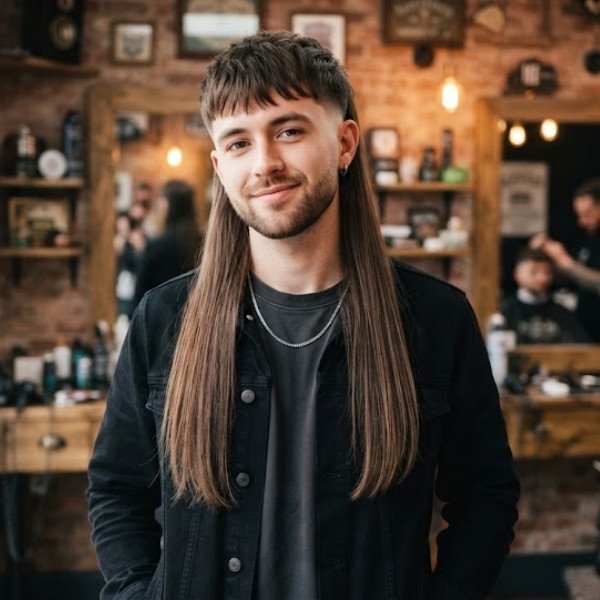
The long version pushes the back section past the shoulders while keeping the front short. This dramatic contrast needs healthy, well conditioned hair since there’s more length to maintain, but it delivers the boldest version of the style.
Layered Straight Hair Mullet
Heavy layering throughout the back and crown removes bulk and adds visible movement, which helps straight hair avoid looking flat or heavy at the ends. This variation suits thicker hair types that need weight removed to keep the shape from looking like a solid slab.
Straight Hair Mullet with Fringe or Bangs
Adding a fringe brings face framing into the mix and softens the forehead. A blunt, straight fringe gives a more editorial look, while a slightly textured, side swept fringe feels more casual. This variation is particularly flattering for longer or narrower face shapes.
Straight Hair Shag Mullet
The shag mullet blends heavy, choppy layering throughout the entire head with the classic short front, long back mullet shape. Unlike a traditional mullet, the sides often stay connected to the back rather than sharply disconnected, giving a softer, more lived in silhouette that reads closer to a wolf cut.
How to Style a Straight Hair Mullet
Styling a straight hair mullet at home usually takes five minutes once you know the routine.
- Towel dry hair until it’s damp, not soaking wet.
- Apply a small amount of texturizing product or light styling cream, focusing on the crown and back.
- Blow dry the top and fringe forward or up using a round brush for lift at the root.
- Let the back air dry or diffuse it briefly to keep the layers loose rather than flat.
- Use your fingers, not a comb, to pinch and separate the ends for texture.
- Finish with a light hold spray or a touch of pomade on the ends to keep flyaways controlled.
Straight hair holds a blow dry shape well, so the main goal during styling is adding volume and separation that the hair wouldn’t naturally create on its own.
Best Products for a Straight Hair Mullet
The right product depends on whether you want texture, hold, or shine.
- Texturizing spray or powder for lift at the crown and a matte, piecey finish on top.
- Light hold paste or cream to define the front and fringe without weighing down straight strands.
- Sea salt spray to add grip and a slightly undone texture through the back layers.
- Lightweight pomade for smoothing flyaways along the sides without full shine.
- Heat protectant spray if you regularly blow dry or use a straightener on the longer back section.
Avoid heavy waxes and thick creams. Straight hair mullets rely on separation and movement, and heavy products tend to clump the layers together instead of lifting them.
What to Tell Your Barber for a Straight Hair Mullet
Clear communication makes the difference between a mullet that looks intentional and one that looks like an accident. Bring these details to your appointment.
- Say exactly how long you want the back, using a reference like “collar length” or “just past the shoulders.”
- Specify the fade type: skin fade, low taper, mid fade, or no fade at all.
- Ask for a blended connection if you want a softer look, or a disconnected cut for a sharper contrast between sections.
- Mention how much texture or layering you want in the top and back.
- Decide on a fringe length, or ask for no fringe if you’d rather keep the front swept back.
- Bring one or two reference photos. Straight hair mullets vary so much that a photo removes almost all guesswork.
Straight Hair Mullet Maintenance Tips
A mullet needs more attention than a standard short haircut because two very different lengths are growing at the same rate.
- Trim the sides and top every three to four weeks to keep the fade or taper sharp.
- Get the back trimmed every eight to twelve weeks to maintain shape without losing overall length.
- Deep condition regularly, especially if the back section is long, since split ends show up quickly on straight hair.
- Brush from the ends upward to prevent breakage on longer sections.
- Use a silk or satin pillowcase to reduce friction and frizz on the longer back layers overnight.
- Book touch up appointments for the fade even if the back doesn’t need a trim yet, since fades grow out faster than length does.
Straight Hair Mullet for Men
For men, the straight hair mullet is usually built around a fade or taper on the sides, a textured top, and a back length ranging from short to shoulder grazing. Popular men’s variations include the mullet with a skin fade for maximum contrast, the taper mullet for office friendly wear, and the shag mullet for a more relaxed, everyday shape. Facial hair, especially a defined beard, tends to balance the boldness of the cut.
Straight Hair Mullet for Women
On women, the straight hair mullet often skips the aggressive fade in favor of soft layering and face framing pieces around the front. Curtain bangs paired with a mullet shape are especially popular, since they soften the haircut and add versatility for styling it straight, in loose waves, or pulled back. Color, including money piece highlights or a subtle balayage, is frequently used to emphasize the layering.
Straight Hair Mullet for Girls
For younger girls, a toned down mullet with minimal fading and softer layering keeps the look age appropriate and low maintenance. A shoulder length back with a light fringe is one of the most common requests, since it grows out easily and doesn’t require frequent salon visits. Parents should ask the stylist for gentle blending rather than a hard fade for a more natural, everyday appearance.
Straight Hair Mullet vs. Wolf Cut
These two cuts get confused constantly, but the difference comes down to connection and layering.
| Feature | Straight Hair Mullet | Wolf Cut |
| Sides | Short, often faded or tapered | Fuller, less dramatic shortening |
| Connection | Front and back can be disconnected | Layers usually stay connected throughout |
| Layering | Concentrated at the crown and back | Heavy, choppy layers all over the head |
| Overall look | Bold contrast, structured | Softer, shaggier, more textured |
| Best for | Anyone wanting a strong style statement | Anyone wanting volume with less commitment |
In short, a mullet is defined by a hard split between short and long sections, while a wolf cut blends a mullet’s shape with a shag’s all over layering for a rounder, less severe silhouette.
Best Face Shapes for a Straight Hair Mullet
Most face shapes can wear a straight hair mullet, but small adjustments make the cut more flattering for each one.
- Round faces benefit from added height at the crown and a taper fade with some length to elongate the face.
- Square faces look best with a straight hair mullet with taper fade, since the softer blend takes the edge off strong jawlines.
- Long or oblong faces are balanced by a fringe or bangs, which breaks up vertical length.
- Oval faces can wear almost any variation, including the classic or shag mullet, since this shape suits most proportions.
- Heart shaped faces pair well with a longer, layered back and a soft fringe to balance a narrower chin.
Conclusion
The straight hair mullet earns its popularity honestly. It’s bold without being unmanageable, it adapts to men, women, and kids, and straight hair actually makes the cut look sharper because every line and layer stays visible.
The key to getting it right is choosing a variation that fits your hair density and face shape, communicating clearly with your barber, and keeping up with regular trims so the short and long sections grow out evenly. Once the shape is dialed in, daily styling takes almost no effort at all.
FAQs
Does a mullet look good on straight hair?
Yes. Straight hair shows off the mullet’s fade lines and layering more clearly than curly or wavy hair, which is why it’s considered one of the best textures for this cut.
How often should I trim a straight hair mullet?
Trim the sides and top every three to four weeks and the back every eight to twelve weeks to keep the shape balanced.
What’s the difference between a mullet and a wolf cut on straight hair?
A mullet has a clear disconnection between short sides and a long back, while a wolf cut blends all over choppy layering with less dramatic side shortening.
Can fine straight hair handle a mullet?
Yes. A shorter back length and light layering add the appearance of volume, which helps fine straight hair avoid looking thin.
What should I ask my barber for a low maintenance straight hair mullet?
Ask for a short to collar length back, a low taper fade, and minimal layering, which grows out cleanly and needs fewer touch ups.