
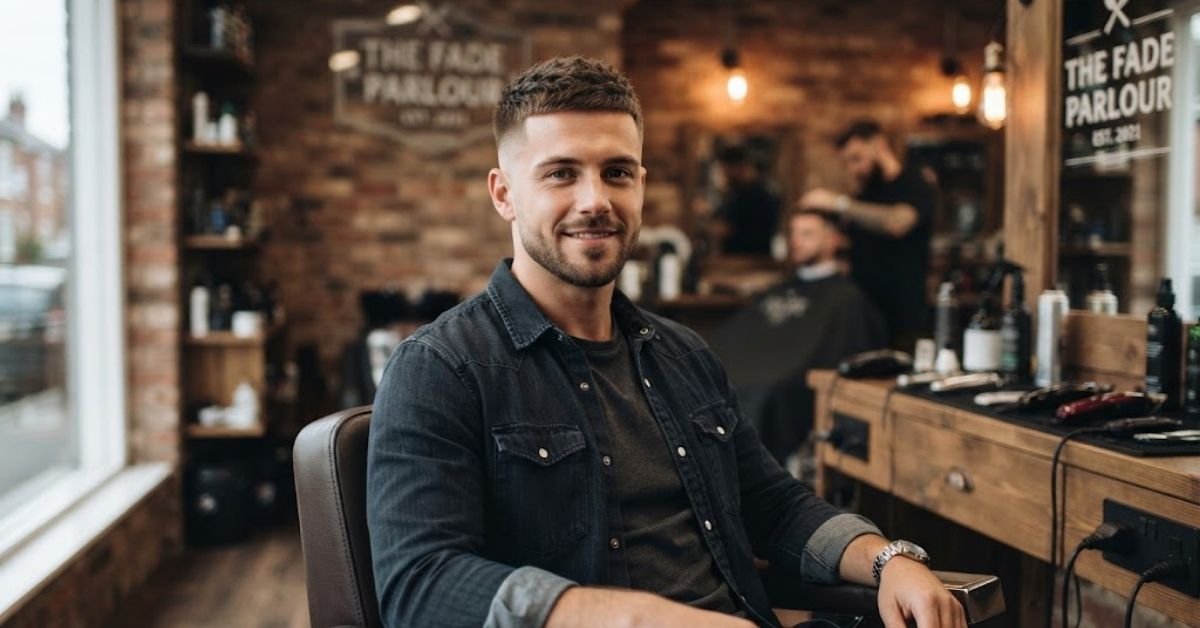
A low fade crew cut is one of the few haircuts that works everywhere. It looks sharp in a client meeting, holds up on a run, and needs almost no daily fuss. The top stays short and full of texture, the sides taper down close to the skin near the ear, and the whole thing grows out without turning into a shapeless mess.That last point is what sells most men on it. A high fade or skin fade on the temple looks great for the first ten days, then it starts to grow a visible line that needs constant upkeep.
A low fade sits lower, closer to the natural hairline, so the transition is softer and the cut stays wearable for weeks instead of days.This guide covers what a low fade crew cut actually is, who it flatters, how to match it to your face shape and hair texture, twelve variations worth trying, and the exact words to use with your barber so you get the same result every single visit.
What Is a Low Fade Crew Cut
A crew cut is a short, military-rooted style with a close back and sides and a slightly longer top, usually left just long enough to lie flat or stand up with a small amount of product. It has stayed popular for decades because it is simple to grow, simple to style, and simple to keep clean.
Add a low fade, and the sides begin tapering roughly an inch above the ear instead of higher up near the temple or crown. The hair blends gradually from short to shortest, finishing at or near skin along the hairline and nape. Because the fade starts low, there is no sharp line marking where the length changes. That is the detail that makes this cut age so well between trims.
The top usually stays between half an inch and one and a half inches, giving enough length for texture, a slight quiff, or a natural, undone finish, while the sides stay tight and out of the way.
Who It Suits
The low fade crew cut works for students, office workers, tradesmen, and anyone who wants one haircut that fits every part of their week. It suits men moving on from a buzz cut who want a little more length to play with, and it suits men who find high or skin fades too bold for a formal workplace.
It is also a strong choice if you are growing your hair out or cutting it shorter. Because the fade is subtle, the cut looks intentional at almost any stage of that transition, rather than awkward halfway through.
- Professionals who need a neat, conservative look
- Students who want something low maintenance for busy schedules
- Athletes and gym goers who want hair that stays out of the way
- Men with thinning temples, since a low fade draws less attention upward
- Anyone who wants a haircut that still looks sharp three to four weeks after a trim
Face Shapes and Hair Types
A low fade crew cut flatters most face shapes, but small adjustments to the top length and fade height make the balance better.
- Oval faces: The most flexible shape. Classic, textured, or messy tops all work well.
- Square faces: A softer blend at the temple takes an edge off strong jaw angles without hiding them.
- Round faces: A touch more height on top adds length and keeps the face from looking wider.
- Oblong faces: A shorter top with a low, even fade keeps proportions balanced and avoids adding extra height.
- Heart-shaped faces: A slightly longer fringe softens a narrower chin and balances a wider forehead.
Hair type matters just as much as face shape.
- Straight hair benefits from light texture on top so it does not sit flat.
- Wavy hair gets tidier with a low fade, since shorter sides reduce puffiness and let the waves show through cleanly.
- Curly hair looks best with a flatter crown, which keeps curls sitting neat instead of pushing upward and losing shape.
Edges and Details
The finish of a low fade crew cut comes down to a few small choices your barber makes at the edges.
- Neckline: Left natural for a softer, low-maintenance finish, or shaped into a clean V or blocked line for a crisper look.
- Hairline: Kept natural for most workplaces, or defined with a line up for extra sharpness.
- Sideburns: Usually kept short and squared off to match the tightness of the fade.
- Crown: Flat and even on curly or wavy hair, slightly lifted on straight hair for movement.
These details are what separate an average haircut from one that photographs well and holds its shape for weeks.
12 Variations Low Fade Crew Cut Hairstyle
Once you understand the base cut, the real value comes from picking the right variation for your hair, your job, and how much time you want to spend styling in the morning.
Classic Low Fade Crew Cut
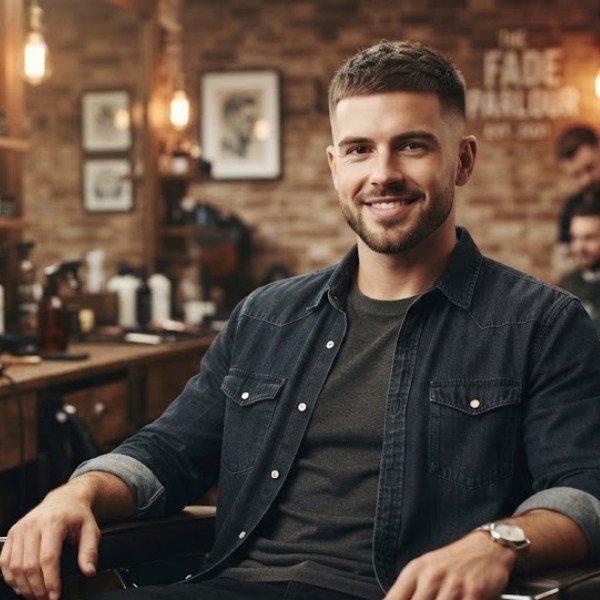
The traditional version. Short, tidy sides fading low near the ear, paired with a top left just long enough to comb or leave natural. It is the safest option for formal workplaces and stays sharp for weeks between visits.
Textured Low Fade Crew Cut
The top is cut with scissors to build movement, then finished with a matte paste or clay. This version adds visible texture without spikes, which reads as polished rather than styled.
Messy Low Fade Crew Cut

The top is left slightly longer and broken into soft, natural pieces with a light styling cream. It still looks planned rather than sloppy, because the low fade keeps the outline sharp even while the top looks relaxed.
Skin Low Fade Crew Cut
The blend drops all the way to the skin at the base, then softens gradually as it moves upward. This version gives the strongest contrast between the sides and the top, and it makes the jawline look more defined.
Drop Low Fade Crew Cut
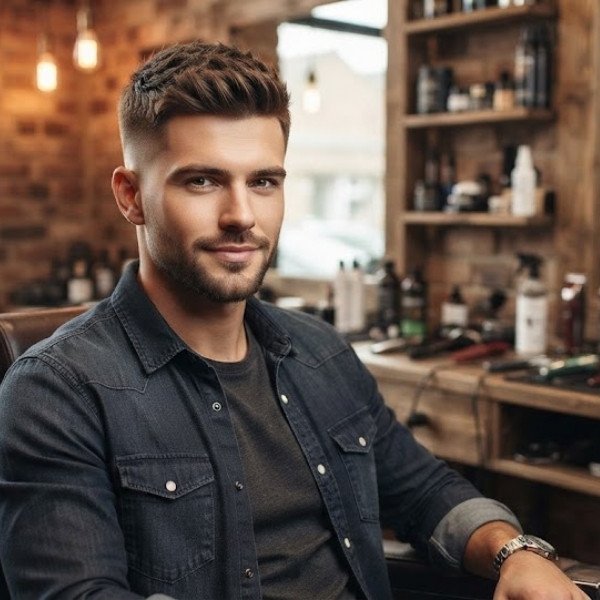
The fade line curves down and dips slightly behind the ear instead of running in a straight horizontal path. It suits rounder head shapes and keeps the nape looking tidy without adding bulk.
Buzz Crew Cut Low Fade
The top is trimmed very short, close to a standard buzz length, and paired with a tight low fade on the sides. This is the lowest maintenance option on this list and works well for sport, service jobs, or hot climates.
Low Fade Crew Cut with Beard

Pairing the cut with a full or well-groomed beard creates a ruggedly clean look. The barber typically blends the fade into the beard line so there is no visible break between the hairline and the facial hair.
Low Fade Crew Cut with Line Up
A sharp, straight line is shaved along the hairline and temple to define the edge of the cut. This adds a crisp, deliberate finish that works especially well with darker or coarser hair, where the contrast shows up clearly.
Low Fade Crew Cut with Hard Part
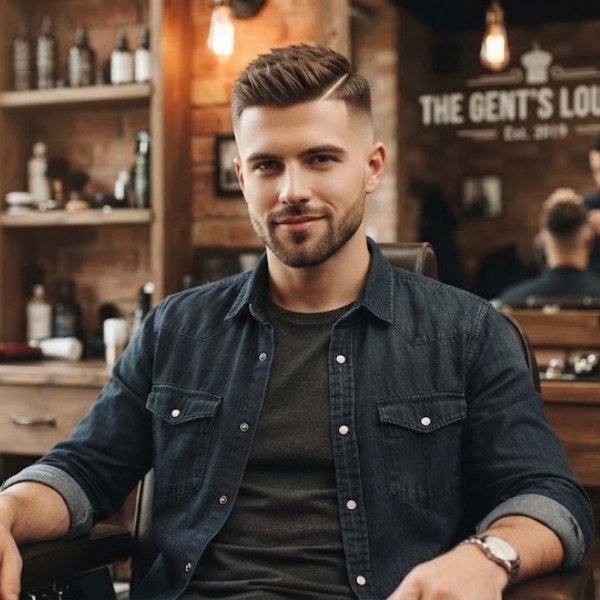
A thin shaved line separates the top section from the fade, usually on one side. It gives the classic side part more structure and holds its shape even without a comb.
Straight Hair Low Fade Crew Cut
Straight hair benefits from a scissor-cut top with light layering, since this prevents the flat, helmet-like look that can happen with straight strands. A small amount of matte paste adds separation without shine.
Wavy Low Fade Crew Cut
The natural wave pattern does most of the styling work here. A low fade keeps the sides slim so the waves on top stay the visual focus, and a sea salt spray enhances texture without extra product.
Curly Low Fade Crew Cut
Curly hair looks sharpest when the crown is kept flat and the curls are allowed to show their natural pattern rather than being pushed up. A lightweight curl cream defines the shape without adding weight or frizz.
Barber Script
Getting the same result every time comes down to using the right words in the chair. Barbers hear dozens of vague requests a day, so specific language saves everyone time and avoids a fade that runs too high or a top that gets taken down too short.
Try this exact script:
“I’d like a low fade crew cut. Keep the fade starting about an inch above my ear, blending down to the skin at the neckline. Leave the top around one to one and a half inches, cut with scissors for texture. Keep the crown flat, and leave the sideburns squared off and short.”
If you want a specific variation, add one line:
- For texture: “Add point cutting on top for movement.”
- For a messy finish: “Leave it slightly longer and uneven on top.”
- For a line up: “Add a line up along the front hairline.”
- For a hard part: “Add a shaved part on my left side.”
Bringing a reference photo alongside this script removes almost all guesswork.
Quick Styling Steps
A low fade crew cut is built for speed. Most versions take under five minutes to style at home.
- Towel dry hair until it is damp, not wet.
- Apply a small, coin-sized amount of matte paste, clay, or light cream depending on your hair type.
- Work the product through with your fingers, starting at the back and moving forward.
- Push the top slightly upward and forward for volume, or comb it flat for a classic finish.
- Let it air dry or finish with a low heat blow dry for extra hold.
- Touch up the neckline and sideburns with a trimmer between barber visits if needed.
For curly or wavy hair, swap the paste for a lightweight curl cream or sea salt spray to keep the natural texture intact instead of flattening it.
Photos and Description
Because the fade sits low and close to the natural hairline, this cut photographs cleanly from every angle, which is part of why it stays a popular request among barbers. The absence of a hard, visible fade line means there is no awkward growing-out phase the way there often is with high or skin fades on the temple.
When showing a barber reference photos, look for images where the fade height, top length, and neckline shape match what you actually want, since small differences in any of these three areas change the entire look of the cut.
Conclusion
A low fade crew cut earns its popularity honestly. It is easy to maintain, flatters nearly every face shape and hair type with small adjustments, and holds its shape for weeks rather than days. Whether you go classic, textured, messy, or paired with a beard or line up, the low fade keeps things clean without demanding constant upkeep.
Bring the barber script above to your next appointment, pick the variation that matches your lifestyle, and you will walk out with a cut that works just as well at a desk job as it does on a weekend.
FAQs
How often should I get a low fade crew cut trimmed?
Every three to four weeks keeps the fade and top length looking sharp, though it can stretch to five or six weeks since the low fade grows out more gracefully than a high or skin fade.
Does a low fade crew cut work with thick hair?
Yes, thick hair actually suits this cut well since the fade removes bulk from the sides while the top keeps enough length for texture and shape.
Can I get a low fade crew cut with curly hair?
Yes, curly hair works great with this style as long as the crown stays flat, which keeps the curls sitting neatly instead of pushing upward.
Is a low fade crew cut professional enough for the office?
Yes, it is one of the most workplace-friendly fades available because the low blend and short top read as neat and conservative rather than trendy.
What is the difference between a low fade and a skin fade?
A low fade tapers gradually and can stop short of the skin, while a skin fade blends all the way down to bare skin, giving a sharper, higher-contrast finish.
Does a low fade crew cut suit round faces?
Yes, keeping slightly more height on top helps elongate a round face and balances the width added by fuller cheeks.