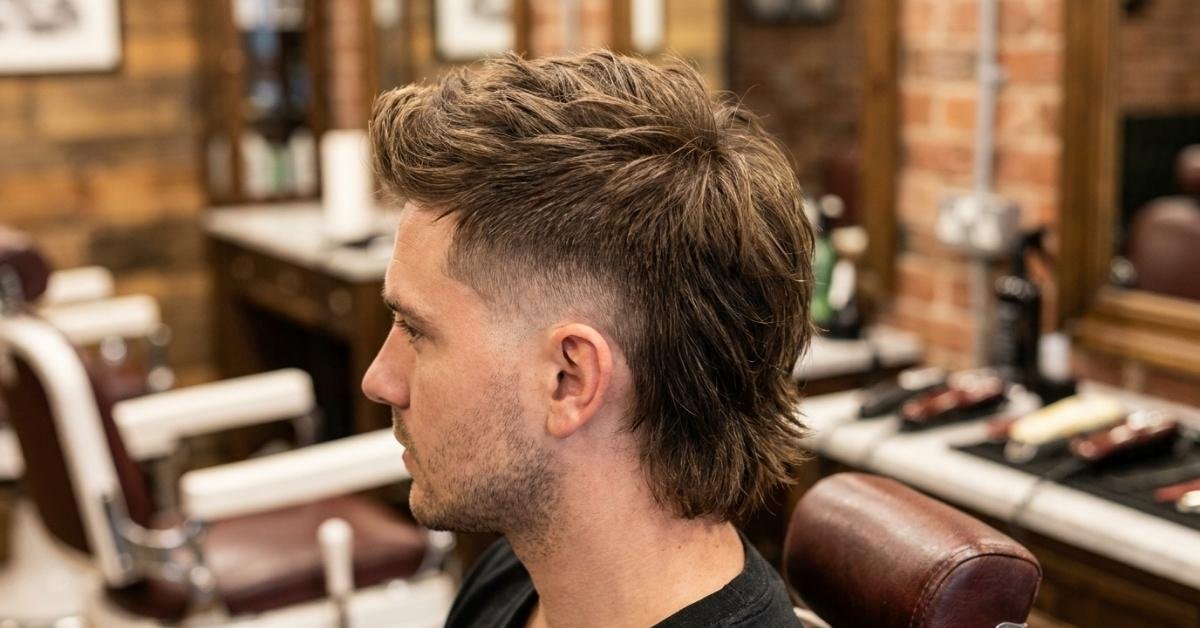
Wondering what a burst fade mullet is and whether you can pull it off? It’s a mullet haircut with the sides cut in a curved burst fade around the ears, so short sides blend into longer hair on top and at the back. Yes, most guys can wear it with the right fade height, texture, and barber instructions.You probably have a few worries. Will it look like a 1980s throwback? Will the fade grow out badly? Will your hair type even hold the shape?
This guide covers all of it. You’ll get 25 styles for 2026, advice by face shape and hair type, a cut breakdown, product picks, and a simple care plan. By the end, you’ll know exactly what to say in the barber chair.
What Is a Burst Fade Mullet Haircut?
A burst fade mullet pairs a burst fade with the classic mullet shape.
The fade curves in a half circle around the ear and drops toward the neckline.
The hair on top and at the back stays longer.
The burst fade is a shape for the sides, not a full haircut.
The mullet is the hairstyle.
Together they create a clean frame with plenty of texture and movement.
You still make three choices: how high the fade sits (low, mid, or high), how much length stays at the back, and what happens at the front.
Those three calls change the whole look.
Burst Fade vs Taper vs Drop Fade
Barbers use these terms loosely, so here’s the quick difference.
| Fade type | Shape | Best for |
| Burst fade | Half circle around the ear | Mullets, mohawks, curls |
| Taper | Gradual blend, shorter toward the ears and neck | Softer, office friendly looks |
| Drop fade | Arc that curves down behind the ear | A longer, sharper back view |
Ask for a ‘burst’ by name, then add low, mid, or high.
That one detail keeps you from walking out with a regular fade.
Who Should Try a Burst Fade Mullet?
Almost any guy with a few inches of hair on top and at the back can try it.
It works on straight, wavy, curly, thick, and fine hair once the layers are adjusted.
It’s a great fit if you:
- Like a bold cut that gets noticed
- Don’t mind a barber visit every few weeks
- Want clean sides with relaxed length at the back
- Enjoy a little daily styling
If you need a very conservative look, start with a low burst taper mullet.
It keeps the shape without shouting.
25 Burst Fade Mullet Styles for 2026
Each style below shows what makes it different and what to ask for.
Save your favorites as reference photos and bring them to your appointment.
1. Low Burst Fade Mullet
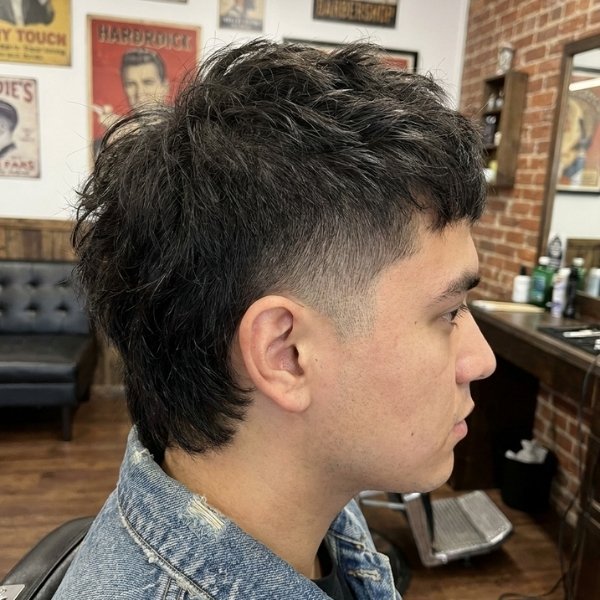
The fade starts low, close to the ear and neckline, so the cut stays subtle.
It’s the safest pick for a first mullet and easy to wear at work.
Ask for a low burst with soft layers on top.
2. Mid Burst Fade Mullet

The fade sits halfway up the sides, which is the height most guys request.
It balances contrast and everyday wearability.
Ask for a mid burst with a blended join into the back.
3. High Burst Fade Mullet
The fade climbs toward the temples and creates big contrast against long hair.
It looks sharp and bold, but the sides lose their crisp edge faster.
Expect a quick line up every two to three weeks.
4. Curly Hair Burst Fade Mullet
Curls stack beautifully above a clean burst, and the back keeps its natural spring.
Curl cream and a diffuser do most of the work.
Ask your barber to cut curls dry so the shape sits right.
5. Burst Fade Mullet for Straight Hair
Straight hair shows every line, so layering matters.
Point cutting through the back stops it from looking flat and heavy.
A light texture spray adds the grip straight hair needs.
6. Messy Burst Fade Mullet
Think choppy layers and a loose, tousled finish.
It’s perfect if you hate fussing with your hair.
Rough dry it, add a pinch of clay, and you’re done.
7. Textured Burst Fade Mullet
Point cut layers create separation and movement through the top and back.
It’s one of the most popular versions in 2026.
Ask for texture on top and a thinned out back.
8. Skin Burst Fade Mullet
The burst fades all the way down to bare skin around the ear.
That gives you the highest contrast and the sharpest edge.
Book touch ups every two weeks to keep it crisp.
9. Taper Burst Fade Mullet
The hair gets gradually shorter around the ears and neckline instead of dropping to skin.
It’s softer, more office friendly, and grows out gracefully.
It’s a smart pick if you want less upkeep.
10. Drop Burst Fade Mullet
The burst arc drops lower behind the ear and follows the curve of your skull.
It adds a clean, dramatic line when people see you from behind.
Ask for a drop burst if you like a longer, curved edge.
11. Burst Fade Mullet with Design
A shaved line or small pattern sits inside the fade for extra personality.
Keep it simple, since one or two lines age better than a full pattern.
Designs need frequent visits to stay sharp.
12. Undercut Burst Fade Mullet
The sides stay very short and disconnected from the longer top.
That heavy contrast makes the mullet length stand out.
Style the top over the cut for a polished finish.
13. Fluffy Burst Fade Mullet
Soft, airy layers add volume and a lived in feel.
It’s great for fine hair that needs lift.
Blow dry with a lightweight mousse and low heat.
14. Modern Burst Fade Mullet
The join between sides and back is blended, so the length looks intentional instead of retro.
Textured ends keep it current.
Ask for a blended back with choppy tips.
15. Short Burst Fade Mullet
Only a couple of inches stay at the back, which gives you a mini or baby mullet.
It’s the easiest way to test the trend.
Grow it out later if you love it.
16. Long Burst Fade Mullet
The back reaches your collar or past it for a dramatic silhouette.
Long ends need regular trims and a leave in conditioner.
Plan on a trim every six to eight weeks.
17. Burst Fade Mullet with Beard
The fade runs into the sideburn and beard line for one clean flow.
A mullet and beard together look bold and balanced.
Trim the beard edges weekly so the fade stays connected.
18. Asian Burst Fade Mullet
Straight, dense hair holds sharp lines well, which many guys use to their advantage.
Textured layers keep the back from looking too heavy.
Ask for a lighter back with a soft, textured fringe.
19. Blonde Burst Fade Mullet
A bleached or blonde top makes the texture and fade contrast pop.
Bleach dries hair out, so conditioning is non negotiable.
Use purple shampoo once a week to cancel brassy tones.
20. Wavy Hair Burst Fade Mullet
Waves bring natural movement, so you need fewer products.
Keep the layers long enough to let waves form.
Sea salt spray and air drying give the best result.
21. Burst Fade Mohawk Mullet
The sides stay tight with a burst, and a strip of length runs down the center.
Push it up for a mohawk or back for a mullet.
It needs a strong hold product.
22. Edgar Burst Fade Mullet
The Edgar cut is known for a blunt, straight across fringe, and it’s popular in Latino communities.
Add a burst and a longer back for a fresh spin.
Keep the fringe line trimmed so it stays crisp.
23. Burst Fade Mullet with Fringe
A fringe frames the forehead while the back stays long.
Textured, curtain style, or side swept versions all work.
Ask for the fringe to land around eyebrow level.
24. Burst Fade Mullet for Thick Hair
Thick hair can turn bulky fast.
Internal layering and point cutting remove weight without losing shape.
Ask your barber to thin the back, not the top.
25. Burst Fade Mullet for Thin Hair
A blunter back and a mid burst make thin hair look fuller.
Over thinning backfires, so keep the cut simple.
A lightweight mousse adds lift at the roots.
Burst Fade Mullet by Face Shape
Face shape helps you pick the fade height, but it isn’t a rulebook.
Hair density and growth patterns matter just as much.
- Oval: Almost any version works, so choose what you like.
- Round: Go mid or high on the sides and add height on top to elongate the face.
- Square: The burst follows your jaw and temples nicely, so a mid burst looks strong.
- Oblong: Keep the fade low and the sides fuller to avoid adding extra length.
- Heart: Pick a low or mid burst with a fringe to balance a wider forehead.
- Diamond: Soft layers and a fringe tone down prominent cheekbones.
Burst Fade Mullet by Hair Type
Your hair type decides how much cutting and styling the shape needs.
- Straight: Needs layers and texture spray so the cut doesn’t fall flat.
- Wavy: Naturally supports the mullet, so keep the layers loose.
- Curly: Looks best with a rounded back and curl cream.
- Coily: Holds a sharp burst beautifully, especially with a defined shape at the nape.
- Thick: Ask for internal layers to remove bulk.
- Fine or thin: Go shorter at the back and add volume with mousse.
Modern Mullet Haircut vs. Traditional Mullet
The shape started in the 1980s, but the modern mullet haircut looks very different today.
| Feature | Traditional mullet | Modern burst fade mullet |
| Sides | Short, often plain scissor cut | Faded in a curved burst |
| Join | Abrupt line | Blended and textured |
| Back | Stringy and straight | Layered with movement |
| Upkeep | Low | Regular barber visits |
| Vibe | Retro joke | Intentional and stylish |
Step-by-Step Burst Fade Mullet Tutorial
Here’s how a pro builds the cut.
Use it as a checklist for your next appointment.
- Section the hair. Clip the top and back out of the way.
- Mark the burst. Draw the arc from the temple around the ear toward the neckline.
- Start with a longer guard. Work in small circles around the ear.
- Blend upward. Lower the guard size near the ear and blend with a clipper over comb.
- Detail the edges. Clean the temple and neckline with a trimmer.
- Texturize the top and back. Use point cutting or thinning shears to add movement.
- Blend the join. Soften where the faded sides meet the mullet length.
Please don’t try a full burst fade at home on your first go.
Clippers don’t forgive mistakes, and fades are hard to fix.
Best Styling Products for a Burst Fade Mullet
You don’t need a shelf full of products.
These cover most hair types.
- Sea salt spray: Adds grip and a messy finish to straight or fine hair.
- Matte clay or paste: Defines layers and holds the fringe.
- Curl cream: Fights frizz and keeps curls springy.
- Lightweight mousse: Adds lift for thin hair.
- Leave in conditioner: Keeps long back sections soft.
- Heat protectant: Use it before blow drying or diffusing.
- Detail trimmer: Tidies the neckline between visits.
Weekly Care Routine
Wash your hair two to three times a week with a gentle shampoo.
Daily washing can strip natural oils, especially on curly hair.
Condition the lengths every wash, and deep condition once a week.
If you’re blonde or bleached, add purple shampoo once a week.
Skip heavy products on the faded sides so the skin stays clean.
A quick neckline tidy with a trimmer keeps things neat.
Maintenance Schedule
Fades lose their edge faster than longer hair, so plan ahead.
| Task | How often |
| Fade clean up | Every 2 to 3 weeks |
| Full cut and reshape | Every 4 to 6 weeks |
| Back and ends trim (long mullets) | Every 6 to 8 weeks |
| Deep conditioning | Weekly |
| Neckline tidy at home | Weekly |
If frequent visits don’t fit your schedule, ask for a softer fade that grows out more naturally.
Barber Tips for the Perfect Burst Fade Mullet
- Say ‘burst fade’ clearly, then name low, mid, or high.
- Bring photos of the front, side, and back views.
- Tell your barber how much length you want to keep at the back.
- Ask for point cutting or thinning shears if your hair is thick.
- Discuss how you’ll style it, so the cut matches your routine.
- Book your next fade clean up before leaving the chair.
Common Mistakes to Avoid With a Burst Fade Mullet
- Skipping the burst detail. A regular fade won’t give you the same curve.
- Going too high on the first try. Start low, then move up.
- Ignoring your hair type. Straight, curly, and thin hair all need different cuts.
- Letting the back get stringy. Regular trims keep the ends healthy.
- Overdoing products. Too much wax weighs down the layers.
- Cutting it at home. A mistake near the ear is tough to hide.
Conclusion
The burst fade mullet is bold, flexible, and easy to adapt. Pick your fade height, match it to your face shape and hair type, and give your barber clear directions.With a simple product routine and regular clean ups, it’ll stay sharp. Start low if you’re nervous, then go bolder as you get comfortable.
Which of the 25 styles are you trying first? Drop your pick in the comments and share this guide with a friend who’s thinking about a mullet.
FAQs
What is a burst fade mullet?
It’s a mullet with a curved burst fade around the ears. The sides stay short while the top and back keep their length.
How often should I get a burst fade mullet touched up?
Plan on a fade clean up every two to three weeks. A full reshape every four to six weeks keeps the mullet looking right.
Is a burst fade the same as a taper fade?
No. A burst fade curves in a half circle around the ear, while a taper blends gradually toward the neckline.
Can a burst fade mullet work on thin hair?
Yes. Use a mid burst, a blunter back, and a lightweight mousse for fuller looking hair.
How long does it take to grow out a mullet?
Hair grows about half an inch a month, so a short mullet takes a few months. A long mullet can take a year or more.
Is a burst fade mullet professional enough for work?
A low burst taper mullet with a tidy, blended back works in many offices. A high or skin burst is better for casual settings.
How do I ask my barber for a burst fade mullet?
Say ‘burst fade mullet,’ name low, mid, or high, and show reference photos. Also tell them how long you want the back.