
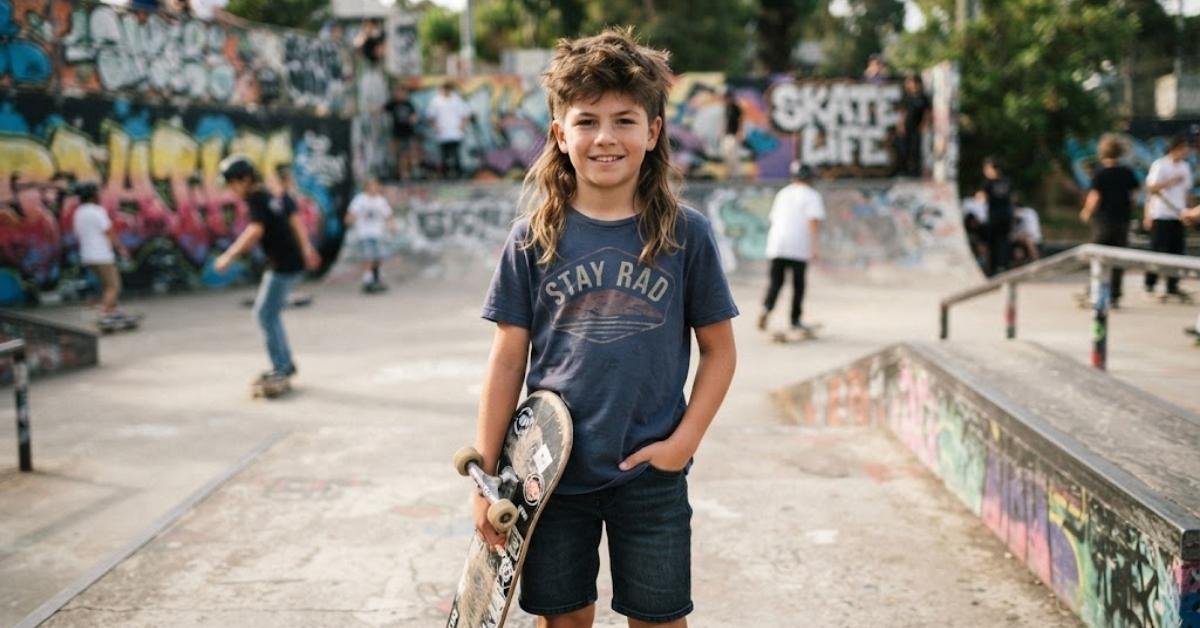
Your son wants a mullet. You want something that still looks presentable at pickup and in school photos. Good news: the 2026 version of this haircut is built for exactly that balance.The boys mullet haircut has moved far past its 1980s reputation. Barbers now blend the sides, add texture on top, and keep the back controlled instead of chopped. The result is a cut that reads as stylish rather than sloppy, and it works whether your son has straight hair, waves, or tight curls.
This guide covers what the cut actually is, how to pick the right version for your kid, twelve style variations with real differences between them, and the care routine that keeps it looking sharp between trims.
What Is a Boys Modern Mullet
A boys modern mullet is a haircut with short, blended sides and top, paired with noticeably longer hair at the back and nape. That’s the whole formula. The variation comes from how short the sides go, how much texture sits on top, and how long the back is left.
The word “modern” is doing real work here. A classic mullet from decades past had a hard line between the short top and the long back, with almost no blending. A modern mullet fades or tapers that transition so it looks like one continuous style instead of two haircuts stitched together.
For kids specifically, this matters more than it might for adults. A well-blended mullet passes most school dress codes because the length in the back looks intentional and neat, not overgrown. A poorly blended one can look like the barber simply forgot to finish the back, which is usually where parent complaints start.
How to Choose the Right Version
Three things decide which mullet variation will actually work: hair type, age, and lifestyle. Skipping any one of these usually leads to a cut that looks great in the chair and frustrating three weeks later.
Start with hair type.
- Straight hair needs layering or point cutting at the back, or the length can sit flat and heavy instead of moving.
- Wavy hair handles almost every mullet style with minimal effort, since the natural texture does half the styling work.
- Curly hair does best with soft layers and a slightly looser fade, since tight curls shrink up and can make short sides look shorter than intended.
Next, factor in age. Younger boys, roughly ages 4 to 8, generally look and feel more comfortable in shorter, tidier versions with less back length. Preteens and teens can usually handle bolder fades, longer back sections, and more dramatic contrast, partly because they’re the ones asking for it and will actually maintain it.
Finally, think about how he spends his week. A kid in weekly soccer or swim practice needs a cut that survives a helmet, goggles, or a ponytail holder, not one that requires ten minutes of product every morning.
The Best Boys Mullet Haircut Variations
Here are twelve solid, barber-tested versions. Pick based on your son’s actual daily life rather than a single photo that caught your eye.
1) Classic Boys Mullet
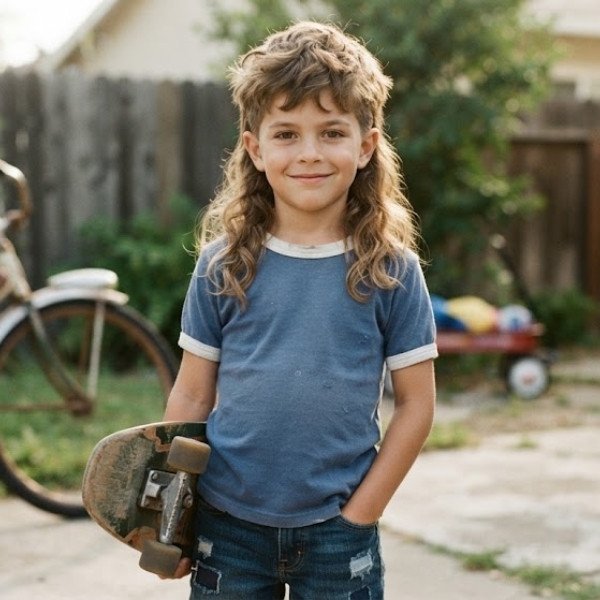
This is the safest starting point. Tidy sides, light texture on top, and a back that stops around the collar rather than dropping past it. It works on straight, wavy, or curly hair and doesn’t demand much from the barber or from styling time at home. If this is his first mullet, start here before moving to anything bolder.
2) Boys Mullet Fade
This version adds a skin or short fade on the sides, which sharpens the contrast between the short area and the longer back. It’s a strong pick for boys who want something that clearly reads as intentional and current, not accidental. The fade also grows out more gracefully than a plain trim, which stretches time between barber visits.
3) Short Mullet Haircut Boy

For kids who want the shape without the commitment of a long tail, this trims the back down to a subtle flick instead of real length. It’s ideal for active boys since there’s less hair to get in the way during sports, and it’s easier to keep neat for school.
4) Curly Boys Modern Mullet
Soft, textured layers let natural curls sit on top of each other instead of pushing outward, which keeps the shape following the head rather than expanding into a triangle. A small amount of curl cream controls frizz without weighing the curls down. This is one of the lowest maintenance options once it’s cut correctly.
5) Boys Modern Mullet Straight Hair
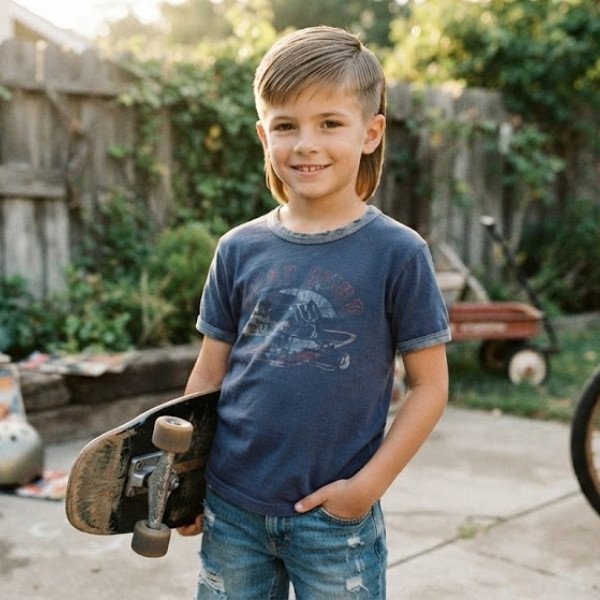
Straight hair needs a bit more intervention to avoid looking flat, so point cutting or light layering at the back is worth requesting specifically. Once that’s in place, this version looks clean and holds its shape well between trims, with minimal daily styling required.
6) Tapered Modern Mullet Haircut Boy
A taper is softer than a fade, blending gradually instead of using a sharp line. It’s a good middle ground for parents who want a cleaner look than a classic mullet but aren’t ready for a full fade. It also tends to age better between appointments since there’s less of a hard edge to grow out.
7) Burst Fade Boys Mullet Haircut
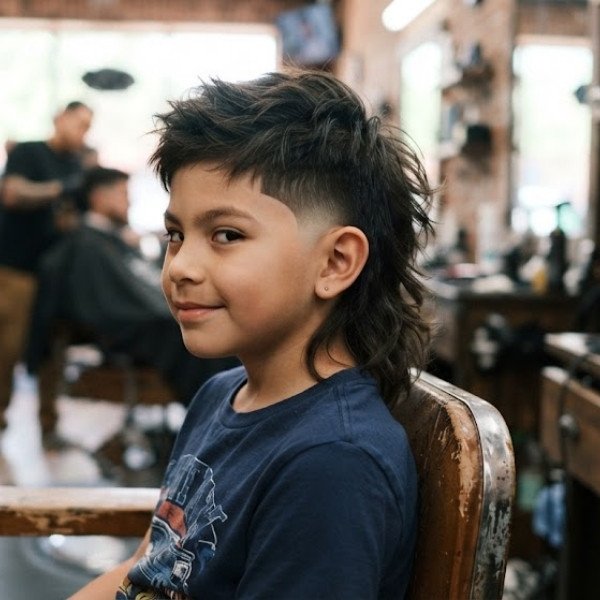
Instead of a straight fade line, the burst fade curves in a circular shape around the ear. It’s become a favorite among older kids and teens who want their cut to stand out at school without going overboard. This one is more detail work for the barber, so it’s worth booking with someone experienced in fades specifically.
8) Sporty Medium Mullet
Built for boys who are in and out of practice gear all week. Sides stay short enough to sit comfortably under a helmet, and the back length is kept medium rather than long, so it doesn’t get pulled or tangled during activity. Genuinely one of the more practical options on this list.
9) Wavy Surfer Mullet for Boys
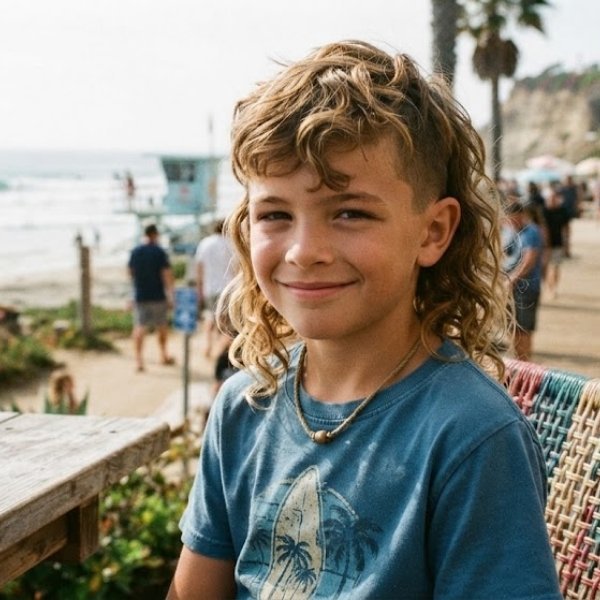
This leans into natural texture with a looser, beachy top and a back that’s left a little shaggy rather than sharply layered. Sea salt spray works well here to enhance the texture without much effort. It suits boys who don’t want a fussy routine but still want visible style.
10) Fringe Mullet
A textured fringe up front pairs with the classic short sides, long back setup. It adds a bit of edge and gives the top something to style, which some boys enjoy more than a plain crop. It works especially well on straight to wavy hair with medium density.
11) Low Fade Modern Mullet
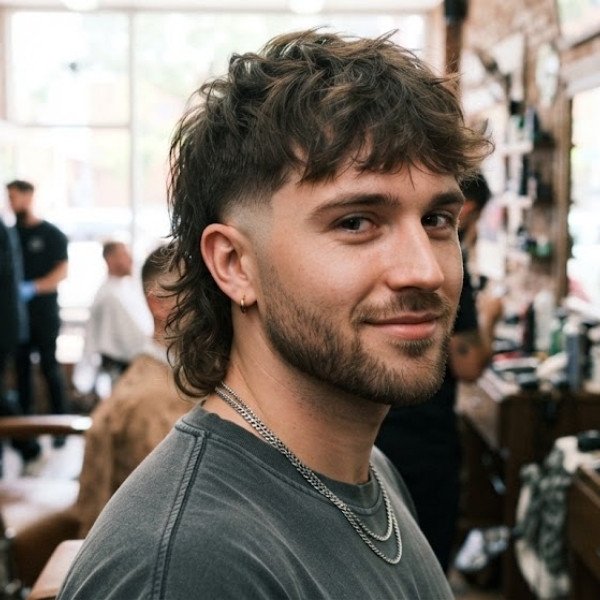
The fade starts lower on the head, closer to the ear, which keeps more length on the sides overall. This is a solid pick for parents who want the mullet silhouette without going as short or as dramatic as a mid or high fade. It also tends to be more school appropriate in stricter dress code environments.
12) Longer Back, School Safe
This variation keeps the back length real, but the sides and top stay conservatively short and clean. It’s designed specifically for families dealing with a dress code that restricts hair length, since the shortness in front and on the sides usually satisfies the rule while the back still gets to be a mullet.
Quick Age and Care Guide
Not every version fits every age the same way, and upkeep expectations should shift accordingly.
- Ages 4 to 7: Stick with the classic mullet or short mullet. Shorter overall length is easier for young kids to sit through and easier for parents to maintain between trims.
- Ages 8 to 12: This is where fades and tapers start to make sense, since kids this age can usually sit still longer and start caring about how the cut looks.
- Ages 13 and up: Burst fades, low fades, and longer back lengths all become realistic, especially if the teen is willing to do a little daily styling himself.
Across every age, plan on a trim every 4 to 6 weeks to keep the fade or taper crisp. The back can grow longer between visits since that’s the point of the style.
Daily Styling That Kids Can Do
The best boys mullet styles are ones a child can actually manage without a parent standing over him every morning. A simple routine looks like this:
- Towel dry the hair until it’s damp, not soaking.
- Apply a small amount of product, texture cream for straight or wavy hair, curl cream for curly hair, sea salt spray for a looser wavy look.
- Use fingers, not a comb, to scrunch or tousle the top and back into shape.
- Let it air dry or give it a quick blast with a hairdryer on low heat.
That’s genuinely the whole process for most versions on this list. Kids as young as seven or eight can usually manage steps 1 through 3 on their own with a little practice.
Conclusion
The boys mullet haircut earns its popularity in 2026 because it genuinely adapts, to hair type, to age, to how active a kid is during the week. Start with a classic version if your son is new to it, then move toward a fade, fringe, or burst fade once you both know what he actually likes.
Regular trims and a lightweight product are really all it takes to keep it looking sharp between appointments. Bring this guide, one of the barber phrases above, and a reference photo to your next visit, and you’ll walk out with a cut he’ll actually want to keep.
FAQs
Is a mullet a good haircut for a kid?
Yes, especially the modern, blended version. It’s low maintenance, works with most hair types, and typically satisfies school dress codes since the sides and top stay short.
What’s the difference between a classic mullet and a modern boys mullet?
A classic mullet has a hard, unblended line between the short top and long back. A modern version fades or tapers that transition so it looks like one intentional style.
Does a mullet work with curly hair?
Yes. Soft layers at the back let curls sit naturally instead of puffing out, and a light curl cream keeps frizz controlled without flattening the texture.
How often does a boys mullet need a trim?
Every 4 to 6 weeks for the sides and fade line. The back is meant to keep growing between visits, that’s the point of the style.
Will my son’s school allow a mullet?
Most schools focus on the length at the top and sides rather than the back. A tidy, short front paired with a longer back usually stays within typical dress code rules, though it’s worth checking your specific policy.
What products does a kids mullet need?
A lightweight texture cream for straight or wavy hair, a curl cream for curly hair, or a sea salt spray for a looser, wavy finish. Heavy gels or waxes usually aren’t necessary.