The quiff has been a barbershop favorite for decades, and it still shows up on red carpets, office floors and street style feeds. The reason is simple. It gives you height, shape and personality without asking for a complicated routine.
This guide covers every popular style, from the classic quiff to the disconnected quiff. For each one you will see who it suits and what to ask your barber. After the list, you will find simple styling steps, face shape advice, product tips and common mistakes to avoid.
Trendy Men’s Quiff Haircut Ideas
Choose your look by three things: the length on top, the fade or taper on the sides, and the level of texture. Most quiffs need roughly 3 to 5 inches (7 to 12 cm) on top, with the longest hair at the front.
Classic Quiff
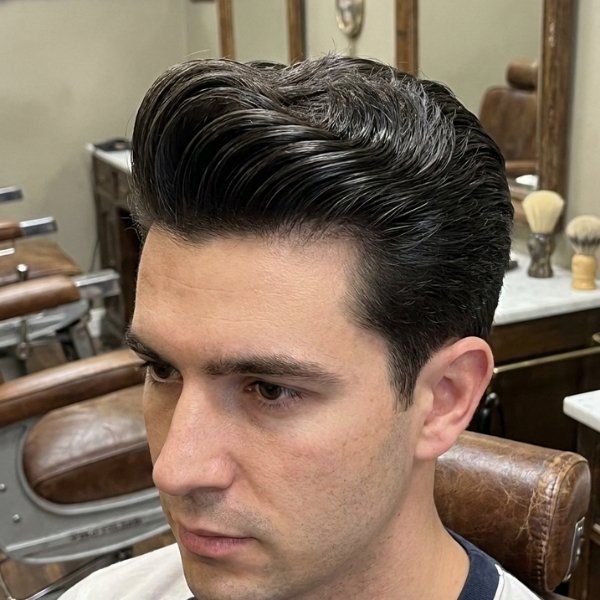
Short sides, a longer top and a smooth finish swept up and back. This is the closest match to the original 1950s shape, and it still passes in any office.
Best for: oval and square faces, straight to slightly wavy hair.
Ask for: a scissor taper on the sides and 3 to 4 inches on top, longest at the front.
Messy Quiff
The same structure with a looser finish. You push the hair up with your fingers instead of combing it into place, so the style looks relaxed and takes very little time.
Best for: guys who want a quick morning routine.
Ask for: point cutting through the top so the ends look choppy, not blunt.
Textured Quiff
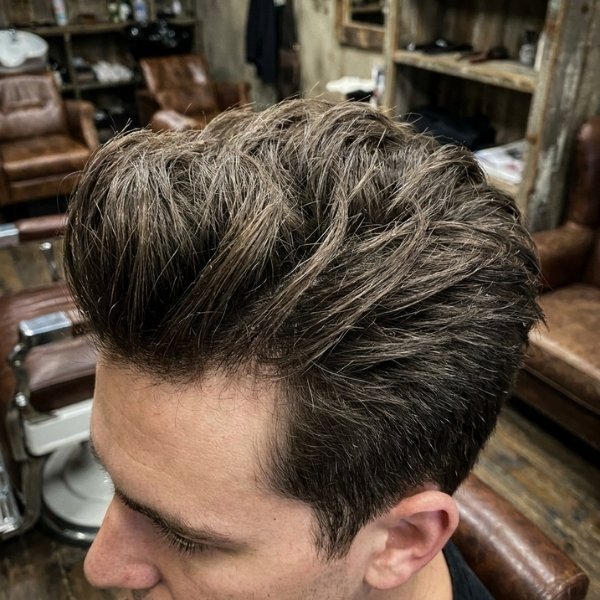
Choppy layers and a matte finish give the hair grip and movement. The texture also hides flat spots, which helps if your hair is on the finer side.
Best for: fine to medium hair.
Ask for: layers on top and light texturizing. Finish with clay or paste.
Modern Quiff
The modern version keeps the sides cleaner and the shape more defined, with a bit less height than the vintage look. It reads as sharp without looking stiff.
Best for: everyday wear and most face shapes.
Ask for: a taper or fade that blends into a top of about 3 inches.
Short Quiff
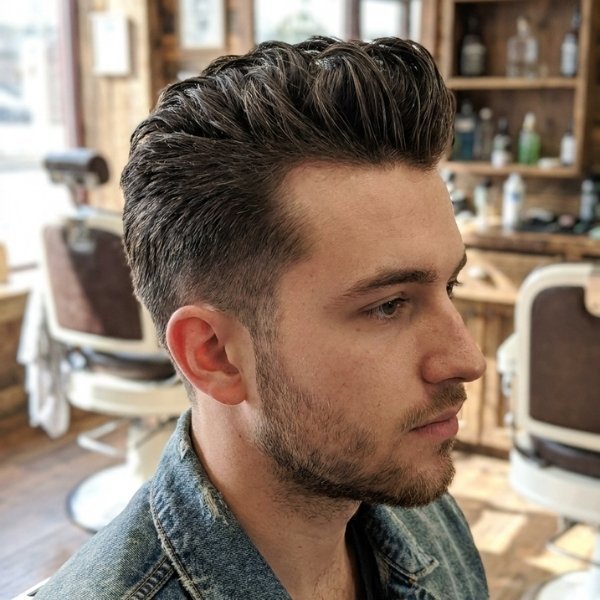
A smaller, easier version with a shorter top that stays longest at the front. It is a safe starting point if you have never worn a quiff before.
Best for: first timers, conservative workplaces and thick hair.
Ask for: a top around 2.5 to 3 inches with extra length at the front. If your hair is dense, ask your barber to remove some bulk.
Quiff Fade
The sides blend from very short, or skin, up into the longer top. The contrast makes the top the clear focal point.
Best for: men who like a crisp, high contrast outline.
Ask for: a low, mid or high fade and a smooth blend with no harsh lines.
Medium Quiff
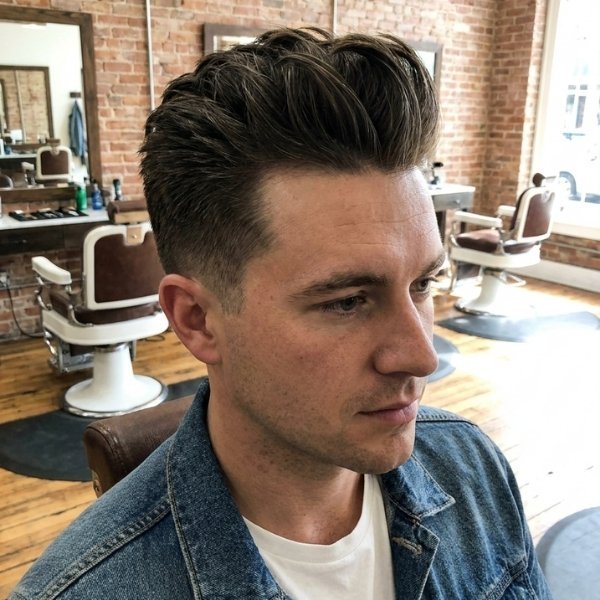
This is the most flexible length. You get enough hair to play with volume and texture, without the daily effort that long hair demands.
Best for: wavy hair and anyone who likes to change their look.
Ask for: 4 to 5 inches on top with light layering.
Quiff with Beard
A beard adds weight to the lower face, and a quiff adds height at the top. Together they balance each other. Keep the beard tapered so it connects with the sides of your haircut.
Best for: square, oval and round faces.
Ask for: a fade that flows into the beard line, plus a clean neckline.
Short Quiff with Low Taper Fade
A low taper only trims around the ears and neckline, so the sides stay fuller. The result is subtle and polished.
Best for: business settings and men who dislike aggressive fades.
Ask for: a low taper at the temples and nape, with a short top that is longer at the front.
Tousled Textured Quiff with Low Fade
A soft, rumpled top sits above a low fade that starts just over the ears. It looks effortless, though the cut itself needs to be precise.
Best for: casual and weekend styling.
Ask for: layers on top and a low fade. Use clay for a dry, natural finish.
Wavy Quiff
Natural waves create built in volume and movement, so you do not have to fight your hair. Avoid brushing it out when dry, because that turns waves into frizz.
Best for: wavy hair.
Ask for: length kept on top with bulk removed. A sea salt spray and a diffuser help define the waves.
Short Textured Quiff with Mid Fade
A mid fade begins around temple level. It slims the sides of the head and gives the textured top more presence.
Best for: round and oval faces.
Ask for: a mid fade, a textured top and extra length at the front.
Messy Quiff with Taper Fade
A taper blends more softly than a skin fade, so the sides look tidy while the top stays loose. It works well when you want a cut that grows out gracefully.
Best for: men who want a clean but relaxed look.
Ask for: a taper on the sides and nape, with a choppy top.
Long Quiff
This version needs about 5 inches or more on top. It gives you the biggest sweep and the most movement, but it needs a blow dry and some patience.
Best for: thick or wavy hair and strong jawlines.
Ask for: layers to remove weight so the top lifts instead of flopping, with tidy sides.
Thick Quiff Fade
Dense hair holds height well, but it can turn into a heavy block. A good barber will thin the top so the shape stays light and easy to style.
Best for: thick and coarse hair.
Ask for: layering or thinning on top and a fade that matches your preferred contrast.
Full Textured Quiff with Low Skin Fade
A full, textured top sits above sides that go close to the skin at the bottom. The contrast is bold, and the cut looks sharp from every angle.
Best for: men who want impact and do not mind regular trims.
Ask for: a low skin fade starting near the ear and a full top with texture. Plan a visit every 2 to 3 weeks.
Tousled Short Quiff with Low Fade
This is the short, low effort sibling of the messy quiff. The top stays compact, the fade stays low and the finish is deliberately undone.
Best for: busy mornings and shorter hair.
Ask for: a top of 2 to 3 inches, a low fade and visible texture.
Messy Wavy Quiff with Low Taper
Natural waves on top and a low taper on the sides make a good pair. The taper keeps the outline neat, so the loose top looks intentional.
Best for: wavy hair that needs some structure.
Ask for: a low taper, light layers and respect for your natural wave pattern.
Natural Quiff with High Fade
A high fade starts near the top of the head and pushes all the attention to the hair above it. Keep the styling minimal and let the top fall naturally.
Best for: oval and square faces, and men who want a bold, clean silhouette.
Ask for: a high fade with a natural top. Expect frequent upkeep, since grow out shows quickly.
Undercut Quiff
The sides are clipped to one short length, and the top is left long, with a visible step between them. It is a strong, modern outline with very little blending.
Best for: straight or thick hair and confident personal style.
Ask for: short, even sides and a top that is long enough to sweep up and back.
Youthful Short Quiff with Drop Fade and Beard
A drop fade curves down behind the ear instead of running level. With a short top and a trimmed beard, it gives a fresh, fashion forward shape.
Best for: younger men and anyone who likes a sharper outline.
Ask for: a drop fade, a short quiff and a beard blended into the fade.
Textured Quiff with Sharp Fade
A crisp fade, often paired with a clean line up, makes the textured top look even more relaxed by contrast.
Best for: men who like precision on the sides and softness on top.
Ask for: a sharp fade, an optional line up and a textured top.
Edgy Blonde Quiff
Blonde or bleached hair adds contrast and makes texture stand out. It also needs extra care, because lightening can leave hair dry and fragile.
Best for: fashion forward men who are ready for aftercare.
Ask for: a colorist who can tone the shade properly. Use purple shampoo and a deep conditioner at home.
Long Quiff Fade
A longer top, around 4 to 6 inches, over faded sides gives a dramatic contrast. The fade keeps the long hair looking intentional and clean.
Best for: thick, straight or wavy hair.
Ask for: a fade with enough length left on top and layering so the shape holds.
Straight Smooth Quiff with Mid Skin Fade
Straight hair gives you the sleekest result. Paired with a mid skin fade, it looks polished and formal. A little pomade and a brush are enough.
Best for: straight hair and formal settings.
Ask for: a mid skin fade, a smooth top and minimal layering to keep it neat.
Curly Quiff
Curls create natural lift, so the volume is already there. Leave the top curly and keep the sides tight to give the curls a clear shape.
Best for: curly and coily hair.
Ask for: a scissor cut on the top. Curls shrink as they dry, so leave a little extra length. Use curl cream and avoid brushing when dry.
Pompadour Quiff
A hybrid that borrows the extra height and sweep of the pompadour. It is more polished and dramatic than a standard quiff and usually needs a strong hold product.
Best for: thick hair and bold personalities.
Ask for: a longer top and tight sides, and ask your barber to show you how to style it.
Textured Fringe Quiff
The front falls slightly forward over the forehead before lifting, which softens the look. It is easy to wear and works well with a high forehead.
Best for: casual styling and high foreheads.
Ask for: a textured front with a slight forward lean and shorter sides.
Disconnected Quiff
There is no blending between the top and the sides. A clear line separates them, which creates a striking contrast. It is the boldest option on this list.
Best for: men who want a statement cut.
Ask for: a hard disconnection, very short sides and a long top with texture.
What Is A Quiff Haircut?
A quiff is a hairstyle with short sides and back and longer hair on top, styled upward and back, with the most volume at the front. The shape grew out of the pompadour and became widely popular in the 1950s through rockabilly and early rock and roll style. It has come back in new forms several times since.
What makes the quiff so lasting is its range. You can keep it neat for work or rough it up for the weekend, and you can adjust the length, the fade and the texture to match your hair and your face.
Quiff vs Pompadour: What Is the Difference?
Barbers often use the two terms loosely, and some call the pompadour a type of quiff. In practice, the pompadour is taller and slicker, while the quiff is lighter and more flexible.
| Feature | Quiff | Pompadour |
| Height | Moderate | High |
| Finish | Textured, messy or neat | Sleek and polished |
| Sides | Tapered or faded | Short and often slicked |
| Styling effort | Lower | Higher |
| Typical top length | About 3 to 5 inches | About 4 to 6 inches |
Which Quiff Suits Your Face Shape?
- Oval: The easiest shape to style. Almost every quiff works.
- Round: Go for extra height and a fade on the sides to add length.
- Square: A textured or slightly softer quiff balances strong angles.
- Oblong: Keep the height moderate and try a side swept version.
- Heart: A textured fringe quiff softens the forehead and balances a narrow chin.
Which Quiff Works for Your Hair Type?
- Straight hair: Gives the cleanest, sleekest shape.
- Wavy hair: Adds natural volume and a relaxed finish.
- Curly hair: Provides lift on its own. Focus on moisture and definition.
- Fine hair: Needs a volumizing mousse or root lift spray and a textured cut.
- Thick hair: Holds height easily, but ask for thinning to avoid a bulky shape.
How to Style a Quiff at Home
- Wash your hair and towel dry until it is damp, not dripping.
- Apply a pre styler such as sea salt spray or volumizing mousse at the roots.
- Blow dry the front upward and back with a round brush on medium heat.
- Warm a small amount of clay, paste or pomade between your palms.
- Work it through from the roots to the tips, lifting the front as you go.
- Shape the quiff with your fingers or a comb.
- Finish with a light spray for hold.
Tip: Start with less product than you think you need. You can always add more, but too much weighs the quiff down.
Best Products for a Quiff
- Clay: Matte finish and strong hold, good for textured and messy styles.
- Paste: Flexible hold with a natural look, good for short and medium cuts.
- Pomade: Shine and control, good for classic and pompadour styles.
- Wax: Medium hold with some pliability for restyling during the day.
- Sea salt spray: Adds grip and grit to fine or wavy hair.
- Volumizing mousse: Lifts fine hair at the roots before blow drying.
What to Tell Your Barber
Bring a photo and be specific. Barbers can only work from what they hear and see, so clear details save you from a cut that is too short.
- Length on top: Say how many inches you want to keep, with the front longest.
- Sides: Choose a taper, a low fade, a mid fade or a high fade.
- Texture: Ask for layers, point cutting or thinning depending on your hair.
- Finish: Say if you want it neat, textured or messy.
Sample request: “I’d like a quiff with a low taper on the sides, about four inches on top and a textured finish.”
How to Keep Your Quiff Looking Sharp
- Trim every 3 to 4 weeks, or every 2 to 3 weeks if you wear a skin fade.
- Use shampoo that cleans without stripping natural oils.
- Wash out styling products regularly to prevent buildup.
- Use a heat protectant if you blow dry often.
- Ask your barber to teach you the styling steps for your hair.
Common Quiff Mistakes to Avoid
- Using too much product, which weighs the hair down.
- Blow drying the front forward instead of up and back.
- Cutting the top too short to lift.
- Skipping trims, which makes fades look untidy.
- Choosing a style that fights your natural hair texture.
Final Thought
The quiff has lasted because it adapts. You can go short or long, sharp or messy, faded or natural, and still end up with a style that feels current. Pick the version that fits your hair type, face shape and daily routine, then give your barber clear details and a reference photo.
With the right cut and a simple styling habit, a quiff can look good every day of the week.
FAQs
What do I tell my barber for a quiff?
Ask for short, tapered or faded sides with 3 to 5 inches left on top, longest at the front. Mention your preferred fade level and show a photo.
What is the difference between fringe and quiff?
A fringe falls forward over the forehead, while a quiff is lifted up and back to create height. Some cuts, like the textured fringe quiff, combine both.
What face shape is a quiff for?
Oval and square faces suit almost any quiff. Round faces benefit from extra height, and longer faces look best with a lower, side swept version.
Is quiff attractive?
Many people see it as a sharp, confident look because it adds height and frames the face. The result depends on choosing a cut that fits your hair and face shape.
What is a modern quiff haircut?
A modern quiff pairs a clean taper or fade on the sides with a textured, medium length top lifted up and back. It looks more natural and less stiff than the 1950s original.