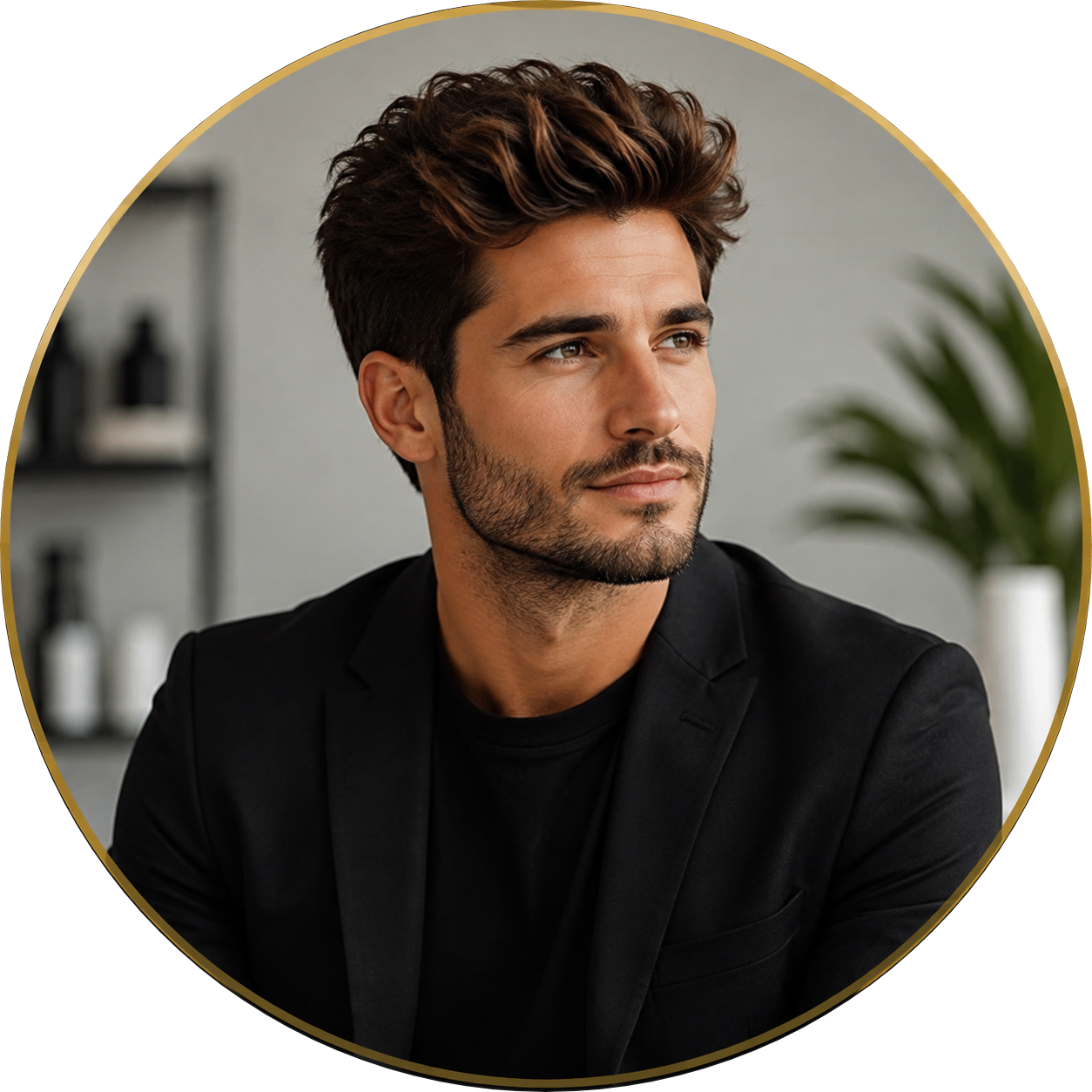
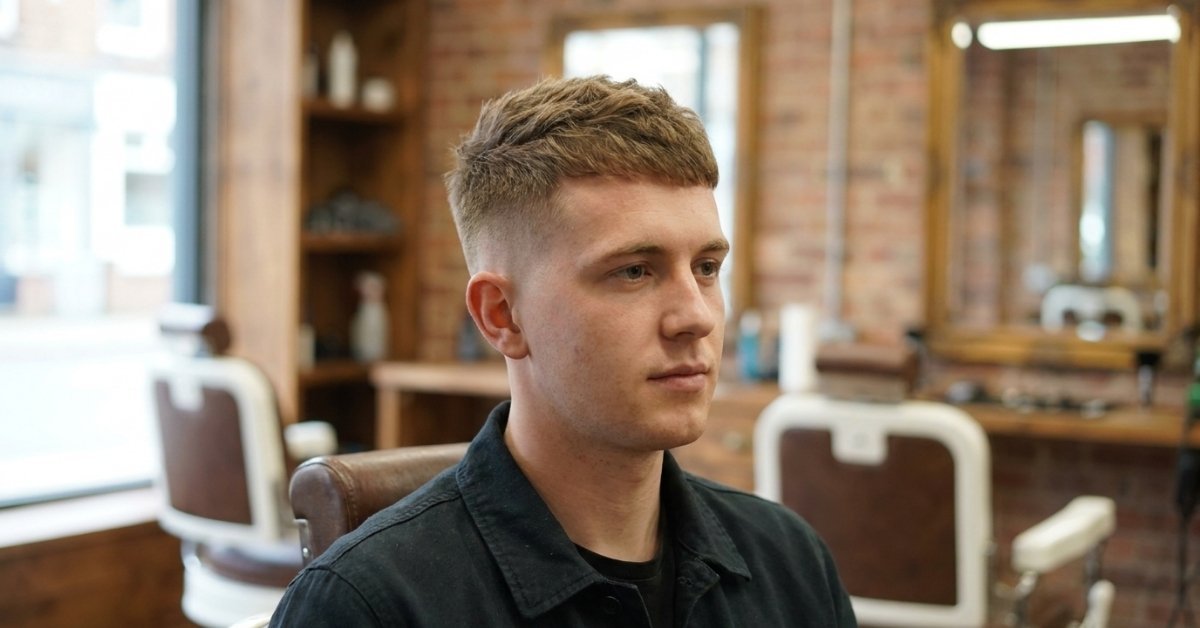
A low taper fade is one of the easiest ways to look sharp without a dramatic change. The sides and back shorten gently, the neckline stays clean, and the top stays yours to style.
This guide covers 10 low taper fade styles for white guys, with ideas on who each suits and how to style it. You will also find barber tips, upkeep advice and quick answers to common questions.
Low Taper Fade White Guy Hairstyles Variations
Each style below keeps the same low taper on the sides and changes the top. Pick the one that matches your hair type, daily routine and work environment.
Low Taper Fade + Curly Hair
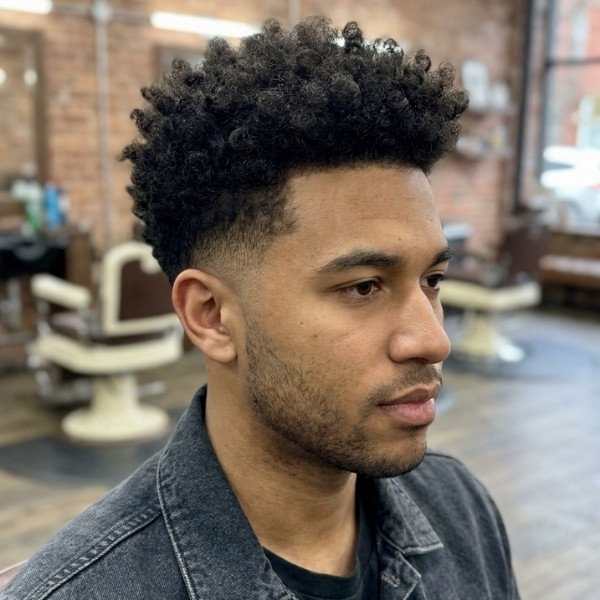
Curls and a low taper work well together. The short sides control width, and the top keeps its natural shape.
- Best for: Wavy to tightly curled hair, round or square faces
- Top length: About 3 to 5 inches
- Style with: Curl cream or sea salt spray on damp hair, then air dry or diffuse
Ask your barber to leave enough weight on top so the curls bounce instead of puff.
Photo: Low taper fade with curly top, front and side view
Low Taper Fade + Slick Back
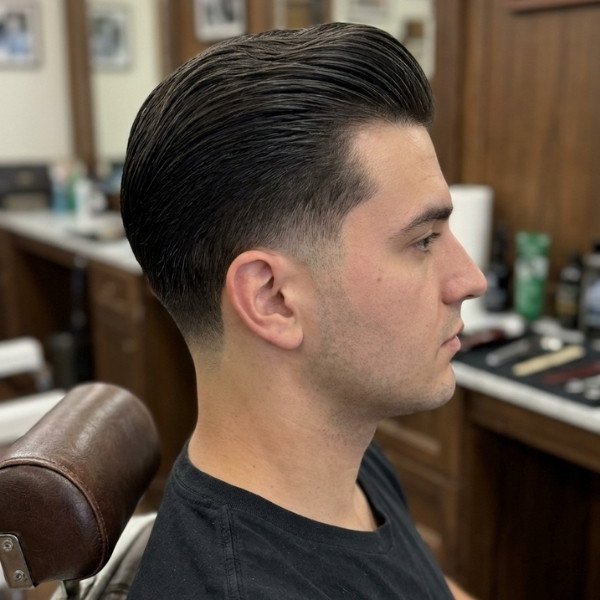
This is the polished option for office, weddings and dinners. The hair sweeps back while the taper keeps the edges neat.
- Best for: Straight to wavy hair with medium thickness
- Top length: 3 to 4 inches
- Style with: Pomade or styling clay, a blow dryer and a comb
Blow dry the hair backward first. Then apply product from front to back for a clean finish.
Photo: Slick back with low taper fade in natural light
Low Taper Fade + Comb Over
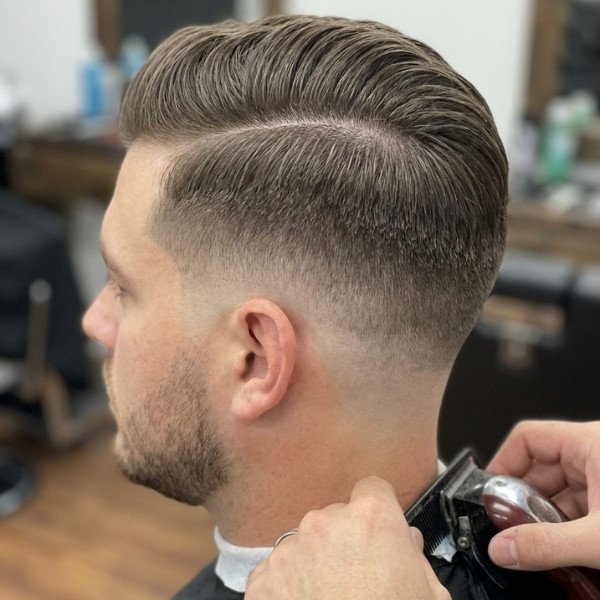
The comb over is a classic short cut with a modern edge. A deep part, a soft taper and a neat sweep create a confident, simple look.
- Best for: Fine to medium hair, oval and diamond faces
- Top length: 2 to 4 inches
- Style with: Matte paste or light cream
A shorter top with a sharp part looks sporty. A longer top with a softer part looks relaxed.
Photo: Comb over with low taper fade, side profile
Low Taper Fade + Textured Crop / Fringe
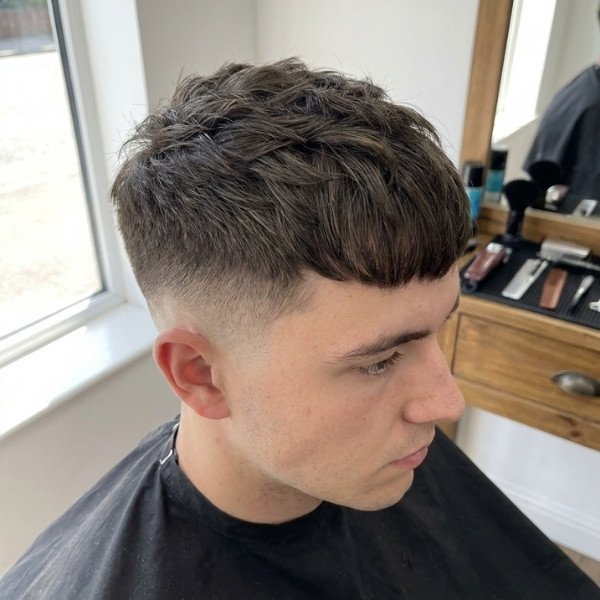
The textured crop is short, messy in a good way and very low effort. A forward fringe adds a youthful, current feel.
- Best for: Straight or slightly wavy hair, receding hairlines (the fringe helps cover them)
- Top length: 1.5 to 3 inches
- Style with: Texture powder or matte clay
Point cut the top so it looks piecey instead of blunt.
Photo: Textured crop with fringe and low taper
Low Taper Fade + Buzz Cut
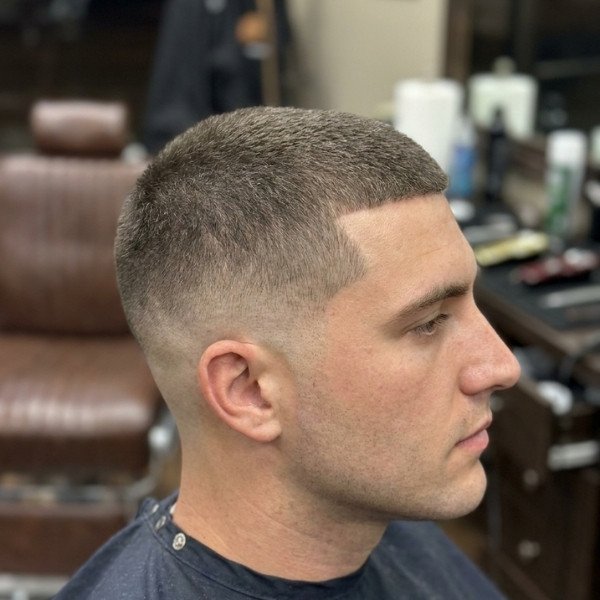
If you want almost no styling, this is it. The top is clipped short, and the taper keeps it from looking flat or harsh.
- Best for: Busy schedules, thinning hair, athletic looks
- Top length: Clipper guard 2 to 4
- Style with: Nothing needed, only a light moisturizer for the scalp
A taper under a buzz cut also gives the hairline a cleaner shape.
Photo: Buzz cut with low taper, back view
Low Taper Fade + Undercut
An undercut creates strong contrast between the top and sides. With a low taper, the transition is smoother than a classic disconnected undercut.
- Best for: Thick hair, bold personal style
- Top length: 3 to 5 inches
- Style with: Strong hold pomade or wax
Pair it with a beard if you want a more rugged look.
Photo: Undercut with low taper, styled up and back
Low Taper Fade + Dreads
This pairing is less common but very striking. A low taper keeps the sides tidy while the dreadlocks stay as the main feature.
- Best for: Guys with a long-term commitment to locs
- Top length: Locs of any length
- Style with: Residue-free shampoo and light oils
Dreads on straight or fine hair take more time and careful maintenance. Talk to a loctician before you start, and keep the taper fresh every few weeks.
Photo: Low taper with locs on top, front view
Low Taper Fade + Afro
An afro-style top suits white guys with very tight curls or coarse, springy texture. The low taper frames the shape and keeps the outline neat.
- Best for: Tight curl patterns, thick hair
- Top length: 4 inches or longer
- Style with: Leave-in conditioner, a pick and a light oil for shine
If your hair is curly but not tightly coiled, the curly style above will suit you better.
Photo: Rounded curly top with low taper, side view
Low Taper Fade + Side Part
The side part is a timeless cut that works in almost any setting. With a low taper, it looks clean and slightly vintage without feeling dated.
- Best for: Straight and wavy hair, professional settings
- Top length: 3 to 5 inches
- Style with: Light pomade or cream, plus a comb
Use a comb to set a defined part line. It makes the whole cut look more intentional.
Photo: Side part with low taper, close-up of part line
Low Taper Fade + Blowout
The blowout is full, textured and lifted. It adds volume to the front and works well for medium to thick hair.
- Best for: Thick or wavy hair, anyone wanting height and movement
- Top length: 4 to 6 inches
- Style with: Sea salt spray, a blow dryer and a light hold cream
Dry the hair upward and forward with your fingers, then finish with a touch of hairspray.
Photo: Blowout with low taper, side and front view
What is Low Taper Fade White Guy Styles
A low taper fade is a haircut where the hair on the sides and back gets gradually shorter as it moves down toward the neck and ears. The change starts low, just above the ear and along the nape.
For white guys, the cut is popular because it works with many hair textures, from fine and straight to thick and curly. The gradual blend also looks softer against lighter skin tones than a bald fade, which creates a stronger contrast.
Low taper vs low fade, in short:
- Low taper: Leaves some length at the hairline and neck. It looks softer and more classic.
- Low fade: Can go down to the skin. It looks sharper and more modern.
Many barbers use the terms loosely, so bring a photo and name the guard or length you want.
What to tell your barber:
- Say “low taper” and show a reference photo.
- Name the top style you want.
- Ask for scissor work on top, not only clippers.
- Request a clean neckline (rounded or squared).
The Evolution of Low Taper Fade White Guy Styles
Tapered cuts have been part of barbering for a long time. Classic short back and sides cuts used gradual shortening at the neck and ears, and these were common in early to mid 20th century barbershops.
Fades became more widely visible in the 1980s and 1990s, shaped heavily by Black barbering culture, which refined the blend and precision. Over time, the technique spread across barbershops and communities worldwide.
In the 2010s, social media and barber channels pushed fades into the mainstream. White men started pairing tapers with quiffs, pompadours and crops. Today, the low taper is often chosen over higher fades because it feels easier to wear at work and grows out more gracefully.
Current trends lean toward natural texture, flowing tops and subtle blends instead of extreme contrast.
Conclusion
The low taper fade is flexible, clean and easy to personalize. Whether you prefer a curly top, a slick back or a quick buzz, there is a version that suits your hair and routine.
Choose the style based on your hair texture and how much time you want to spend each morning. Bring photos to your barber, book regular trims, and use the right product for your hair type. Small details make the difference between a good cut and a great one.
FAQs
What is a low taper fade?
It is a haircut where the sides and back gradually shorten near the ears and neckline, leaving the top longer and fully styleable.
Does a low taper fade suit white guys?
Yes. It works with straight, wavy and curly hair, and the soft blend flatters most face shapes and skin tones.
How often should I get a low taper fade?
Every 3 to 4 weeks keeps the lines sharp. You can stretch to 5 weeks if you like a softer, grown-out look.
Which style is best for beginners?
The textured crop or side part is easiest. Both need little product and forgive small styling mistakes.
Can I style my top hair differently with a low taper fade?
Yes. The taper stays the same while the top can be curly, slicked back, parted, spiky or buzzed.