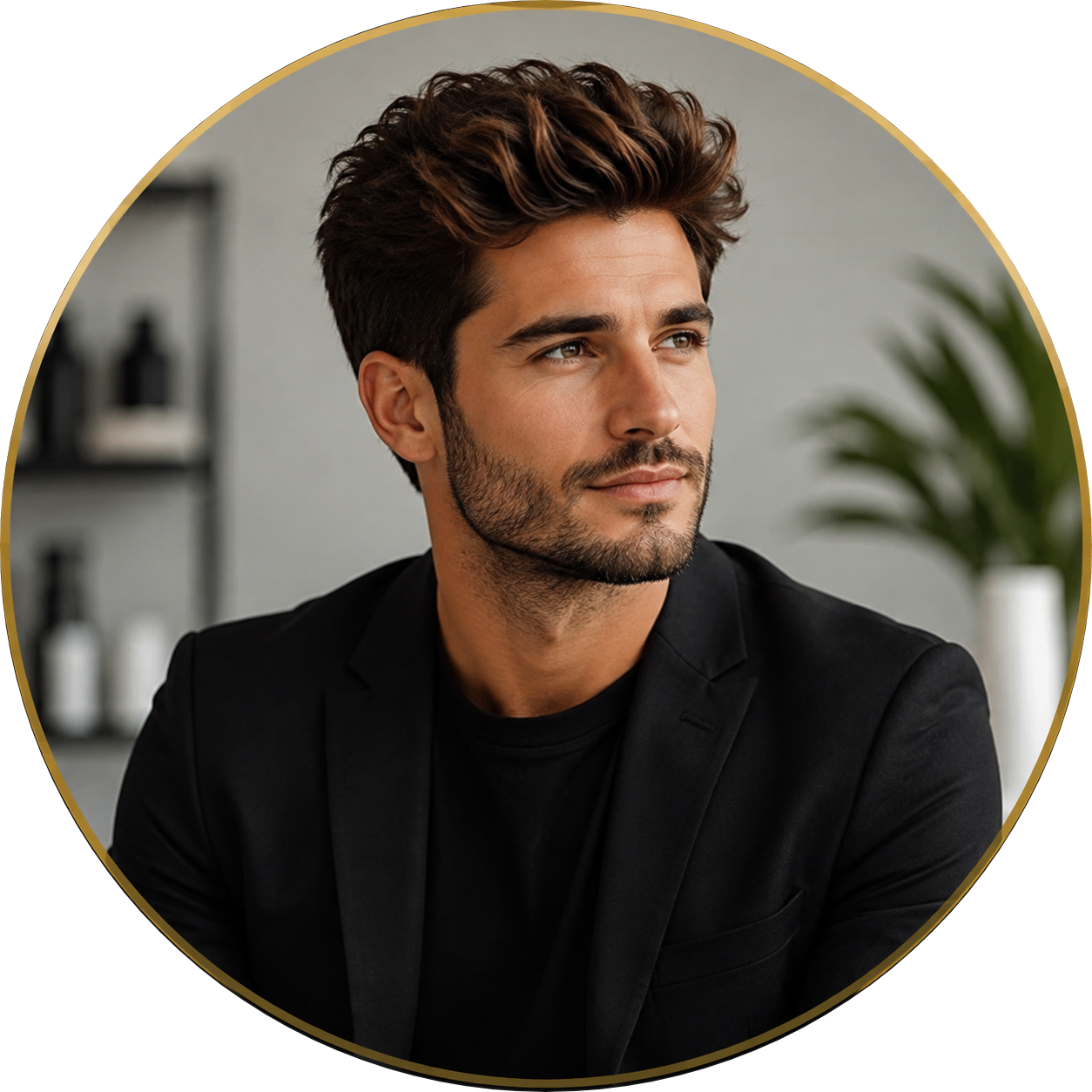

Not sure which burst fade fits your head? Wondering what to tell your barber without sounding lost?You’re not alone. A burst fade looks simple in photos, but the height, the top and your hair texture change the final result a lot.
This guide covers 35 styles, the best picks by face shape and hair type, and the exact words to use in the chair.
Quick Answer
A burst fade is a fade that curves in a half circle around the ear and drops into the neckline. It keeps extra length at the back and leaves the top open, so it pairs well with mullets, curls, buzz cuts and textured crops.
Pick a low, mid or high burst based on your face shape. Then plan a touch up every 2 to 4 weeks.
What is a Burst Fade Haircut?
A burst fade is a shape for the sides of your head, not a full hairstyle. The fade starts near the temple, arcs around the ear and melts into the nape, like a small sunburst.
Barbers build the arc with clippers, guards and clipper over comb blending. The top and back stay as long as you like, which is why the cut works with so many looks.
Who Should Get a Burst Fade Haircut?
Almost anyone with enough hair around the ear to shape an arc can wear it. Men with straight, wavy, curly and coily hair all get strong results.
It suits you best if you like a sharp, modern look and can visit your barber every few weeks. If upkeep worries you, ask for a soft low burst that grows out gently.
Hair density and growth patterns matter more than any chart. A good barber reads your cowlicks and hairline before picking a height.
Why Burst Fade Haircuts Are Trending in 2026
Short videos made curved fades go viral because the shape looks great from every angle. Add the mullet revival and the textured crop boom, and barbers now hear “burst fade” daily.
It also gives you contrast without shaving the sides bald. That balance works at the office, the gym and on weekends.
Where the Burst Fade Comes From
Fades grew out of military barbering and Black barbershop culture, where precision blending became an art form. The burst shape came later, as barbers experimented with curves around the ear.
No single barber owns the cut, so origin stories vary. What’s clear is that social media and the mullet comeback pushed it into the mainstream.
35 Burst Fade Haircut Styles for Men
Each style below changes the fade height, the top or the finish. Mix and match them with your face shape and hair type.
1: Burst Fade Mullet
The mullet is the most famous partner of this fade. The burst cleans the sides while the back stays long and loose.
Low Burst Fade Mullet
The arc sits low near the ear and neckline. It’s the softest, most office friendly mullet version.
Mid Burst Fade Mullet
The fade starts around the temple for a balanced look. Most barbers recommend this height as the safe starting point.
High Burst Fade Mullet
The arc climbs high on the sides for strong contrast. Pair it with a long back for a bold, 90s inspired shape.
Straight Hair Burst Fade Mullet
Straight hair gives a sleek, flowing back with crisp edges. A little texture spray stops it from falling flat.
Curly Hair Burst Fade Mullet
Curls add natural volume at the back and crown. Keep them hydrated so the shape stays defined.
2: Low Burst Fade
The arc stays close to the ear and nape. It’s subtle, clean and easy to grow out.
3: Burst Fade Curly Hair
Tight sides make curls on top look fuller and more defined. Use a curl cream to control frizz.
4: Mid Burst Fade
This is the all rounder. It works on most face shapes and every styling product.
5: Burst Fade with Design
A barber carves lines, hair tattoos or a part into the faded area. Keep the design simple so the arc still stands out.
6: Burst Fade Mohawk
Sides stay short while the center strip stands tall. A faux hawk version looks softer for daily wear.
7: Burst Fade Straight Hair
Straight hair shows every line, so the blend must be smooth. A matte clay adds grip and thickness.
8: Taper Burst Fade
This mixes a gentle taper fade with the curved arc. The sideburns and nape stay slightly longer for a natural finish.
9: High Burst Fade
The fade climbs toward the temples. It’s sharp and dramatic, and it highlights length on top.
10: Burst Fade Buzz Cut
A uniform buzz on top with a curved fade around the ears. It’s minimal, fast to style and great for summer.
11: Short Burst Fade
Everything stays compact, with about one inch on top. It’s a clean choice for work and sport.
12: Burst Fade Textured Fringe
A choppy fringe falls over the forehead. It softens a strong brow line and adds youthful energy.
13: V Shape Burst Fade
The back is cut into a V that points down the nape. It looks sharp from behind and pairs well with longer hair.
14: Burst Fade Long Hair
The sides are faded while the top and back keep real length. Tie it back or let it flow for a half shaved vibe.
15: Burst Fade Slick Back
Hair is combed back over a tight fade. Use a medium hold pomade for a polished shine.
16: Comb Over Burst Fade
A side part with a clean hard part line gives a classic gentleman look. The burst keeps it modern instead of old school.
17: Burst Fade Wavy Hair
Waves get extra bounce when the sides are short. Air dry or diffuse to keep the pattern intact.
18: Textured Burst Fade
The top is cut in layers and finished with clay or paste. It looks effortless but photographs very well.
19: French Crop Burst Fade
A short, blunt fringe sits on a cropped top. It’s low effort and flatters most face shapes.
20: Burst Fade Back View
The back view is where the arc really shows. Ask your barber to check symmetry from behind with a hand mirror.
21: Burst Fade Edgar
An Edgar cut has a straight, blunt fringe with sharp edges. The burst fade adds a curved frame around it.
22: Burst Fade with Beard
The fade flows into the sideburns and beard. A smooth beard blend makes the whole head look connected.
23: Blowout Burst Fade
A blow dried, lifted top adds height above the fade. It’s great for round faces that want length.
24: Burst Fade for Black Men
Burst fades pair beautifully with waves, twists and high top styles. A sharp line up gives the cut extra definition.
25: Asian Burst Fade
Straight, thick hair holds a clean arc well. Ask for point cutting on top so the hair doesn’t stand stiff.
26: Burst Fade Blonde Hair
Bleached or natural blonde tops contrast nicely with a shadowy fade. Use purple shampoo to keep brassiness away.
27: Burst Fade Afro
Short sides frame a rounded Afro for a crisp silhouette. Shape the top evenly so the outline stays balanced.
28: Undercut Burst Fade
The sides drop shorter and the top stays disconnected. It’s bold, modern and easy to style.
29: Grown Out Burst Fade
Let the fade soften for a relaxed, lived in look. It buys you extra weeks between barber visits.
30: Burst Fade Fluffy Hair
Light, airy hair on top looks soft over clean sides. A sea salt spray gives fluff without crunch.
31: Skin Burst Fade
The fade drops down to bare skin at the nape. It’s the sharpest version and needs the most upkeep.
32: Drop Burst Fade
The arc dips lower behind the ear. It follows your skull shape and suits longer tops.
33: Messy Burst Fade
A tousled top with a tidy fade creates relaxed contrast. Rough dry it and finish with a pinch of paste.
34: Burst Fade Pompadour
Volume sweeps up and back over tight sides. Use a blow dryer and strong hold wax for a lasting lift.
35: Burst Fade Quiff
The front stands up and tilts slightly back. It’s shorter and easier than a pompadour, which makes it perfect for daily wear.
How to Choose the Right Barber for a Burst Fade
Not every barber blends curves well. Check these points before you book:
- Portfolio: Look for clear photos of burst fades from the side and back.
- Consultation: A good barber asks about your routine and hair growth.
- Tools: Fresh guards, clean clippers and sharp trimmers show care.
- Reviews: Search for comments about fade quality and symmetry.
- Hair type experience: Make sure they’ve worked on your texture.
How to Ask Your Barber for a Burst Fade
Say “burst fade” first, then add the details. The right words save you from a standard fade you didn’t want.
Bring Reference Photos
Show two or three pictures from different angles. Point out what you like about the arc and the top.
Choose Your Fade Height
Say low, mid or high. Low is subtle, mid is balanced and high is bold.
Decide the Length on Top
Tell the barber how many inches you want to keep. Mention if you plan to grow it out.
Specify the Neckline
Pick a natural, tapered or squared nape. A natural neckline grows out best.
Mention Beard Blending
If you have a beard, ask the barber to blend it into the sideburns. This keeps the fade smooth from ear to jaw.
Ask About Your Maintenance Schedule
Ask how often you should come back. Most men refresh every 2 to 4 weeks.
Quick Barber Checklist
- Say “burst fade” and the height
- Share reference photos
- State the top length
- Choose the neckline style
- Mention beard blending
- Ask about upkeep
Best Burst Fade Haircut by Face Shape
Your face shape guides the height and the top. Think of it as a starting point, not a strict rule.
Round Face
Choose a mid or high burst with extra volume on top. The height elongates your face.
Oval Face
You can wear nearly any version. Pick the one that matches your lifestyle.
Square Face
A low or mid burst with texture softens a strong jawline. Avoid overly sharp, boxy tops.
Diamond Face
Try a low or mid burst with a side swept fringe. It balances wide cheekbones.
Heart Face
Go for a low burst with a textured fringe. The fringe reduces forehead width.
Oblong Face
Keep the top short and wide, not tall. A low or mid burst prevents extra length.
Quick Face Shape Guide
| Face Shape | Best Burst Height | Top Style |
| Round | Mid to High | Volume, quiff |
| Oval | Any | Any |
| Square | Low to Mid | Textured crop |
| Diamond | Low to Mid | Side fringe |
| Heart | Low | Textured fringe |
| Oblong | Low to Mid | Short, wide top |
Expert Barber Advice
Most barbers say hair density and growth direction matter as much as face shape. Ask for a consultation, and trust a pro who studies your head from every side.
Best Burst Fade Haircut by Hair Type
Hair texture decides how the top behaves and how crisp the fade looks.
Straight Hair
A sleek fade shows every line, so blending must be perfect. Use clay for volume.
Curly Hair
Short sides make curls pop. Use a cream and diffuse on low heat.
Wavy Hair
Waves look best with a mid burst and a layered top. Sea salt spray boosts texture.
Thick Hair
Ask for debulking to remove weight. This stops the top from looking boxy.
Thin or Fine Hair
Choose a low or mid burst with a short, textured top. Shorter sides make the top look fuller.
Coily or Afro Hair
A crisp burst gives coils a sharp frame. Moisturize often because dry coils break easily.
Quick Hair Type Guide
| Hair Type | Best Pick | Key Product |
| Straight | Slick back, crop | Matte clay |
| Curly | Mullet, curls on top | Curl cream |
| Wavy | Textured, messy | Sea salt spray |
| Thick | Mid burst, debulked | Pomade |
| Thin or Fine | Low burst, short top | Texture powder |
| Coily | Afro, high top | Leave in moisturizer |
Best Burst Fade Haircut by Age
Teens and twenties often pick bold looks like the mohawk, mullet or a design. Thirties and forties lean toward a mid burst with a textured crop, which works for the office and weekends.
Men over fifty tend to prefer a low, tidy burst with a short, natural top. The clean arc also looks sharp with gray or silver hair.
Burst Fade for Receding Hairlines and Thinning Hair
A burst fade can hide thinning by keeping the sides short. This shifts attention away from the temples.
Pick a low or mid burst with a short, textured fringe. A very short buzz cut top also works well and looks confident.
- Avoid long comb overs that draw the eye to bare spots.
- Use matte products so hair doesn’t look greasy.
- Ask your barber to keep the hairline slightly soft, not razor sharp.
Best Products for Burst Fade Styling
The right product depends on your hair type and the finish you want.
- Matte clay: Strong hold with a natural look.
- Pomade: Shine and control for slick backs.
- Sea salt spray: Texture and volume.
- Curl cream: Definition and frizz control.
- Texture powder: Lift for fine hair.
- Beard oil: Softens and shapes facial hair.
Pro Tip
Start with a pea sized amount and add more only if needed. You can always add product, but you can’t take it back out.
How to Style a Burst Fade Haircut?
Styling takes five minutes once you know your hair. Follow these four tips.
1. Choose the Right Styling Products for Your Hair Type
Fine hair needs light powders. Thick or curly hair loves creams and pomades.
2. Blow Dry Technique for a Clean and Voluminous Look
Dry your hair on medium heat and lift the roots with your fingers. Finish with a cool shot to lock in the shape.
3. How to Style a Burst Fade with Curly or Wavy Hair
Apply cream on damp hair and scrunch. Diffuse on low heat or let it air dry.
4. Creating Texture and Definition With Pomade or Wax
Warm the product in your palms and work it through from the back to the front. Shape the top with your fingers, then check the sides in a mirror.
Barber Tools Used to Create a Burst Fade
Good tools make a clean blend. Barbers usually reach for these:
- Adjustable clippers and detail trimmers
- Guards from #0 to #4
- Foil shaver for the skin finish
- Cutting comb and thinning shears
- Neck brush and spray bottle
- Straight razor for the edge up
Step-by-Step Burst Fade Tutorial
Here’s how a pro approaches the cut. Attempt it at home only with a steady hand and patience.
Step 1: Prep the Hair
Wash and dry the hair, then comb it in its natural direction. Clean hair cuts more evenly.
Step 2: Create the Burst Shape
Mark the curve from the temple, around the ear, and down to the nape. This guideline controls the whole fade.
Step 3: Debulk the Hair
Use thinning shears or a guard to remove extra weight. This keeps the shape light and clean.
Step 4: Set the Fade Lines
Start with a longer guard at the top of the arc. Work down to shorter guards toward the neckline.
Step 5: Blend the Fade
Use clipper over comb and a bit of lever work to smooth any harsh lines. Check from several angles.
Step 6: Detail the Fade
Use a trimmer to tidy around the ears and temples. Look for any uneven patches.
Step 7: Clean the Edges
Outline the hairline and neckline with a trimmer or razor. Sharp edges make the fade stand out.
Step 8: Final Touch
Brush off loose hair and style the top. Add a light product to finish.
Final Result
You get a smooth arc around the ear with no visible lines. The top is styled the way you asked.
Burst Fade Haircut vs. Other Popular Fade Haircuts
Many men mix up fades. These comparisons help.
Burst Fade vs. Taper Fade
A taper fade follows the natural hairline and keeps length at the sideburns and nape. A burst fade curves around the ear and creates a rounder shape.
Burst Fade vs. Drop Fade
A drop fade arcs downward behind the ear in a smooth line. The burst makes a fuller semicircle around the ear.
Burst Fade vs. Skin Fade
A skin fade goes down to bare skin. A burst can be skin or shadow, since the term describes the shape, not the length.
Why a Burst Fade Haircut Is Worth Trying
It’s versatile, sharp and easy to personalize. It works for most hair types, ages and styles.
| Feature | Burst Fade | Taper Fade | Drop Fade | Skin Fade |
| Shape | Curved around ear | Follows hairline | Dips behind ear | Goes to skin |
| Look | Bold, modern | Subtle, classic | Smooth, sharp | Very clean |
| Upkeep | Every 2 to 4 weeks | Every 3 to 4 weeks | Every 2 to 4 weeks | Every 2 weeks |
How Much Does a Burst Fade Cost?
Prices depend on location and experience. Neighborhood shops often charge around $20 to $40.
Premium barbershops and salons may charge $40 to $70 or more. Beard trims or designs usually cost extra.
| Barber Type | Typical Price |
| Neighborhood barbershop | $20 to $40 |
| Premium barbershop or salon | $40 to $70+ |
| Add ons (beard, design) | $5 to $20 |
Burst Fade Haircut Glossary: Key Terms Explained
- Burst fade: A fade that curves around the ear.
- Taper: A gradual shortening toward the neck and sideburns.
- Skin fade: A fade that ends at bare skin.
- Guard: A clipper attachment that sets cutting length.
- Nape: The back of the neck.
- Edge up: Sharp lines on the hairline made with a trimmer.
- Debulking: Removing hair weight to keep shape light.
- Clipper over comb: Cutting hair lifted by a comb to blend lengths.
- Weight line: A visible line where hair length changes.
Common Mistakes to Avoid with a Burst Fade Haircut
Choosing the Wrong Burst Fade Variation
A high burst on a long face can add too much height. Match the height to your face shape.
Skipping Regular Barber Visits
The fade softens fast. Book your next visit before you leave the shop.
Using Too Much Hair Product
Too much clay or pomade weighs hair down. Start small and build up.
Ignoring Hair Texture
Straight, curly and coily hair need different approaches. Ask for advice instead of copying a photo exactly.
Forgetting Daily Hair Maintenance
Wash, condition and moisturize regularly. Healthy hair makes the cut look sharper.
Quick Tip
Take a photo of your fresh cut from the back. It gives your barber a clear reference next time.
Conclusion
The burst fade works because it’s flexible. Choose the height, pick a top style that matches your face shape and hair type, and keep a steady barber schedule.
Which of the 35 styles are you trying first? Drop a comment below and share this guide with a friend who needs a fresh cut.
FAQs
What is a burst fade haircut?
It’s a fade that curves in a half circle around the ear and into the neckline. The top can be any style you like.
Is a burst fade the same as a mullet?
No, the burst fade is the technique and the mullet is the full hairstyle. They’re often paired together.
How often should I get a burst fade touched up?
Every 2 to 4 weeks keeps the lines sharp. Skin versions need visits closer to every 2 weeks.
How much does a burst fade cost?
Most barbershops charge around $20 to $40, and premium shops can reach $70 or more. Extras like beard work add to the price.
Does a burst fade work on curly hair?
Yes, it frames curls well and adds definition. Keep the top moisturized for the best shape.
Which face shape suits a burst fade best?
Oval faces handle every version, while round, square and diamond faces benefit from a custom height. Ask your barber to adjust it.
What’s the difference between a burst fade and a taper fade?
A taper follows the natural hairline, while a burst curves around the ear. The burst is bolder and rounder.
Can I get a burst fade with thinning hair?
Yes, a low or mid burst with a short, textured top can look great. Avoid long comb overs.
How long does a burst fade take to grow out?
It softens in about 3 to 4 weeks and looks fully grown out in 2 to 3 months. A low burst grows out more gracefully.