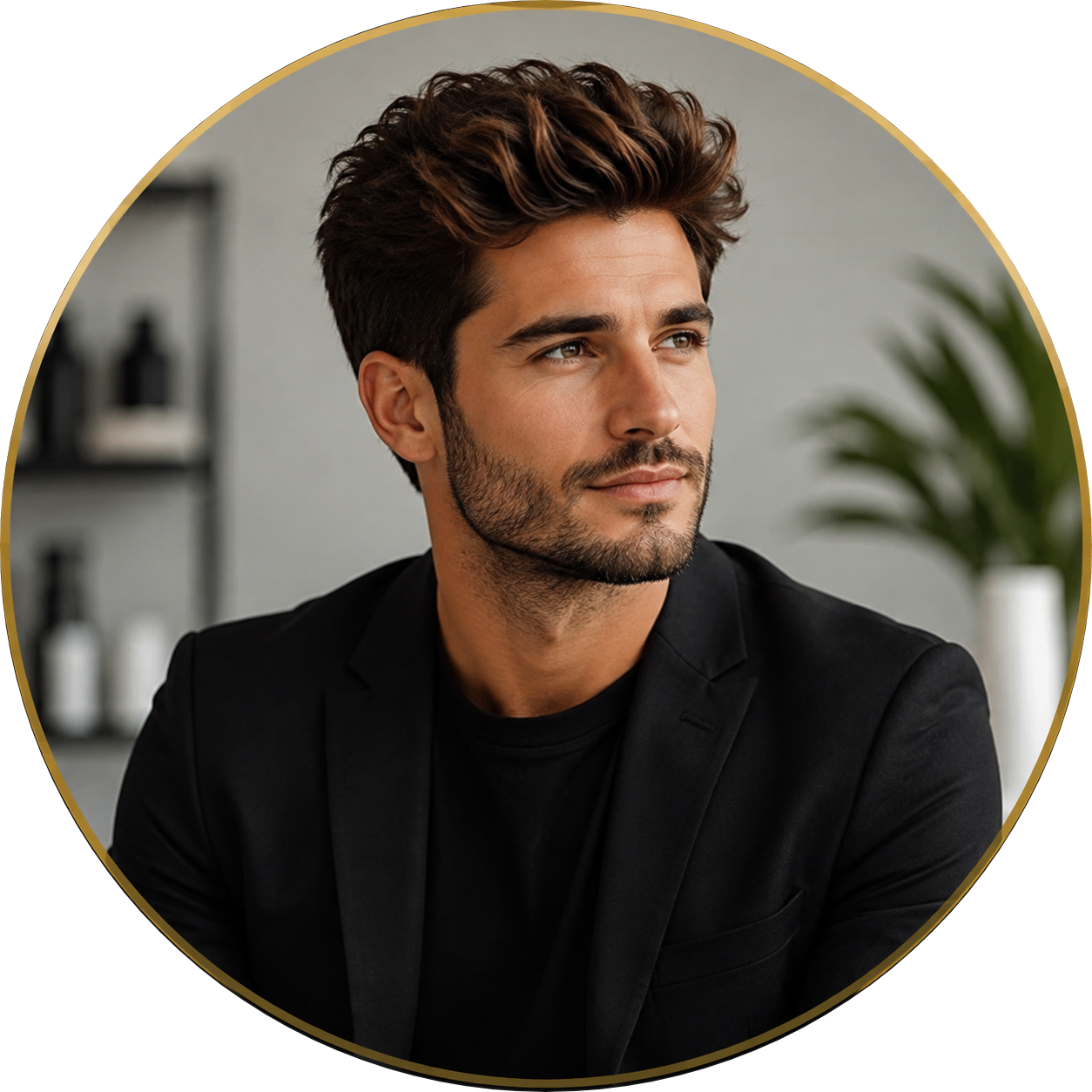
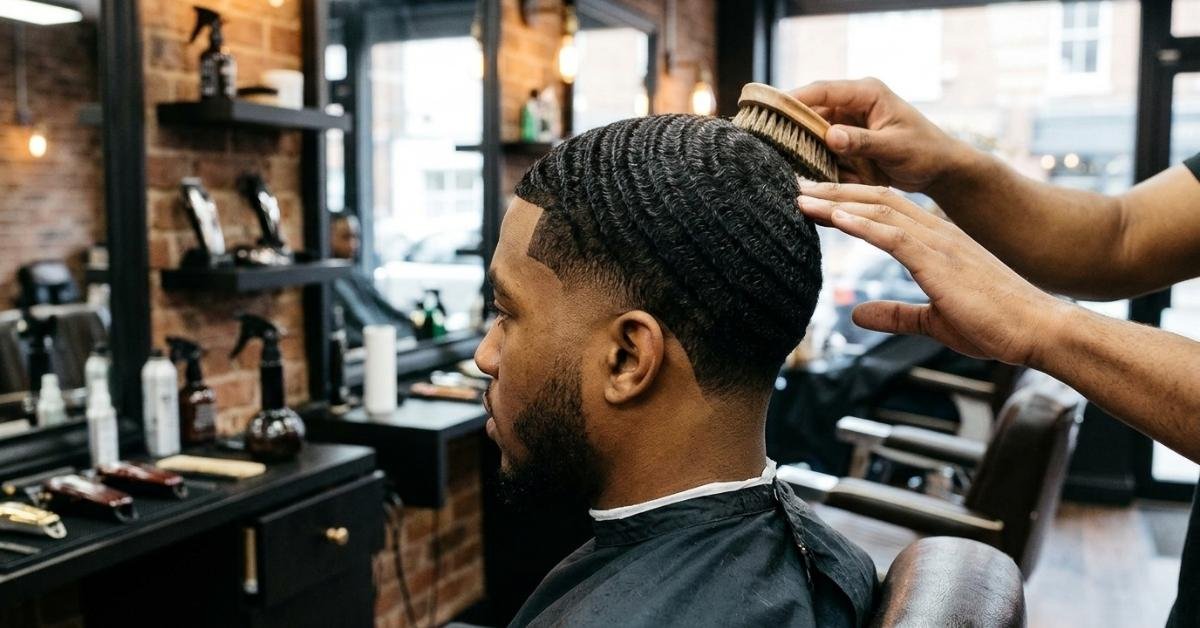
Got natural waves and want a cleaner cut without losing them? You are not alone. Many men worry that a fade will make waves look flat, or that the sides will look too harsh.A wavy hair burst fade solves both problems.
The sides fade out in a curve around the ear, while your waves stay full on top and at the back. Below you will find 21 styles, plus face shape advice, hair type tips, products, and a simple barber script.
Quick Answer
A wavy hair burst fade is a burst fade haircut where the sides fade in a semicircle around the ear. The top keeps its natural waves and length. The most popular options are the low burst fade, the mid burst fade, and the textured crop. Book your barber every 2 to 3 weeks and style with sea salt spray or curl cream.
What Is a Wavy Hair Burst Fade?
A burst fade is a fade haircut that curves around the ear instead of running straight across the head. The hair behind the ear and at the nape stays longer, so the shape looks like a small burst or arc.
On wavy hair, this works well because the fade removes bulk from the sides. Your waves get room to move on top, and the cut still looks neat. Think of it as a frame, with your hair texture as the picture.
Burst Fade vs Taper Fade vs Drop Fade
Men often mix these up, so here is a quick comparison.
| Fade Type | Shape | Back and Nape | Best Feature |
| Burst Fade | Curves around the ear | Stays longer | Pairs with mullets and long waves |
| Taper Fade | Gradual shortening at sideburns and neckline | Tapered | Subtle and professional |
| Drop Fade | Arcs down behind the ear | Fades low | Dramatic curve line |
Pick a burst fade if you want length at the back. Pick a taper if you want a quiet, office-safe finish.
21 Modern Wavy Hair Burst Fade Styles
Each style below includes who it suits and one styling tip. Use them as a starting point, then adjust with your barber.
1. Classic Wavy Hair Burst Fade

This is the standard version. The fade curves around the ear, and the top keeps about 3 to 4 inches of waves. It looks balanced and easy to live with.
Best for: first-timers. Work a little curl cream through damp hair and let it dry naturally.
2. Low Burst Fade with Natural Waves

The fade starts low, near the ear and the neckline. The contrast is soft, so it suits conservative workplaces.
Best for: fine to medium waves and men who want subtle change. Use a leave-in conditioner and skip heavy products.
3. Mid Wavy Burst Fade
Here the fade begins around the temple level. It gives more contrast and a sharper outline than the low version.
Best for: oval and square faces. A pea-sized amount of matte clay adds definition without shine.
4. High Burst Fade with Wavy Top

The fade starts high on the head, often down to the skin. Waves on top look fuller because the sides are so tight.
Best for: men who like bold contrast. Expect more frequent barber visits, since a skin fade grows out fast.
5. Textured Crop Wavy Burst Fade
The top is cut short, around 1 to 2 inches, with choppy layers. The fringe sits forward, and the burst fade keeps the sides clean.
Best for: fine waves and busy mornings. Add a little texture powder and you are done.
6. Messy Wavy Burst Fade
This one is loose, tousled, and relaxed. Waves are scrunched rather than combed.
Best for: casual, creative styles. Spray sea salt spray on damp hair, scrunch, and leave it alone.
7. Wavy Burst Fade with Fringe
Waves fall forward across the forehead in a soft fringe. The burst fade keeps the back and sides neat.
Best for: high foreheads and diamond or heart faces. Dry the fringe forward with your fingers to set the direction.
8. Side-Part Wavy Burst Fade
A clean side part gives waves a polished flow. The fade adds sharpness around the ears.
Best for: interviews, offices, and events. Comb through a light water-based pomade for control.
9. Wavy Burst Fade with Beard
The curve of the fade can blend into the sideburns and then into a trimmed beard. When done right, it looks like one connected shape.
Best for: men who want extra jaw definition. Tell your barber to blend the beard and fade together, and keep the neck line tidy.
10. Faux Hawk Wavy Burst Fade
Sides stay tight, and the center ridge is pushed upward. Natural waves add movement that straight hair cannot fake.
Best for: oval faces and confident dressers. Push clay from front to back and let the waves finish the job.
11. Wavy Burst Fade Mullet
Short top, tight sides, and longer waves at the back. The burst fade works well here because it leaves the nape length alone.
Best for: men who want a modern mullet. Leave extra length, since wavy hair shrinks as it dries.
12. Slicked-Back Wavy Burst Fade
Waves are combed back for a clean, sleek shape. The fade gives crisp edges on the sides.
Best for: evening wear and formal looks. You need around 4 inches on top, and heavy gel will flatten your waves, so keep the hold light.
13. Long Wavy Burst Fade
The top reaches the eyes or ears, and the sides stay tight. The contrast looks dramatic and very current.
Best for: men growing out their hair. Moisturize often and get regular trims to avoid split ends.
14. Short Wavy Burst Fade
Waves are kept around 1.5 to 2 inches, and the sides are clean. It is practical and quick.
Best for: gym lovers and hot weather. Wash, towel-dry, add a touch of cream, and go.
15. French Crop Wavy Burst Fade
A short horizontal fringe sits over a textured top. The burst fade gives a sharp outline.
Best for: men with a high or slightly receding hairline. The forward fringe helps soften the forehead area.
16. Curly-Wavy Burst Fade
For hair between 2C waves and loose curls, this keeps the curl pattern on top and trims the bulk on the sides.
Best for: mixed textures. Ask for a dry cut, so your barber can see how your hair really springs back.
17. Brush-Up Wavy Burst Fade
The top is brushed upward and slightly back, creating lift. Waves add natural body to the shape.
Best for: medium to thick hair. Blow-dry upward and finish with matte clay.
18. Modern Pompadour Wavy Burst Fade
Volume sweeps up at the front while the sides stay short. Waves give a relaxed, less stiff pompadour.
Best for: square and oval faces. Keep 4 to 5 inches at the front and use a medium-hold paste.
19. Textured Quiff Wavy Burst Fade
The front lifts into a loose quiff with visible texture. It is softer and less formal than a pompadour.
Best for: men who like volume without effort. Apply salt spray, blow-dry, then lightly shape with your fingers.
20. Comb-Over Wavy Burst Fade
Hair is swept across from a deep side part. The tight burst fade creates strong contrast.
Best for: work and weddings. Use a comb and a light cream so the waves stay soft.
21. Modern Natural Wavy Burst Fade
The top is left to fall as it grows, with very little product. The fade does the framing.
Best for: low-effort mornings. Use leave-in conditioner and air-dry.
Why the Wavy Hair Burst Fade Is Trending in 2026
More men now work with their natural hair instead of fighting it. A burst fade supports that trend, because it keeps waves on show and trims only what looks bulky.
It also pairs easily with other popular shapes, such as mullets, quiffs, and crops. Barbers share these cuts on Instagram and TikTok, so clients arrive with clear reference photos.
Who Should Get a Wavy Hair Burst Fade?
This cut suits men who like a clean outline and a bit of attitude. It works for students, creatives, and professionals who can style hair a little.
It is also a great choice if you:
- Have natural waves with enough length on top
- Want less bulk around the ears
- Enjoy trying new looks without a big commitment
Who Should Avoid It?
Skip it if you want a zero-maintenance cut. The fade lines soften within a few weeks, so you need regular visits.
You may also want a gentler option if you have very thin hair on top, or if you have a sensitive scalp. Strong contrast can make thin areas more visible, and a close fade shows the skin underneath.
Best Face Shapes for a Wavy Hair Burst Fade
Your face shape decides how much height, width, and fringe you need. Use these as guidelines, not strict rules.
Oval Face
Oval faces carry almost every version. A mid burst fade with a textured top is a safe, flattering choice.
Square Face
Soften the strong jaw with waves on top. A quiff or side part looks sharp without feeling too hard.
Diamond Face
A fringe balances wide cheekbones. Choose a low or mid fade so the sides do not look too narrow.
Heart Face
Go for a side-swept fringe and a low burst fade. This keeps the forehead and chin in balance.
Round Face
Add height on top with a pompadour, brush-up, or faux hawk. A high or mid fade helps slim the sides.
Oblong Face
Avoid too much height. Choose a fringe or a short crop, and keep the sides moderate.
Best Hair Types for a Wavy Hair Burst Fade
Not all waves behave the same. Here is how each type works with this cut.
Medium Wavy Hair
This is the easiest to style. Medium waves hold shape well, so almost every style on this list works.
Fine Wavy Hair
Fine waves can fall flat, so choose a textured crop or a short top. Add volume with light mousse or sea salt spray.
Coarse Wavy Hair
Coarse hair is strong and can look puffy. Use a cream or leave-in conditioner for softness, and ask for the weight on the sides to be removed.
Loose Waves
Loose, S-shaped waves suit longer tops, side parts, and slicked-back looks. They stretch longer when wet, so allow for shrinkage.
Strong Waves
Tighter waves or soft curls look great with a curly-wavy burst fade. A curl cream keeps them defined and controls frizz.
How Much Length to Leave on Top
Most wavy styles need at least 2 to 3 inches to show the wave. For pompadours, quiffs, and slick-backs, aim for 4 inches or more.
Wavy hair shrinks as it dries, so a 4-inch wet length can look like 2 inches dry. Tell your barber how long you want it to look, not only how long it measures.
Wavy Hair Burst Fade Maintenance Guide
A burst fade is easy to wear but needs regular care. Small habits keep the shape sharp.
Trimming Schedule
- Every 2 to 3 weeks for most burst fades
- Every 1 to 2 weeks for a high or skin-close fade
- Every 4 to 5 weeks for a soft, low fade
Trim the top every 6 to 8 weeks, or when the shape starts to lose balance. Ask for a quick neckline cleanup between full haircuts.
Daily Routine
- Wash with a gentle shampoo and condition after.
- Pat dry with a towel. Do not rub.
- Apply cream, mousse, or salt spray on damp hair.
- Air-dry or use a diffuser on low heat.
- Finish with clay or powder only if you need hold.
Wavy Hair Burst Fade Styling Tips
- Style on damp hair, because waves set better as they dry.
- Use less product than you think you need.
- Scrunch for texture, comb for polish.
- Avoid brushing dry waves, which can cause frizz.
- Use a blow dryer on a cool or low setting.
Best Products for a Wavy Hair Burst Fade
- Sea salt spray: adds grit and beachy texture.
- Curl cream: defines waves and cuts frizz.
- Light mousse: gives volume to fine hair.
- Matte clay: adds hold without shine.
- Texture powder: lifts the roots on short tops.
- Leave-in conditioner: keeps coarse waves soft.
Skip heavy wax and strong gel. They weigh waves down and can make the cut look greasy.
What to Tell Your Barber
Walk in prepared, and the result will be much closer to your idea. Say this:
- “I want a burst fade that curves around the ear.”
- “Please keep it low, mid, or high.” (Pick one.)
- “Leave 3 inches on top, and remember my waves shrink.”
- “Keep the length at the nape,” or “taper the back.”
- “Can you show me how to style it?”
Bring two or three photos. Pictures remove most of the guesswork.
Pros and Cons of a Wavy Hair Burst Fade
Pros
- Shows off natural waves
- Reduces bulk around the ears
- Works with many tops, from crops to mullets
- Looks modern and neat
Cons
- Needs regular barber visits
- Can look uneven if the fade grows out
- Takes some product know-how
- May not suit very thin hair on top
Common Wavy Hair Burst Fade Mistakes
- Cutting the top too short and losing the wave
- Ignoring shrinkage when choosing length
- Using heavy wax or gel
- Skipping trims for too long
- Choosing a high fade when a low fade suits your face better
- Brushing dry waves, which leads to frizz
Conclusion
A wavy hair burst fade gives you the best of both worlds. You get clean sides and a shaped outline, but your natural waves stay in charge. Pick a fade height that fits your face, keep enough length on top, and match the style to your daily routine.
Which style from the list would you try first? Drop it in the comments, and share this guide with a friend who is thinking about a new cut.
FAQs
What is a wavy hair burst fade?
It is a haircut where the sides fade in a curve around the ear, while the wavy top and back stay longer.
How often should I get a burst fade trim?
Most men need a trim every 2 to 3 weeks. High or skin fades may need a visit every 1 to 2 weeks.
Is a burst fade good for wavy hair?
Yes. It removes side bulk and lets waves show on top.
How long should wavy hair be for a burst fade?
Leave at least 2 to 3 inches on top. Go longer for quiffs, pompadours, and slick-backs.
Which products work best for wavy burst fades?
Sea salt spray, curl cream, light mousse, and matte clay work best. Avoid heavy gel and wax.
Can I get a burst fade with a beard?
Yes. Ask your barber to blend the fade into your sideburns and beard for a connected look.
What is the difference between a burst fade and a taper fade?
A burst fade curves around the ear, while a taper fade shortens gradually along the sideburns and neckline.
Does a burst fade suit round faces?
Yes. Add height on top and choose a mid or high fade to slim the sides.