
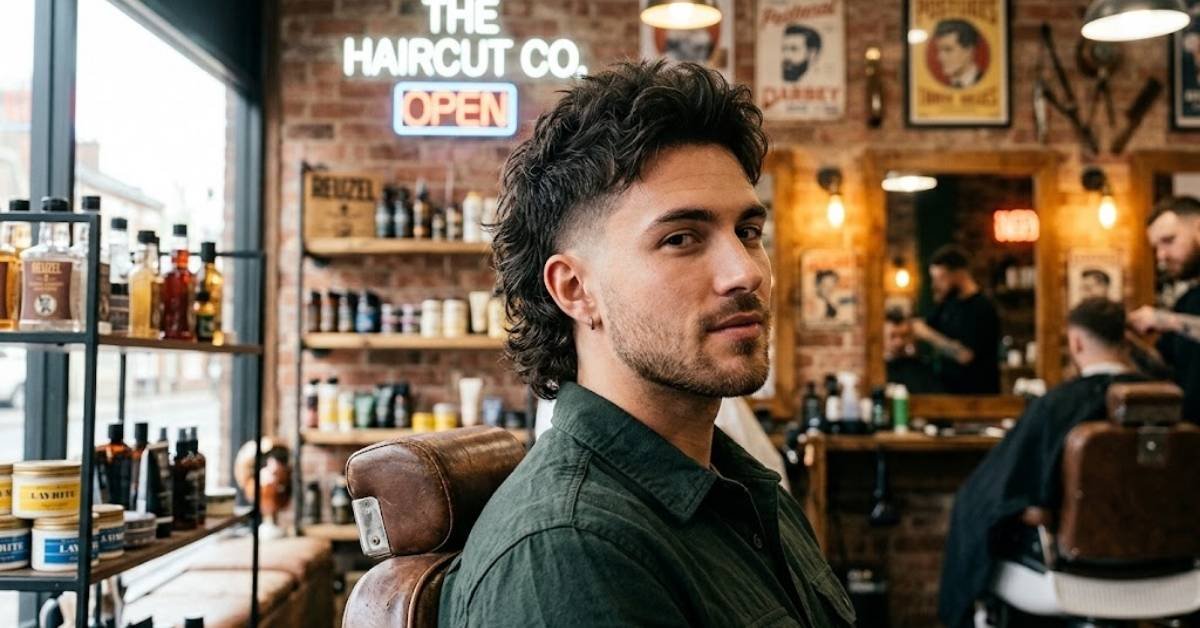
Most haircuts force a choice between “safe and professional” or “bold and expressive.” The low taper mullet skips that trade off. It keeps the sides neat enough for an office, a wedding, or a job interview, while the back still carries the length and movement that made the mullet a cultural icon in the first place. That balance is exactly why it has become one of the most requested cuts at barbershops heading into 2026.
This guide breaks down what a low taper mullet actually is, how to match it to your face shape and hair type, fifteen ways to wear it, and how to keep it looking sharp between visits. Whether you’re walking into a barbershop for the first time or trying to fine-tune a cut you already have, you’ll find a clear starting point below.
What Is a Low Taper Mullet
A low taper mullet is a haircut where the fade begins low, right around the ear and neckline, and gradually blends upward into a longer, layered section at the back. Unlike a mid or high taper, the clipper work stays close to the hairline, so more natural hair is preserved along the sides. The top usually carries some texture or length for styling, and the back is left long enough to create the signature mullet silhouette without looking unfinished.
From the front, a low taper mullet looks clean, almost like a standard short haircut. It’s only from the side or back that the longer, flowing section becomes visible. That contrast is the whole appeal: one angle reads as tidy and professional, the other reads as confident and a little rebellious.
Compared to the shaggy, undefined mullets of the past, the low taper version relies on clean blending. There’s no harsh line between short and long, just a smooth gradient that a skilled barber builds with a few clipper guards and some scissor work. This is also what separates it from a fade mullet or a burst fade mullet, where the taper is either sharper or shaped around the ear in a curve rather than a straight blend.
Face Shape and Hair Type Guide
Not every version of this haircut suits every face or texture equally. Use this table as a starting point, then let your barber adjust the details in person.
| Face Shape or Hair Type | Good Starting Option | Why It Works |
| Round face | Low taper mullet with added height on top | Creates vertical lines that balance width |
| Square face | Low taper fade with softer temple blending | Softens strong jaw and temple angles |
| Oval face | Nearly any low taper mullet variation | Proportions already balance most styles |
| Long face | Low taper mullet with a fringe or textured top | Adds width and breaks up length |
| Fine or thin hair | Low taper mullet fade | Extra contrast makes hair look fuller |
| Thick hair | Taper mullet fade with thinning at the back | Removes bulk without losing length |
| Straight hair | Low taper mullet straight hair version | Falls naturally with minimal styling |
| Wavy hair | Low taper mullet wavy hair version | Texture adds shape without extra product |
| Curly hair | Low taper mullet curly hair version | Curl pattern stays intact once sides are trimmed |
If you’re unsure which category you fall into, describe your hair texture and face shape to your barber before the cut starts. A few extra minutes of conversation usually prevents a haircut you’ll want to fix in two weeks.
Variations
1) Low Taper Mullet (Baseline)
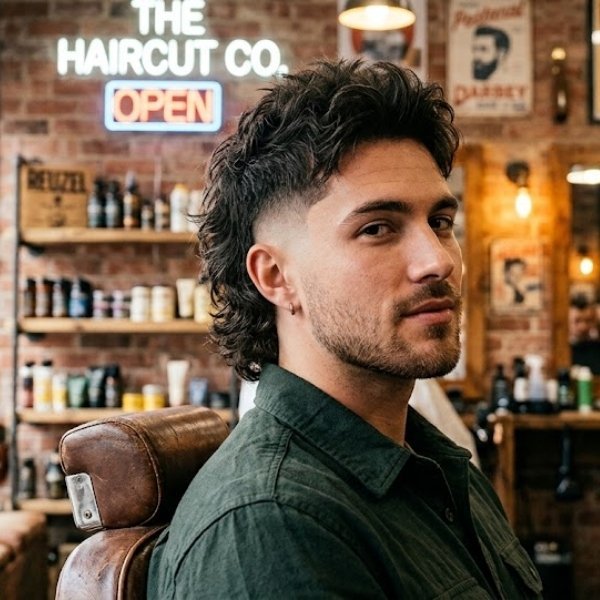
This is the version to start with if the style is new to you. The baseline low taper mullet uses a gentle taper at the ear and neckline, a lightly textured top, and a layered back that falls near the collar. Ask for soft layers through the back so the ends move naturally instead of sitting stiff. It’s forgiving, easy for a barber to execute, and works as a foundation you can build other variations from later.
2) Low Taper Mullet Fade
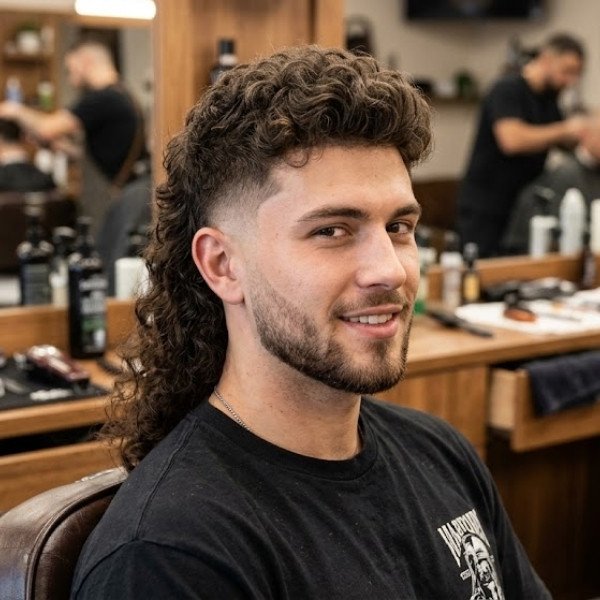
Here the taper is blended into more of a true fade, meaning the transition from skin to hair is smoother and slightly more pronounced near the neckline. The top keeps its length, and the back stays layered. This version reads a bit sharper than the baseline cut and suits men who want more definition without going into mid or high fade territory.
3) Low Taper Mullet Straight Hair
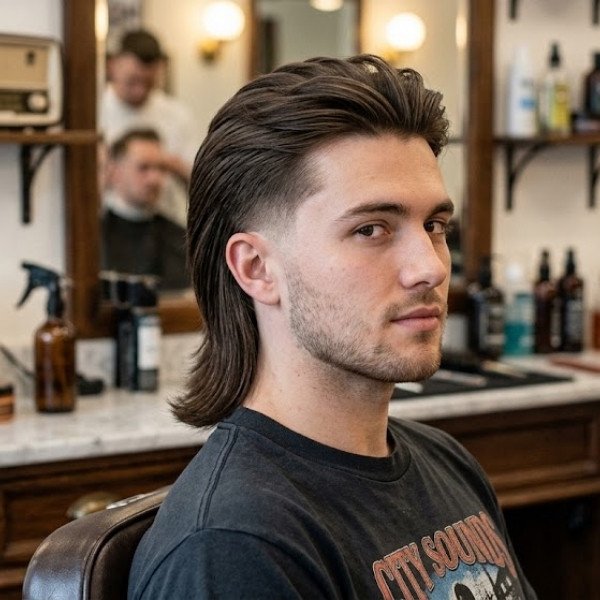
Straight hair shows every line clearly, which makes the low taper mullet look especially crisp on this texture. The back tends to fall flat rather than curl or flip, so ask your barber for slightly angled layers to prevent the ends from looking too blunt. A light pomade or texturizing spray adds just enough separation to keep it from looking flat.
4) Low Taper Mullet Curly Hair
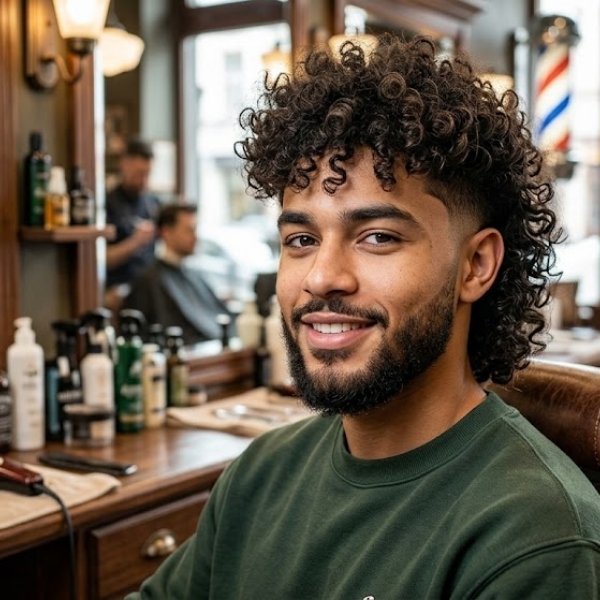
A low taper mullet curly hair version trims puff at the sides and keeps a soft, layered back so the curl pattern stays strong. Apply a small amount of curl cream and dry with a diffuser on low heat. This variation frames the face well and shows healthy movement, reading clean at work and relaxed on weekends without extra effort.
5) Low Taper Mullet Wavy Hair
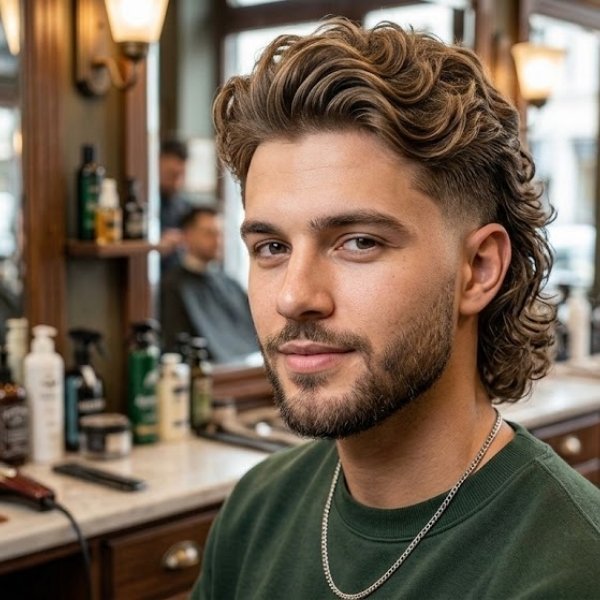
Wavy hair sits in a sweet spot between straight and curly, and this cut takes advantage of that. The taper stays low and tight, while the back is left long enough for natural waves to show through. A sea salt spray enhances the texture without weighing it down, and minimal drying is needed since the waves do most of the styling work on their own.
6) Modern Mullet Taper Fade
This version leans into current trends by combining a cleaner fade with a more structured top, often styled with a side part or slight quiff. It’s a step up in polish from the baseline cut and photographs well, which is part of why it shows up so often in barber portfolios and on social media in 2026.
7) Taper Mullet Fade
Similar to the modern mullet taper fade but with a slightly less dramatic top, this variation keeps the emphasis on the back length and the smoothness of the fade itself. It’s a good middle ground for men who want the mullet silhouette to do the talking rather than an elaborate top style.
8) Mid Taper Mullet
Technically a step above a true low taper, the mid taper mullet starts its blend a bit higher on the head. It’s worth mentioning here because many men ask for a “low taper” and end up with this instead. The mid version removes more hair from the sides, which suits thicker hair or a rounder face that benefits from extra tapering.
9) High Taper Mullet
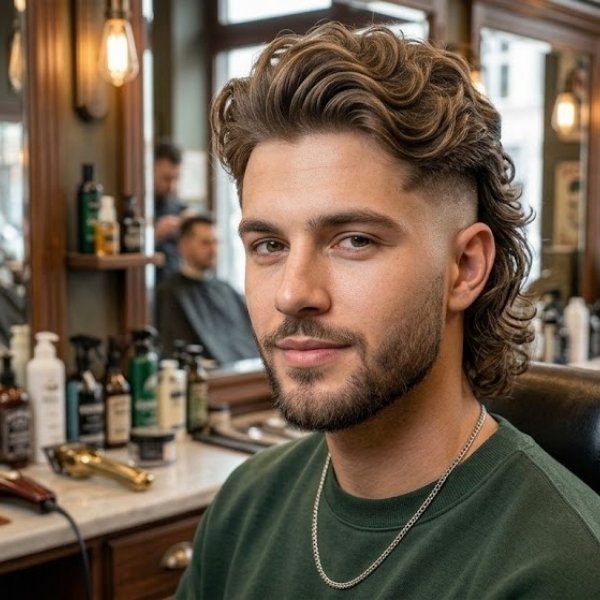
At the opposite end of the spectrum, the high taper mullet fades starting well above the ear, creating a much bolder contrast between the short sides and the long back. It’s the most attention-grabbing option on this list and works well for men who already wear shorter, edgier cuts and want the mullet element without softening the overall look.
10) Tapered Mullet
Used as a general term, a tapered mullet simply refers to any mullet with a gradual blend rather than a hard fade line. If you want flexibility and don’t want to commit to a specific guard height, describing your cut this way to a barber leaves room for them to recommend the best taper level for your hair.
11) Short Low Taper Mullet
For men who want the shape without a dramatic length difference, the short low taper mullet keeps the back only slightly longer than the top, often just past the collar rather than well beyond it. It’s more subtle, easier to maintain, and a smart entry point for anyone nervous about growing out a longer mullet.
12) Low Taper Mullet Middle Part
A middle part splits the top down the center and creates a soft, even flow on both sides. It works best with straight or lightly wavy hair, where both sides fall symmetrically. The low taper keeps the sides snug while the back holds its layered shape. This version pairs naturally with casual outfits like clean sneakers and relaxed fits. Ask for soft layers so both sides move the same way.
13) Low Taper Mullet Flow
Built for hair that’s grown out a little longer on top, this version emphasizes movement over structure. The top is left long enough to swoop back or to the side, and the back flows into it without a visible break. It requires slightly more hair length overall but rewards you with one of the most natural-looking versions of the cut.
14) Men’s Low Taper Mullet
This isn’t a separate technical variation so much as the general search term most men use when describing the style to a barber or browsing for inspiration. If you use this phrase, be ready to clarify hair type, desired back length, and how sharp you want the fade, since “men’s low taper mullet” can describe several of the styles above.
15) Low Taper Mullet Fade for Wavy, Curly, Straight
This is the universal version, tuned to your hair type rather than locked into one specific approach. For straight hair, add layers. For curly hair, use soft thinning through the back. For wavy hair, light shaping is usually enough on its own. The low taper mullet fade stays neat with a quick blow-dry and a small amount of product, regardless of texture.
How to Style in Three Steps
- Prep damp hair. Towel dry until hair is damp, not wet. Product distributes more evenly and holds longer this way, and heat styling tools work more efficiently on partially dry hair.
- Apply the right product for your texture. Use a lightweight sea salt spray for wavy hair, a matte clay or pomade for straight hair, and a curl cream with a diffuser for curly hair. A dime-sized amount is usually enough.
- Shape the top, then set the back. Direct the top with your fingers or a comb toward your preferred part or flow, then lightly scrunch or comb the back so the layers sit naturally rather than flat against the neck.
Barber Instructions
Clear communication is the single biggest factor in whether this haircut turns out right. Bring a reference photo, but also describe the cut in words so there’s no ambiguity. A useful script:
“I’d like a low taper mullet. Keep the fade low, starting about an inch above my ear, using a number one guard blending up to a number three. Leave the top around three to four inches for texture, and keep the back long, around five to six inches, with soft layering rather than a blunt line.”
A few extra details that make a real difference:
- Ask for a rounded or slightly tapered neckline rather than a squared one. It grows out far more evenly.
- Mention if you want the back point-cut or thinned, especially if your hair is thick, so the ends don’t look heavy.
- If you have curly or wavy hair, ask the barber to cut it dry at least for the final pass, since curl pattern changes the way length falls once hair dries.
Care and Upkeep
How often you need a trim depends on which part of the cut you’re focused on, since the sides and the back grow at different visible rates.
- Fade or taper touch-up: every three to four weeks. This is the part that grows out fastest and most noticeably.
- Back and top length: every six to eight weeks, or longer if you’re actively growing it out.
- Neckline cleanup: can often be handled at home with a trimmer between barber visits if you’re comfortable doing it yourself.
Between appointments, wash with a moisturizing shampoo two to three times a week rather than daily, since over-washing strips the natural oils that help the longer back hair stay manageable. If you color or lighten any part of the cut, use a color-safe shampoo and a leave-in conditioner to prevent the ends from becoming brittle. A neckline that’s shaped rather than squared off will also stay presentable noticeably longer between trims, which matters if your schedule doesn’t allow for frequent barber visits.
FAQs
What is a low taper mullet?
A low taper mullet is a haircut with a gentle fade starting near the ear and neckline that blends into a longer, layered section at the back, combining a clean side profile with mullet-style length.
Is a mullet good for work?
Yes, when it’s a low taper version. The clean, tapered sides read as professional from the front, while the longer back stays out of the way in most office environments.
How often should I trim a taper mullet?
Plan on a fade touch-up every three to four weeks, with the back and top trimmed less often, roughly every six to eight weeks, depending on how much length you want to keep.
What’s the difference between a low taper mullet vs fade mullet?
A low taper mullet blends gradually starting near the ear, while a fade mullet typically involves a sharper, more defined transition that can start at a similar height but contrasts more strongly.
Can I style a low taper mullet at home?
Yes. With the right product for your hair texture, a comb, and a couple of minutes, most versions of this cut are easy to style without professional tools or training.
Conclusion
The low taper mullet earns its popularity because it doesn’t ask you to compromise. The sides stay sharp enough for a boardroom, the back keeps enough length to feel distinctive, and the range of variations means there’s a version suited to straight, wavy, curly, thick, or fine hair. Whether you start with the baseline cut or go straight for a bolder fade or flow style, the key is clear communication with your barber and a realistic trim schedule that matches your hair’s growth. Get those two things right, and this is one haircut that genuinely works as hard as it looks.