
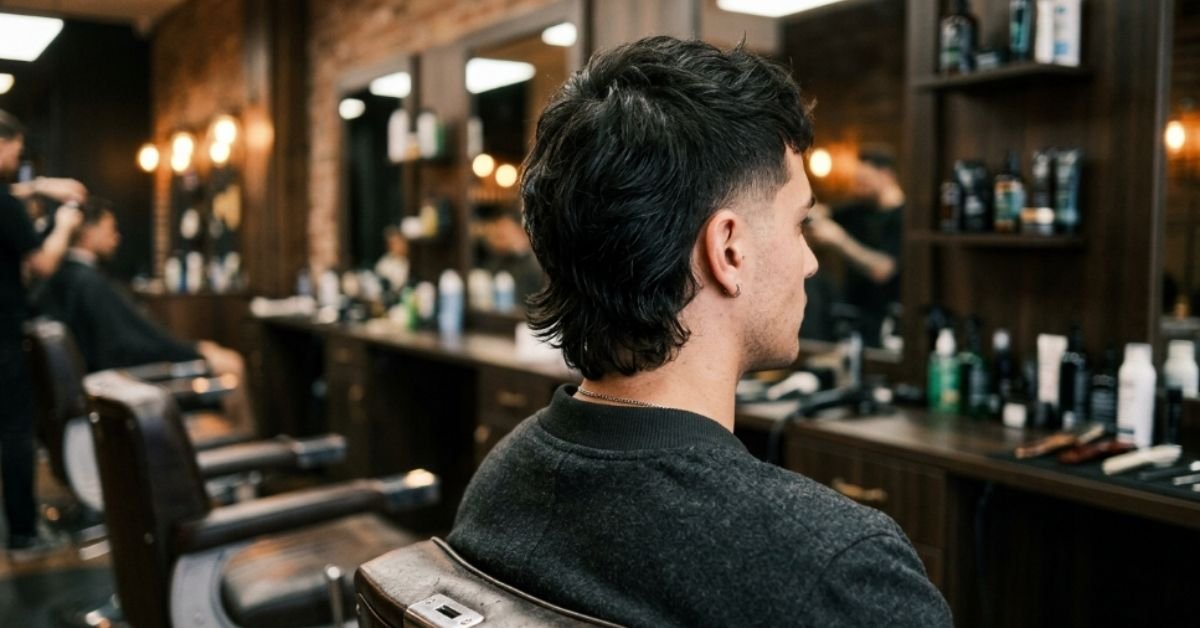
Most haircuts force a choice: buttoned-up and safe, or bold and hard to maintain. The low taper mullet skips that trade-off entirely. It keeps the sides short and tidy while letting the back grow into a relaxed, expressive length, so the same cut works in a client meeting and at a weekend show. This guide breaks down what a low taper mullet actually is, how to match it to your face shape and hair type, 15 variations worth asking for, and exactly how to style and maintain it so it looks intentional every day, not just on haircut day.
What Is a Low Taper Mullet
A low taper mullet is a haircut where the fade starts low, right around the ear and neckline, and gradually blends into longer, layered hair at the crown and back. Because the taper begins lower than a mid or high fade, more hair stays on the sides, which gives the style a fuller, softer finish instead of a sharp, high-contrast look.
From the front, a low taper mullet reads clean and structured, almost like a standard business cut. Turn to the side or back, though, and the layered length takes over, curling past the collar or sitting in a soft, feathered shape. That contrast between the tidy front and the relaxed back is the entire appeal of the style.
Compared to a traditional 1980s mullet, the low taper mullet is far easier to wear day to day. The gradual blend removes the harsh line that made older mullets look dated, and the shorter taper zone means less upkeep between barber visits. It also grows out cleanly, so you are not stuck with an awkward in-between stage the way you would be with a high or skin fade.
Face Shape and Hair Type Guide
Not every low taper mullet variation flatters every face or every hair texture the same way. Use this table as a starting point before you sit in the barber’s chair.
| Face Shape or Hair Type | Recommended Starting Style | Why It Works |
| Round face | Modern mullet taper fade with added top height | Creates vertical lines that balance width |
| Square face | Low taper mullet with softer temple blending | Softens strong jaw and temple angles |
| Oval face | Low taper mullet (baseline) | Suits nearly any length or fade placement |
| Long face | Low taper mullet with shorter top | Avoids extra vertical length that stretches the face |
| Diamond face | Low taper mullet flow with side part | Balances a narrow forehead and chin |
| Fine or thin hair | Short low taper mullet with texturizing | Adds the illusion of density and movement |
| Thick hair | Taper mullet fade with debulking | Removes bulk so the shape sits flatter |
| Straight hair | Low taper mullet straight hair variation | Holds a crisp line with minimal effort |
| Wavy hair | Low taper mullet wavy hair variation | Waves add natural texture without extra product |
| Curly hair | Low taper mullet curly hair variation | Preserves curl pattern while controlling volume |
If your face and hair type point to two different recommendations, prioritize the hair type advice first. Texture affects daily styling far more than face shape does.
Variations
The low taper mullet is not one fixed haircut. It is a framework that barbers adjust for fade height, top length, texture, and hair type. Below are 15 variations worth knowing before your next appointment.
1) Low Taper Mullet (Baseline)
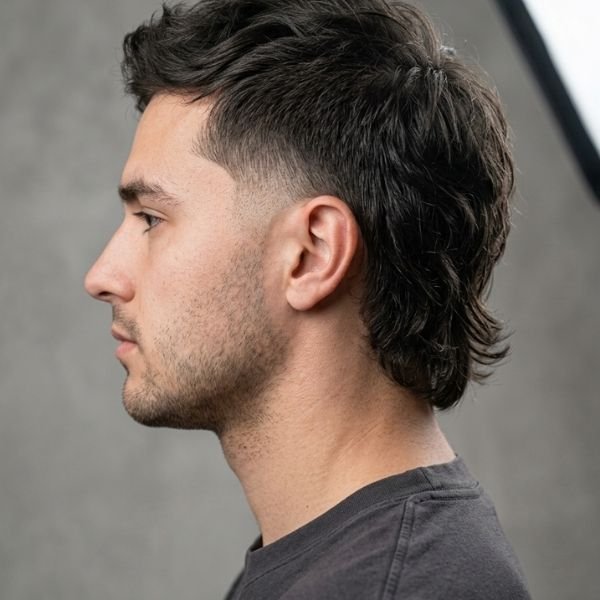
The baseline version is the standard most people mean when they simply say “low taper mullet.” The fade sits low near the ear, usually cut with a #2 or #3 guard, and blends into roughly five to six inches of length at the back. It suits nearly every face shape because the proportions stay moderate rather than extreme. Ask for a “low blend with medium mullet length” to land this exact look.
2) Low Taper Mullet Fade
This variation leans harder into the fade element, with a smoother, more gradual transition from skin or near-skin at the neckline up through the taper zone. The blend takes priority here, so the top and back length can vary while the fade itself stays razor clean. It photographs well and holds its shape between trims.
3) Low Taper Mullet Straight Hair
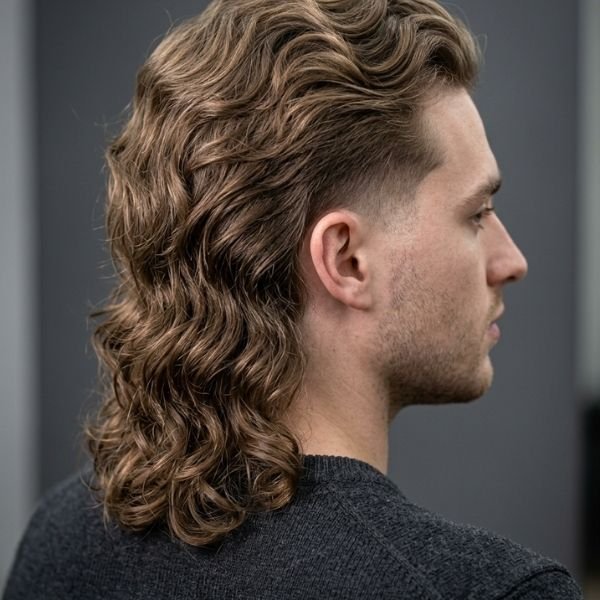
Straight hair holds sharp lines exceptionally well, which makes this variation look crisp with very little daily effort. The top is usually left slightly longer and lightly layered so it does not sit flat, while the taper stays tight and defined. A small amount of matte paste is often all that is needed to finish the look.
4) Low Taper Mullet Curly Hair
For curly hair, the goal is controlling volume at the sides without flattening the curl pattern on top. Barbers typically thin the back with soft layering rather than blunt cutting, which lets curls fall naturally instead of clumping. A diffuser on low heat with a curl cream helps define the pattern without frizz.
5) Low Taper Mullet Wavy Hair
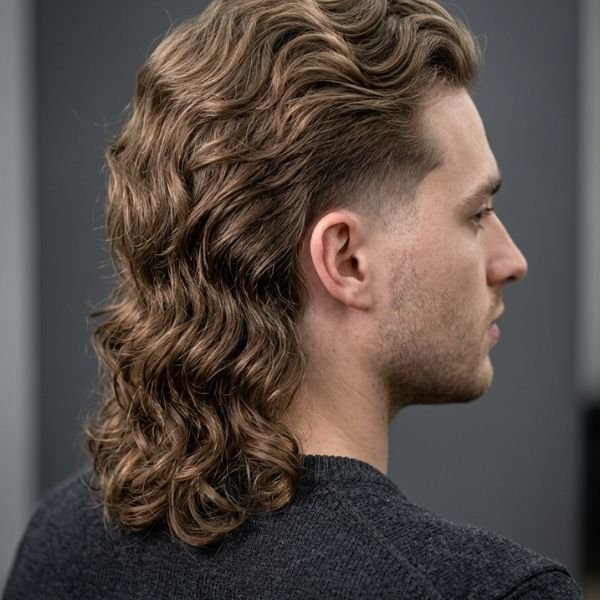
Wavy hair sits right between straight and curly, and this variation takes advantage of that by keeping styling minimal. Light shaping through the back is usually enough, since waves already provide texture and movement. Sea salt spray applied to damp hair enhances the natural wave without extra effort.
6) Modern Mullet Taper Fade
This is a more polished, contemporary take built around a sharper fade line combined with a longer, more deliberately styled top. It reads as a fashion-forward cut rather than a nod to retro mullets, making it a strong pick for anyone who wants the length payoff without the vintage association.
7) Taper Mullet Fade
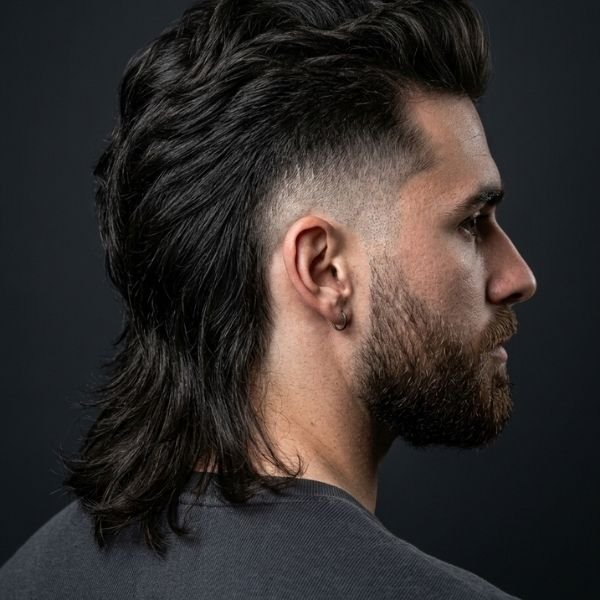
Slightly different from the low taper mullet fade above, this version lets the blend begin a touch higher, around mid-ear, which gives more visible contrast from the front while still keeping the length drop in back. It suits people who want a middle ground between subtle and bold.
8) Mid Taper Mullet
Moving the fade start point up to the middle of the side gives more definition and a slightly more dramatic look than the low taper. It works especially well with thicker hair, since it removes more bulk while still leaving enough length for a strong mullet shape at the back.
9) High Taper Mullet
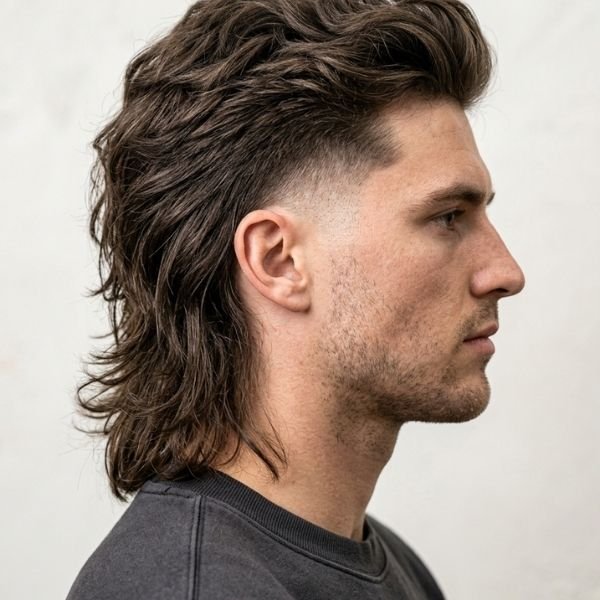
The high taper mullet raises the fade close to the temple, creating the boldest contrast in the family. This version demands more upkeep since new growth becomes visible faster, but it delivers the sharpest, most editorial look of any variation covered here.
10) Tapered Mullet
A broader, catch-all term for any mullet with a gradual taper instead of a blunt or clippers-over-comb finish on the sides. Barbers use this as a starting phrase when you are not sure which specific fade height you want yet, and they can narrow it down from there based on your preferences.
11) Short Low Taper Mullet
This variation trims the back length down significantly, so the mullet effect is subtle rather than dramatic. It is a good entry point for anyone nervous about committing to a longer back, or for workplaces with stricter grooming expectations.
12) Low Taper Mullet Middle Part
A center part on top creates a symmetrical, even flow on both sides, which pairs best with straight or lightly wavy hair. The low taper keeps the sides controlled while the back retains its layered shape. This version tends to suit a casual, off-duty aesthetic.
13) Low Taper Mullet Flow
Built for length and movement, this variation keeps the top longer and directs it backward or to the side in one continuous flow, blending seamlessly into the mullet at the back. It works well for people already growing their hair out who want a shape rather than a fresh short cut.
14) Men’s Low Taper Mullet
This is essentially the classic, no-frills version most commonly requested by men across age groups. It balances a professional-enough front profile with just enough personality at the back, making it one of the safest entry points into mullet culture.
15) Low Taper Mullet Fade for Wavy, Curly, Straight
Rather than locking into one texture, this approach adapts the same base cut to whatever hair type you have. Straight hair gets more layering for movement, curly hair gets soft thinning to manage volume, and wavy hair needs only light shaping. The result stays neat across textures with minimal daily styling.
How to Style in Three Steps
Styling a low taper mullet at home takes less time than most people expect once the cut is dialed in correctly.
- Start on towel-dried hair. Apply a dime-sized amount of light cream or sea salt spray, focusing on the top and back rather than the tapered sides.
- Rough dry with your fingers. Use a blow dryer on medium heat, lifting the roots at the crown for volume while letting the back fall naturally.
- Finish with a small amount of matte paste or clay. Work it through the top for texture and hold, then smooth the taper sides flat with your palm.
The whole process typically takes under five minutes once you know how much product your hair type needs.
Barber Instructions
Clear communication in the chair is the single biggest factor in getting a low taper mullet that actually matches what you pictured. Use language like this:
“I want a low taper mullet. Fade to skin or a #1 starting right at the bottom of my ear, blending up to a #3 within an inch. Keep the top around three to four inches and the back at five to six inches for mullet length. Don’t take much off the top, just clean up the shape. Blend the neckline low and natural, not squared off.”
A few additional tips before your appointment:
- Bring two or three reference photos: one front, one side, one back.
- Mention your hair type (straight, wavy, or curly) so the barber adjusts the layering technique.
- If you’re growing out a shorter cut, ask the barber to taper the sides low now and let the top and back grow out gradually over several visits.
- Specify whether you want a hard fade line or a soft, gradual blend, since this detail is easy to lose in translation.
Care and Upkeep
A low taper mullet is genuinely low maintenance compared to a full skin fade, but a few habits keep it looking sharp between visits.
- Trim the taper every two to three weeks. The sides grow out faster than the back and will look shaggy first if neglected.
- Trim the back every six to eight weeks. This maintains the layered shape without sacrificing the length that defines the style.
- Wash two to three times a week, not daily, to avoid stripping natural oils that help curly or wavy textures hold their shape.
- Use a diffuser for curly or wavy hair instead of a regular dryer nozzle, which can cause frizz and disrupt the curl pattern.
- Apply a lightweight leave-in conditioner to the back length if it starts to feel dry or brittle, since longer hair is more exposed to heat and friction.
- Book a shape-up appointment even during growth phases so the taper stays defined while the back fills out.
FAQs
What is a low taper mullet?
A low taper mullet is a haircut with a fade that starts near the ear and neckline, blending into longer, layered hair at the crown and back for a clean-front, longer-back shape.
Is a mullet good for work?
A low taper mullet is generally office-appropriate because the low, gradual fade keeps the front and sides polished, while only the back shows extra length.
How often should I trim a taper mullet?
Trim the taper every two to three weeks and the back length every six to eight weeks to keep the shape sharp without losing the mullet’s signature length.
What’s the difference between a low taper mullet vs fade mullet?
A low taper mullet blends gradually and keeps more hair on the sides, while a fade mullet (especially a high or skin fade) creates sharper contrast and shows more scalp.
Can I style a low taper mullet at home?
Yes, most versions need only a light cream or paste, a quick rough dry, and a few minutes of finger styling to look intentional every day.
Conclusion
The low taper mullet earns its popularity by solving a problem most bold haircuts create: it lets you keep length and personality at the back without sacrificing a clean, professional front. Whether you have straight, wavy, or curly hair, there’s a version of this cut built around your texture and face shape, from the understated short low taper mullet to the statement-making high taper mullet. Bring clear reference photos, use precise language with your barber, and stick to a simple trim schedule, and this style will stay sharp through every stage of growth in 2026 and beyond.