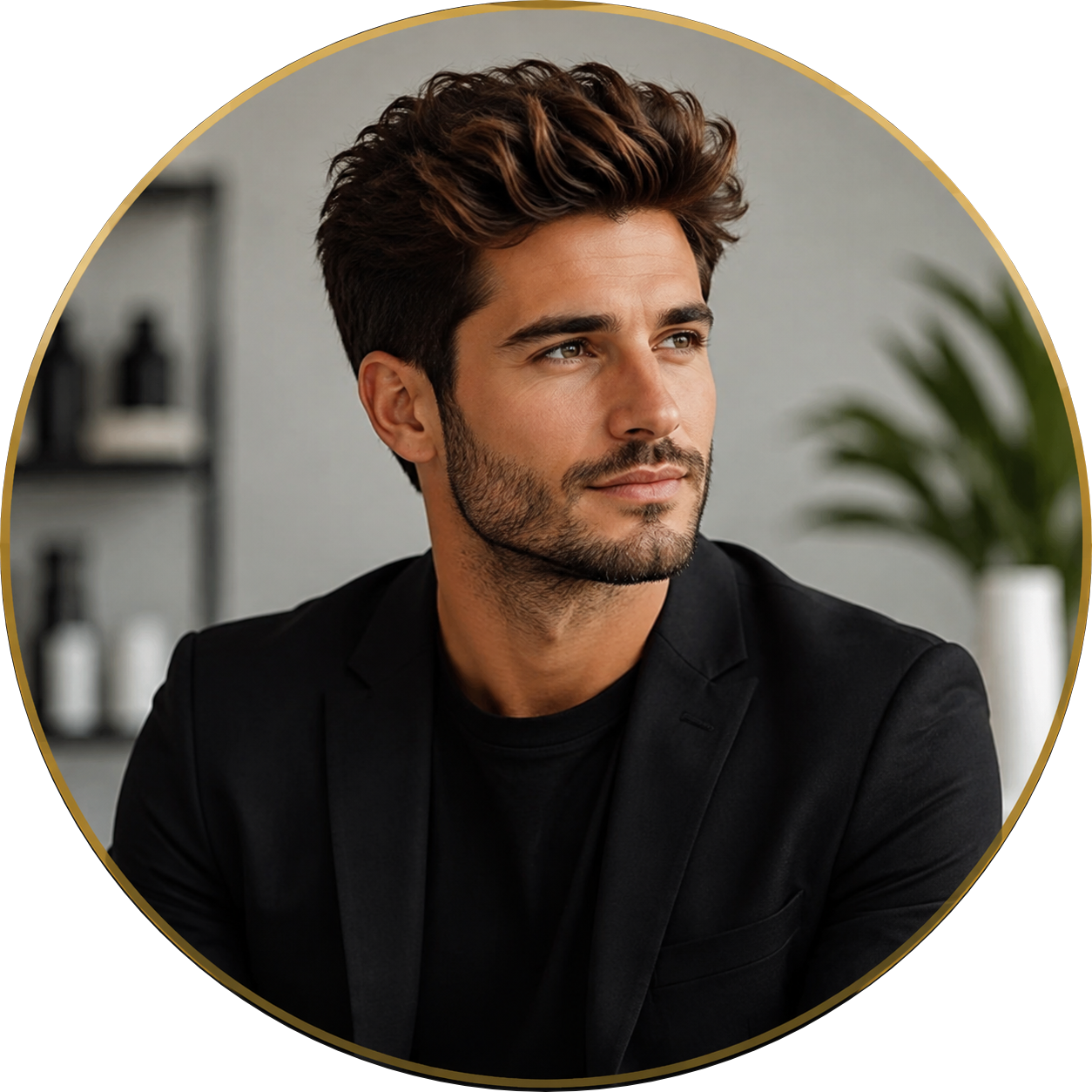
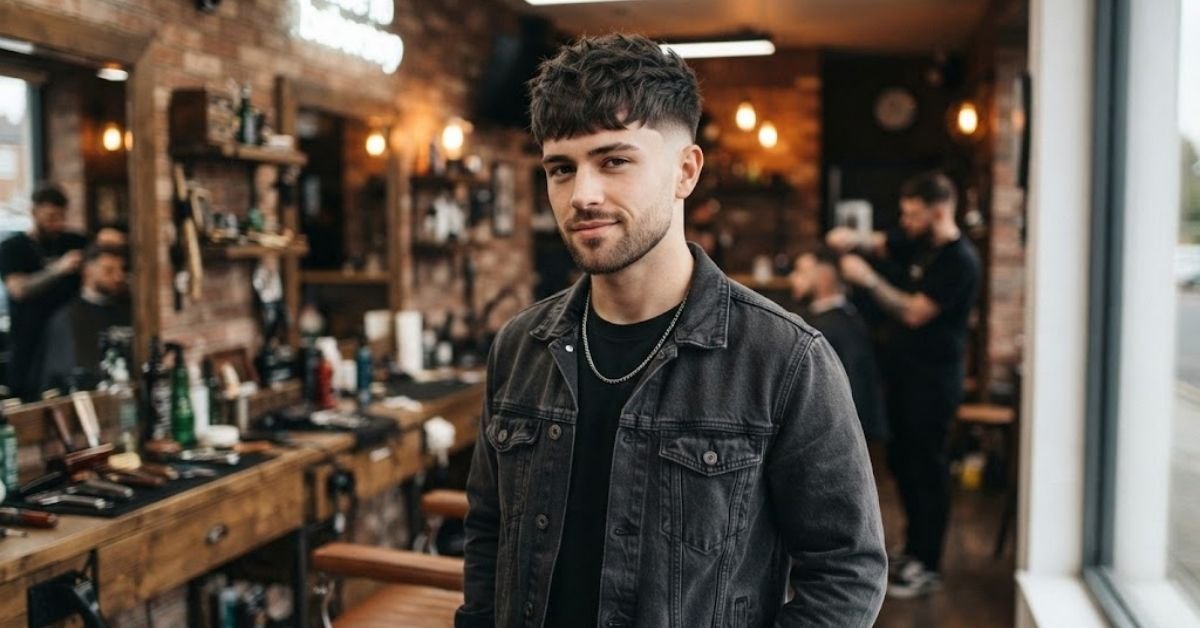
The low taper fade with textured fringe is one of the most requested men’s haircuts going into 2026, and it’s easy to see why. It takes the clean, controlled sides of a taper fade and pairs them with a soft, choppy fringe on top that falls naturally over the forehead. The result feels effortless, but there’s actual technique behind it.
If you’ve seen this cut on social media, in a barbershop lookbook, or on a friend who suddenly looks like they stepped out of a men’s fashion editorial, this guide breaks down exactly what it is, how it’s cut, how to style it yourself, and who it suits best.
What Is a Low Taper Fade Textured Fringe?
A low taper fade with textured fringe combines two separate barbering techniques into one cohesive style.
The low taper fade refers to how the sides and back are cut. Instead of fading high up near the temple, the taper starts low, close to the ears and the neckline. This keeps more hair on the sides than a mid or high fade, which makes the transition from short to long far smoother and less dramatic. There’s no sharp line where skin suddenly meets hair; it’s a gradual blend.
The textured fringe is the section left longer on top, usually between one and a half and three inches, and cut using techniques like point cutting or slide cutting. These methods remove weight from the hair without cutting it uniformly straight across, which is what gives the fringe its broken, piecey look instead of a flat, blunt edge.
Put together, you get a haircut that reads as tidy at the sides and relaxed on top, a combination that works across straight, wavy, and curly hair.
| Feature | Low Taper Fade | Mid or High Taper Fade |
| Fade starting point | Near the ears and neckline | Above the ears, near the temples |
| Scalp visibility | Minimal | Noticeable to high |
| Time between trims | Longer, since it grows out softly | Shorter, since contrast fades fast |
| Overall look | Subtle, natural | Bold, more attention grabbing |
Why This Style Became So Popular
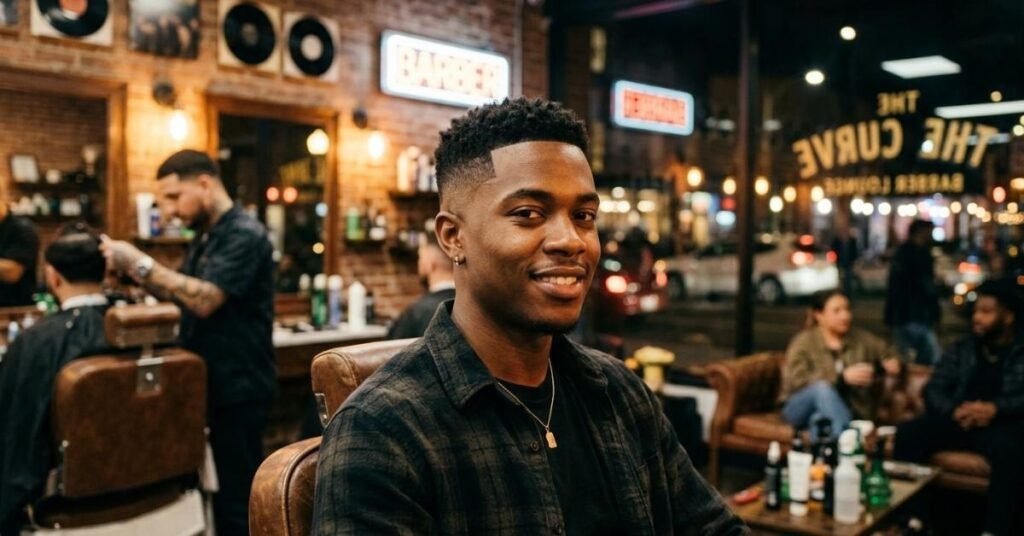
A few reasons explain why this cut has held its ground for several seasons rather than fading out as a short trend.
- It’s versatile. The low taper works with nearly every hair type and doesn’t demand a specific face shape to look good.
- It’s low commitment compared to a skin fade. Because the fade sits low, it grows out gently and doesn’t need weekly touch ups to still look sharp.
- It photographs well. The fringe adds movement and dimension, which shows up better in photos and on video than a flat, gelled-down top ever could.
- Barbers can customize it endlessly. The same base cut can look sporty, polished, or edgy depending on how the fringe is styled that day.
- It suits everyday life. Unlike styles that need constant restyling throughout the day, a well-cut textured fringe holds shape with minimal product and effort.
Social platforms accelerated the trend, but the reason it stuck is practical: it’s a haircut that looks intentional without looking overdone.
Variations of the Low Taper Fade with Textured Fringe
Not every low taper fade with textured fringe looks the same. Length, texture, and finish can all be adjusted depending on your hair type and the vibe you’re going for.
Short Textured Fringe
This version keeps the top around one to one and a half inches, giving a cropped, tidy shape that still has movement. It’s a strong choice for a first-time cut, for workplaces with a dress code, or for anyone who wants low daily upkeep.
Wavy Fringe with Low Taper
Natural waves are enhanced rather than fought against here. The barber cuts with the wave pattern in mind, so the fringe falls with soft, natural bends instead of sitting flat. A little sea salt spray brings out even more texture.
Curly Fringe Low Taper
Curly hair gets extra length left on top to account for shrinkage once it dries. The taper stays clean underneath while the curls on top are left to do their own thing, framed rather than forced into a shape.
Messy Textured Fringe
This is the most relaxed variation, styled to look almost untouched. Barbers achieve it with heavier point cutting and encourage a light-handed styling routine at home, using minimal product and letting the fringe fall where it wants.
Layered Fringe with Low Taper
Instead of one length on top, this version uses multiple layers to build depth. It works particularly well on thicker hair, since the layers remove bulk while keeping the fringe from looking like one solid block.
How Your Barber Creates This Haircut
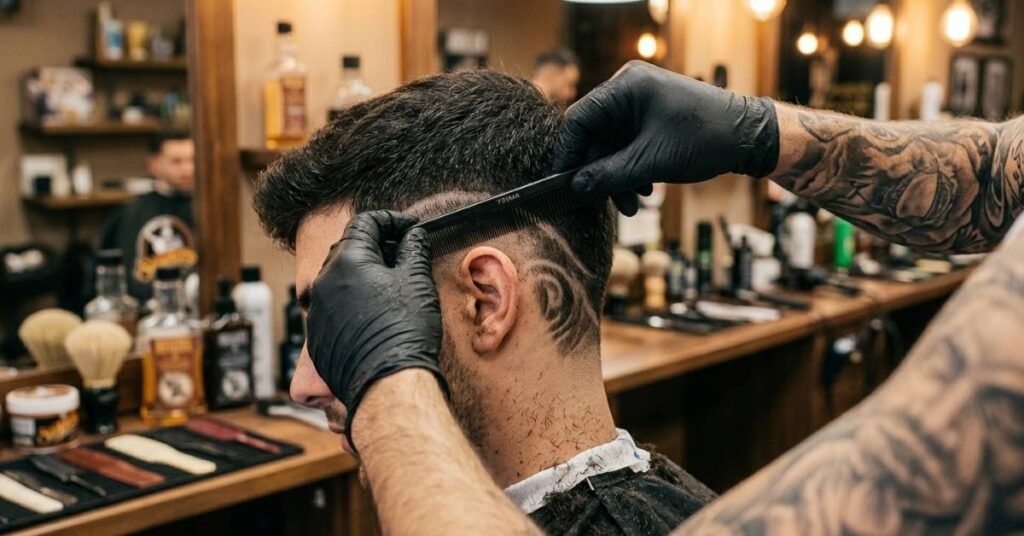
A skilled barber typically works through the cut in this order:
- Consultation and hair assessment. They’ll check your hair density, growth pattern, and natural texture before touching the clippers.
- Clipper work on the sides and back. Using a graduated set of clipper guards, they blend the hair from short at the neckline up to the length on top, keeping the transition low and gradual.
- Blending the taper into the top section. This is the step that prevents a visible line between the sides and the crown.
- Cutting the fringe with texturizing shears or a razor. Point cutting and slide cutting remove bulk and create the broken edge that defines the style.
- Dry cutting for final texture. Many barbers finish with the hair dry, since this shows exactly how the fringe will fall day to day and allows small adjustments.
- Styling and finishing. A small amount of product is worked through to show you how the cut looks styled, and to check the fringe moves the way you want.
What to Say to Your Barber
Clear communication makes the difference between a cut you love and one you have to grow out. Try phrases like:
- “Keep the taper low, starting near my ears and neckline, not up by my temples.”
- “Leave about two to three inches on top and point-cut the fringe so it has movement.”
- “I want it textured and piecey, not blunt or blocky.”
- Bring a reference photo. Even a general description can be interpreted differently from barber to barber, so a photo removes the guesswork.
How to Style a Low Taper Fade Textured Fringe at Home
You don’t need a professional styling kit to keep this cut looking sharp between visits. A simple, repeatable routine works best.
- Wash and towel-dry your hair until it’s damp rather than soaking wet; product grips better this way.
- Choose a lightweight product suited to your hair type (see the recommendations below).
- Warm a small amount between your fingertips and work it through with your hands, not a comb, starting from the back and moving toward the front.
- Push the fringe forward and slightly downward, separating small sections with your fingers to build texture.
- If you want more lift, use a blow dryer on low heat while lifting the roots with your fingertips as you go.
- Once dry, pinch a few strands together at the ends to sharpen the piecey finish.
The whole routine takes about two to three minutes once you’ve done it a few times.
Maintenance and Hair Care
Barber Visits
Most people can stretch four to six weeks between full trims, since the low taper grows out more gracefully than a high fade. That said, a quick neckline and sideburn cleanup every two to three weeks keeps the edges looking fresh in between full cuts.
At-Home Care
- Wash two to three times a week with a gentle, sulfate-free shampoo. Washing daily strips natural oils that help texture hold its shape.
- Use a lightweight conditioner on the lengths to prevent the fringe from becoming dry or brittle.
- Keep a small amount of dry shampoo on hand for non-wash days; it refreshes the roots and adds volume back.
- Get a trim before the fringe starts falling into your eyes or losing its defined shape, since waiting too long makes the next cut harder to blend.
Who This Haircut Suits Best
Face Shapes
- Round faces benefit from the added height and forward movement of the fringe, which helps elongate the face.
- Square faces get a softened frame, since the textured edges break up strong jawlines.
- Oval faces can wear nearly any variation of this cut without issue, since the shape is already balanced.
- Long faces should ask their barber to keep the fringe slightly fuller and lower, which visually shortens the face.
Hair Types
- Straight hair takes well to a sleeker, more defined fringe with a light matte product.
- Wavy hair naturally enhances the piecey look with minimal styling effort.
- Curly hair needs extra length on top and a curl-friendly product to keep definition without frizz.
- Thick hair benefits most from the taper, since it removes bulk from the sides while the layered fringe manages weight on top.
- Fine or thin hair does best with a shorter, lighter fringe and a texture powder that adds lift at the roots.
The Style’s Journey and What’s Ahead
The taper fade itself has roots going back decades in barbering, but pairing it with a deliberately textured, forward-styled fringe is a more recent development shaped by a mix of Korean, European, and American men’s grooming trends. What started as a niche look among barbers who specialized in texture work has become a mainstream request in shops everywhere.
Heading further into 2026, expect to see more subtle color work paired with this cut, along with barbers leaning into even more natural, less “styled” finishes. The core structure, low taper plus textured fringe, isn’t going anywhere; it’s flexible enough to keep evolving with smaller trend shifts layered on top.
Low Taper Fade Textured Fringe: Asked Questions
People searching for this cut tend to have a handful of recurring questions beyond the basics of the style itself. Will it work with a receding hairline? Generally yes, since the fringe can be styled to sit lower and camouflage the hairline naturally. Can it be adapted for a professional office setting? Absolutely; keeping the fringe neatly pushed forward and using a clay with slight sheen instead of a fully matte finish gives it a polished, put-together look suitable for work. Is it a good option for someone growing their hair out from a very short cut? Yes, it’s actually one of the easier transitional styles, since the low taper keeps the sides tidy while the top is allowed to grow into a fuller fringe over time.
Conclusion
The low taper fade with textured fringe earns its popularity honestly. It’s flattering across face shapes and hair types, forgiving between barber visits, and simple enough to style at home once you know the basic routine. Whether you go short and clean or messy and relaxed, the combination of a soft, low fade and a piecey fringe on top is a haircut built to last well beyond a single season.
If you’re heading to the barber, bring a reference photo, be specific about where you want the taper to start, and don’t be afraid to ask for more texture in the fringe than you think you need. It’s easier to tone a style down than to wait for it to grow back in.
FAQs
How often should I visit my barber for this cut?
Plan on a full trim every four to six weeks, with an optional quick cleanup around the neckline and sideburns every two to three weeks in between.
Does a textured fringe work on straight hair?
Yes, straight hair actually shows off the piecey, separated look clearly, especially with a light matte product worked through damp hair.
What is the easiest way to style this at home?
Apply a small amount of matte clay or texture powder to damp hair, then push the fringe forward with your fingers and let it air dry or finish with low heat.
Is the low taper fade good for growing out?
Yes, it’s one of the more forgiving fades to grow out since the transition starts low and blends gradually instead of leaving a hard line.
Can I add color or highlights to this cut?
Yes, subtle highlights or a few tonal pieces in the fringe can add extra dimension without overwhelming the overall style.
What is the difference between a textured fringe and a blunt fringe?
A textured fringe is cut with point cutting or a razor to create broken, piecey ends, while a blunt fringe is cut straight across for a solid, uniform edge.
Is this cut high maintenance?
Not really; daily styling takes just a couple of minutes, though it does help to visit your barber every few weeks to keep the shape sharp.
Does this haircut work for men with beards?
Yes, a low taper fade with textured fringe pairs well with most beard styles, since the low fade keeps the transition between hair and beard looking cohesive.