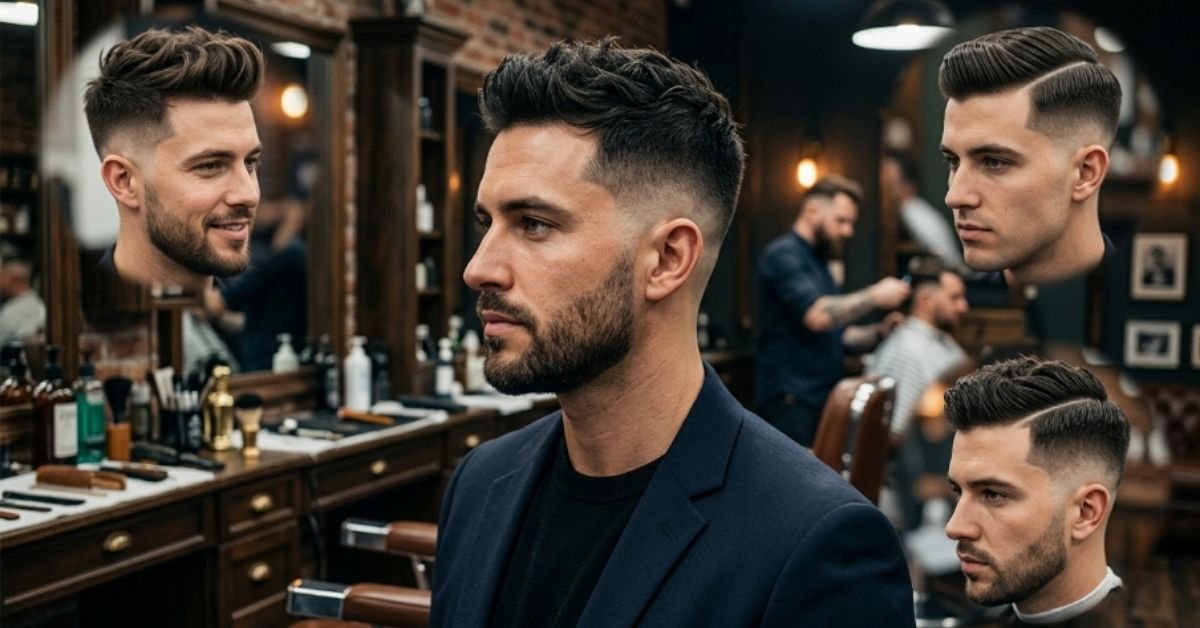
If you’ve ever sat in a barber’s chair and frozen when asked “how do you want the sides?”, the mid fade is the answer that almost never goes wrong. It sits right between the subtle low fade and the bold high fade, starting its taper around the temple, which makes it the most forgiving fade for growing out, for switching up your top style, and for matching pretty much any face shape or hair texture.
This guide rounds up 37+ mid fade haircuts men are actually asking their barbers for right now, from a classic comb over to a modern mullet, along with plain-English explanations of what a mid fade is, how it compares to a mid taper, and how to describe each cut so your barber gets it right the first time.
Best Mid Fade Haircut Styles to Try This Year
Every style below works with the same core mid fade technique. What changes is the top: length, texture, and how you style it. Pick the one that matches your hair type and how much time you want to spend on it each morning.
Mid Fade with Comb Over
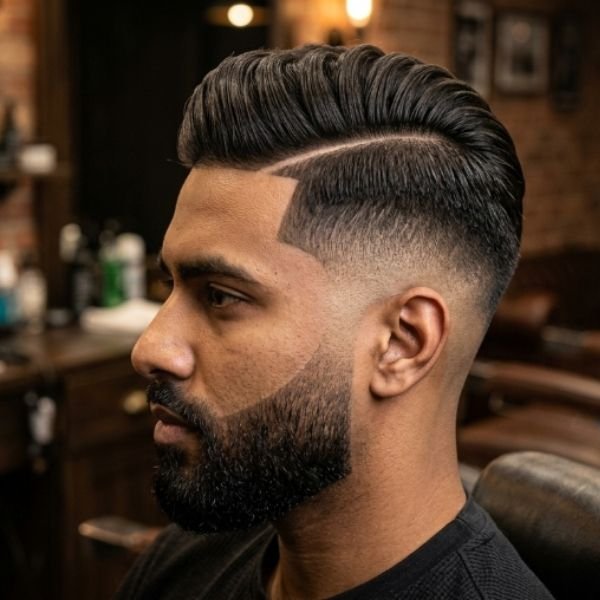
The comb over mid fade takes longer hair on top and sweeps it to one side over a clean, tapered part. It’s one of the sharpest options for office settings because it looks deliberate without looking overworked. A lightweight pomade or cream gives you shine and hold without turning the top stiff. This pairing suits straight and wavy hair best, and it flatters oval, square, and diamond face shapes especially well.
Mid Fade with Textured Crop
A textured crop keeps the top short, choppy, and slightly messy on purpose, while the mid fade cleans up the sides so the cut doesn’t look sloppy. This is a low-effort, high-payoff combination: work a matte paste through damp hair, push it forward or leave it tousled, and you’re done. Thick or medium-density hair holds the choppy texture longest, though fine hair can still pull it off with the right paste.
Mid Fade with Quiff
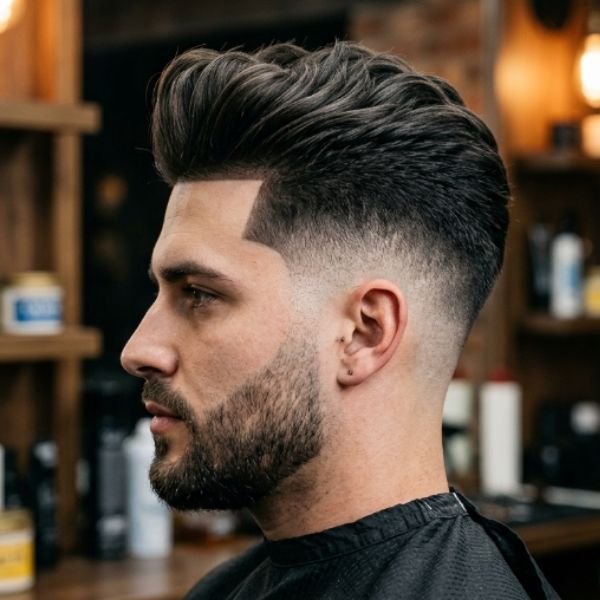
The quiff brushes hair up and slightly back at the front for noticeable height, then blends into a mid fade at the sides. It reads as more polished than a pompadour but still has plenty of volume, which makes it a strong pick for round faces that benefit from added vertical lines. Blow-dry the front section upward while it’s still damp, then set with a strong-hold cream or wax.
Mid Fade with Spiky Hair
Spiky hair over a mid fade is one of the more youthful, energetic combinations on this list. Short to medium length hair on top is worked into defined spikes using a matte or fiber-based product, while the fade keeps the sides tidy so the spikes don’t look chaotic. It works best on straight or slightly wavy hair and needs only a few minutes of daily styling.
Mid Fade with Side Swept Fringe
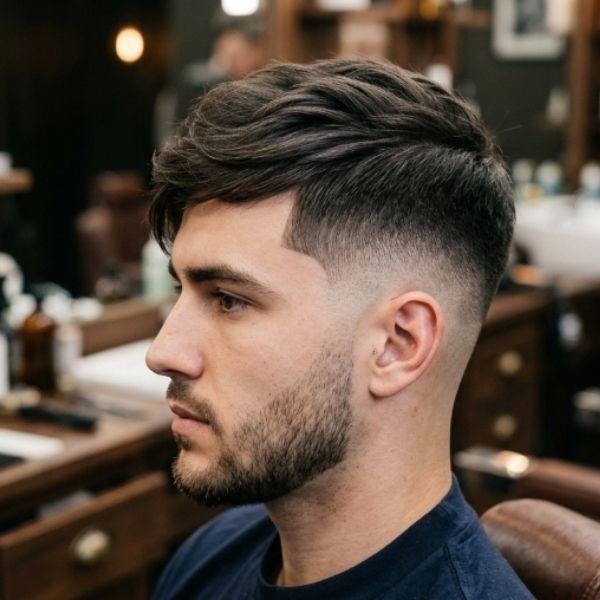
This version takes a longer fringe and sweeps it across the forehead instead of straight back, creating a softer, more casual finish. It suits men with layered hair who want something between a full fringe and a slicked style. A side swept fringe with a mid fade also happens to be one of the more flattering combinations for narrower or heart-shaped faces, since it softens angular features.
Mid Fade with Curly Top
Curly hair paired with a mid fade lets your natural texture do the styling work for you. The sides stay tight and controlled while the curls on top are left to move freely, creating strong contrast between structure and texture. A curl-defining cream applied to damp hair keeps the curls bouncy and frizz-free without weighing them down.
Mid Fade with Brushed Forward Waves
Brushing the top forward over a mid fade highlights natural wave patterns and adds a floppy, youthful volume that works especially well on thinner or flatter hair. The structured sides balance out the looser top, so the overall look stays refined rather than messy. A light mousse or cream is usually enough to hold the waves in place through the day.
Mid Drop Fade
A mid drop fade curves the fade line downward as it wraps behind the ear, following the natural shape of the head instead of cutting a straight line. It creates a slightly more dramatic taper than a standard mid fade and pairs especially well with curly or coily hair, where the dropped line helps balance volume at the back of the head.
Buzz Cut with Mid Fade and Beard
A buzz cut on top with a mid fade on the sides is about as low maintenance as fade haircuts get, and adding a well-groomed beard turns it into a complete, masculine look. This combination is popular with athletic and military-style guys because it needs almost no daily styling, just a trim every couple of weeks to keep the fade and beard line sharp.
Mid Fade with Hard Part
The hard part adds a thin, razor-shaved line that separates the top section from the fade, giving a comb over or side part extra definition. It’s a small detail that makes a big visual difference, especially for men who want their part to hold its shape all day without constant re-combing. Ask your barber for a “hard part” specifically, since not every fade includes one by default.
Mid Burst Fade
A mid burst fade arcs the taper around the ear in a semicircle rather than running it straight across the side, which is why it’s often called an ear fade. It’s a favorite with curly, coily, and mohawk-style tops because the burst shape keeps volume intact toward the back while still cleaning up the area around the ear. Tell your barber you want the fade to “burst around the ear” for the right shape.
High Volume Brush Back with Mid Skin Fade and Beard
This style takes longer hair and brushes it straight back for maximum height and volume, paired with a mid skin fade for sharp contrast and a full beard to frame the whole look. It’s a bold, statement combination that works best on men comfortable with daily styling, using a blow-dryer and strong-hold cream to keep the height from collapsing.
Long Curly Hair with Mid Skin Fade
For guys who don’t want to sacrifice length, keeping the curls long on top while fading the sides all the way to skin creates striking contrast. The tighter the fade, the more the curls seem to pop. This look needs regular moisture, a curl cream, and occasional trims to keep the curl pattern defined and healthy.
Side Part with Mid Fade
A classic side part with a mid fade is one of the most versatile, professional-looking cuts on this list. A defined part line separates the top, which is combed neatly to one side, from the tapered sides. It works across almost every face shape and hair type, and it transitions easily from boardroom to weekend with just a change in product.
Mid Fade with Pompadour
The pompadour takes the top hair, adds volume at the front, and sweeps it upward and back, all sitting on top of a clean mid fade. It’s a bolder, more retro-leaning style than a quiff, with more height and a stronger sweep. Thick hair holds the pompadour shape longest, though a strong-hold pomade can help finer hair fake the volume.
Mid Fade with Undercut
Technically an undercut and a fade are different techniques, an undercut is disconnected while a fade blends gradually, but a mid fade undercut blends both ideas: tight, faded sides with noticeably longer, often slicked-back hair on top. The contrast is sharp and fashion-forward, and it suits oval, diamond, and heart face shapes particularly well.
Modern Mullet with Mid Fade
The modern mullet keeps the signature longer back while cleaning up the sides with a mid fade, giving the whole cut a more polished, less dated feel than the mullets of decades past. It’s grown into a genuinely mainstream style choice for men who want length and personality without looking unkempt.
Short Hair with Mid Fade
Sometimes the simplest option is the best one: short, even length on top with a mid fade on the sides. It’s tidy, professional, and needs very little product or daily effort, making it a reliable go-to for busy schedules or first-time fade wearers who want to ease into the style.
Mid Fade with Line Up
A line up (also called an edge up) adds crisp, razor-sharp lines along the hairline, temples, and beard edge to sharpen up any mid fade style. It’s especially popular alongside buzz cuts, curly tops, and beard combinations, where the clean lines create maximum contrast against the fade and natural hair texture.
Mid Temp Fade
Short for “mid temple fade,” this version starts the taper right at the temple area, which is the textbook definition of where a mid fade begins. It’s often used interchangeably with “mid fade” by barbers, and it works as a base for nearly every top style on this list.
Mid Taper Fade
The mid taper fade blends hair shorter at the temples and neckline without ever dropping to bare skin. Since some length always remains at the base, it grows out more gracefully than a skin fade and reads as slightly softer and more conservative, which makes it a strong choice for workplaces with more traditional dress codes.
Spiky Hair with Mid Taper Fade
Pairing spiky styling with a mid taper fade, instead of a skin fade, gives you the same energetic top with a softer, more natural-looking side. It’s a good middle ground for men who like the spiked look but don’t want the high-contrast, bald-sided finish of a skin fade.
Mid Fade with Design
A design adds a shaved pattern, line, or shape into the fade itself, usually along the side or temple. It’s a way to personalize a standard mid fade and make it stand out, ranging from a single simple line to more detailed artwork. Designs need refreshing every couple of weeks as the surrounding hair grows in.
Trendy Parted Style with Mid Fade
This is a more fashion-forward take on the classic side part, often with a slightly deeper, more angled part line and extra texture worked through the top. It photographs well and suits men who want a part that feels current rather than corporate.
Long Textured Fringe with Mid Fade
A longer, textured fringe left to fall over the forehead (and often swept to one side) softens the face and adds a relaxed, layered look on top of a clean mid fade. It works especially well on thinner faces, since the fringe visually shortens the forehead and balances sharper features.
Short Slick Back with Mid Fade and Beard
Short hair slicked straight back with a light gel or cream, paired with a mid fade and a groomed beard, is a clean, put-together look that works equally well for formal occasions and everyday wear. It requires minimal daily styling once the length is right.
Mid Skin Fade
The mid skin fade tapers the sides all the way down to bare skin at the temple level, creating the sharpest, highest-contrast version of the mid fade family. It pairs with almost any top style but needs a touch-up every two to three weeks to keep that just-cut definition, since skin fades grow out faster than taper fades.
Mid Fade with Waves
If you have naturally wavy or “360 wave” textured hair, a mid fade lets the wave pattern take center stage while keeping the sides sharp and controlled. Brushing regularly and wearing a durag or wave cap at night helps train and maintain the wave pattern over time.
Mid Fade with Beard Blend
A beard blend connects the mid fade seamlessly into a full beard, so there’s no harsh line between the hair on your head and your facial hair. It’s a technique more than a separate style, and it works with almost any top length, giving the whole look a more unified, intentional finish.
Mohawk with Burst Mid Fade
Combining a mohawk with a burst mid fade keeps a strip of longer hair down the center while the sides burst-fade tightly around the ears. It’s one of the boldest options on this list, popular with curly and coily hair types, and it makes a strong statement without needing a fully shaved mohawk look.
Mid Fade with Messy Texture
Messy texture on top, achieved with a matte clay or texturizing spray worked through slightly damp hair, gives a relaxed, effortless finish over a structured mid fade. It’s forgiving of bad hair days and works well between haircuts, since a little extra length just adds to the messy effect.
Mid Fade with Short Fringe
A short fringe brushed forward over the forehead, rather than swept to the side, gives a slightly younger, more casual look. Paired with a mid fade, it keeps the overall style clean and low-maintenance while still adding a bit of texture and shape up front.
Mid Fade with Tapered Back
This variation focuses extra attention on tapering the back of the head to match the sides, avoiding the boxy, uneven look that can happen when only the sides are faded. It’s less a standalone style and more a finishing detail worth requesting for any mid fade cut, especially with shorter tops.
Mid Fade with Natural Volume
For men who don’t want a heavily styled look, keeping the top at a natural length and letting it sit with its own volume, over a clean mid fade, gives a low-effort but still sharp result. It works particularly well on thicker hair that naturally holds shape without much product.
Mid Fade with Clean Crop Top
A clean crop keeps the top short, straight across, and evenly cut, without the choppy texture of a textured crop. Combined with a mid fade, it’s one of the tidiest, most classic looks on this list, and a reliable choice if you’re unsure what to ask for.
What is a Mid Fade?
A mid fade is a men’s haircut where the sides and back are gradually tapered shorter starting around the middle of the head, roughly at temple height, and blending down toward the ear and neckline. It sits directly between a low fade, which starts near the ears, and a high fade, which starts closer to the crown, which is why barbers often call it the most balanced and versatile fade placement.
Because the fade starts at a mid-level point, it works with almost any hair type, from straight to tightly coiled, and any top length, from a buzz cut to a modern mullet. It’s also the most commonly requested fade among first-time fade wearers, since it offers noticeable contrast and shape without the higher-maintenance upkeep of a high fade or the more subtle change of a low fade.
Types of Mid Fade Haircuts
Mid fade haircuts generally fall into a few core categories, and understanding them makes it much easier to describe exactly what you want in the chair.
- Mid skin fade: Tapers all the way down to bare skin for maximum contrast.
- Mid taper fade: Shortens the hair without reaching bare skin, keeping a softer, more conservative finish.
- Mid drop fade: Curves the fade line downward behind the ear, following the head’s natural shape.
- Mid burst fade: Arcs the taper around the ear in a semicircle instead of a straight line.
- Mid bald fade: A more extreme version of the skin fade with almost no length left at the shortest point.
- Low-mid and mid-high fades: Slight variations that start a touch lower or higher than a true mid-point fade.
Each of these base techniques can be paired with any top style covered above, which is exactly why there are dozens of named mid fade haircuts even though they all share the same underlying fade placement.
Mid Taper vs. Mid Skin Fade
The core difference between a mid taper and a mid skin fade comes down to what happens at the shortest point of the cut. A mid taper fade shortens hair gradually but always leaves some length at the base, usually around a guard 1 or 2, so it never exposes bare skin. A mid skin fade takes the same starting point at the temple but continues all the way down to bare skin, creating a much sharper, higher-contrast finish.
In practice, that difference affects both look and upkeep. A mid taper reads as softer and more office-appropriate, and it grows out more gracefully, often holding its shape well for three to five weeks. A mid skin fade looks noticeably sharper right after a cut, but it loses that crisp contrast faster, so most men refresh it every two to three weeks. Neither is objectively better; it comes down to how bold a contrast you want and how often you’re willing to see a barber.
Our Thoughts about Mid Fade Haircuts
After looking at dozens of variations, the mid fade earns its popularity for a simple reason: it’s the safest fade to start with and the hardest one to get wrong. It flatters nearly every face shape, adapts to straight, wavy, curly, and coily hair equally well, and gives you room to change the top style, from a buzz cut to a mullet to a pompadour, without ever needing to change the underlying fade.
If you’re unsure where to start, a mid skin fade with a textured crop or a mid taper with a side part are two of the most reliable, low-risk choices. From there, use your face shape and hair texture as a guide, add volume if you have a round face, keep things structured if you have a square jaw, and don’t be afraid to ask your barber to blend in a beard or add a line up for extra sharpness.
FAQ’s: What Makes Mid Fade Haircuts So Popular
What’s better, mid-fade or taper?
Neither is universally better. A mid fade gives sharper contrast and a bolder look, while a plain taper is softer and more conservative, so the right choice depends on how much contrast you want.
What is a mid taper fade?
A mid taper fade blends the sides shorter starting at the temple but always keeps some length at the base instead of fading to bare skin, giving a softer finish than a mid skin fade.
Do mid fades look good?
Yes, mid fades suit nearly every face shape and hair type because the temple-height starting point balances contrast and length, which is why barbers recommend it as the most versatile fade option.
Is a mid fade good for straight hair?
Yes, straight hair takes a mid fade especially well since the clean taper contrasts sharply against smooth, flat texture on top, making styles like a comb over or side part look crisp.
What haircut suits straight hair with a mid fade?
A comb over, textured crop, or slick back all pair well with straight hair and a mid fade, since straight hair holds these defined shapes and part lines cleanly throughout the day.