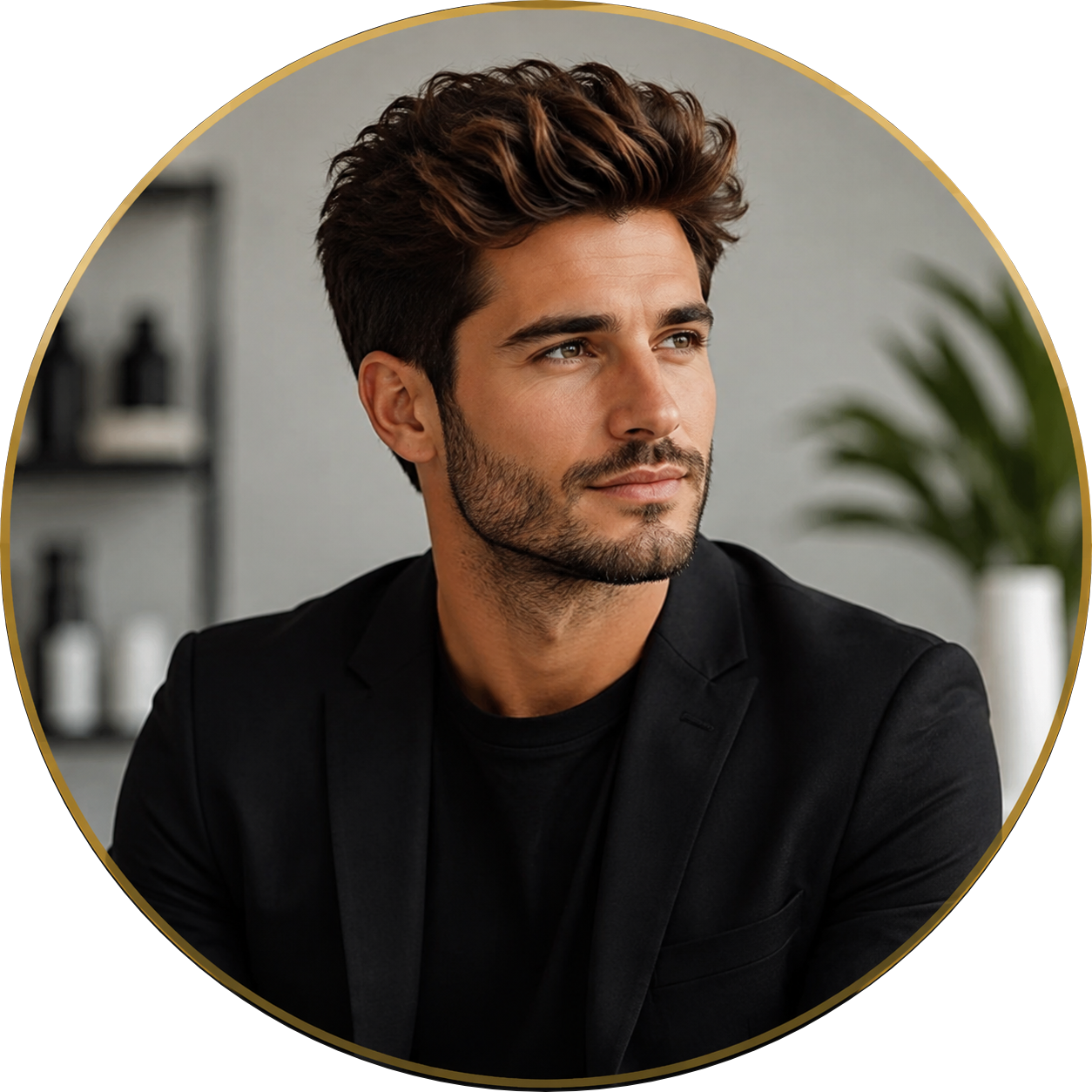
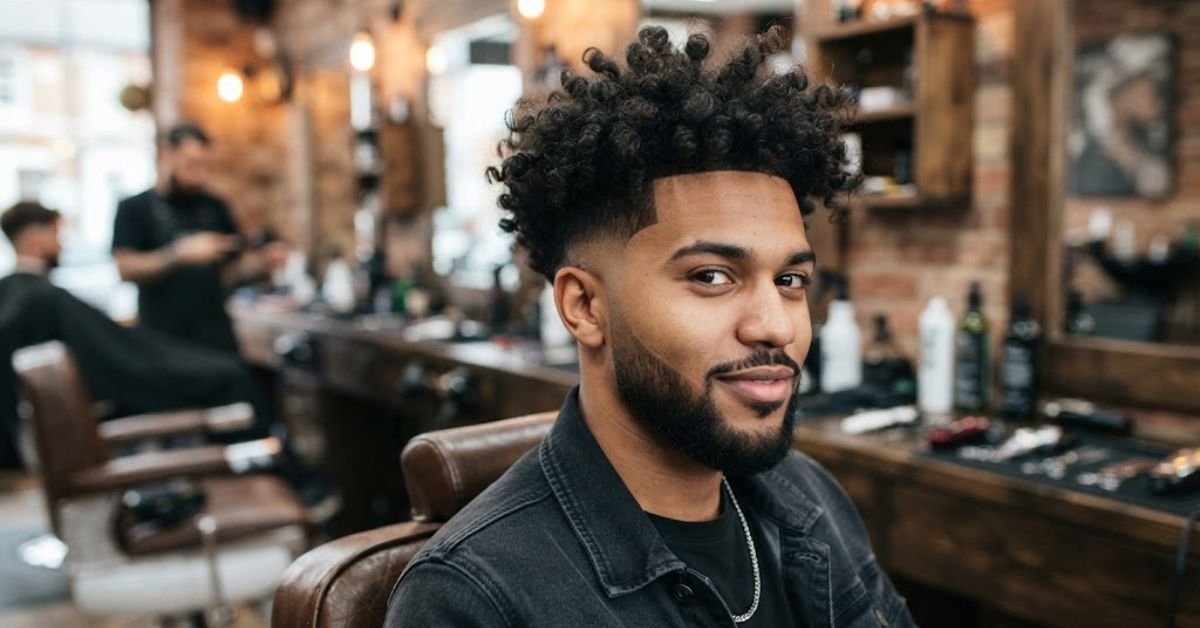
If your curls have started to feel flat, shapeless, or just plain boring, the curly burst fade might be the reset you’re looking for. It takes the natural movement of curly hair and pairs it with a clean, circular fade that wraps around the ear instead of cutting straight across it. The result is a cut that looks sharp from every angle while still letting your curl pattern do the talking on top.
This guide walks through what a curly burst fade actually is, why barbers and clients keep choosing it in 2026, 35 style variations to bring to your next appointment, and everything else you need, from face shape pairings to maintenance routines, to keep the cut looking fresh between visits.
Quick Answer: What Is a Curly Burst Fade?
A curly burst fade is a haircut where the sides and back are cut in a curved, semicircular pattern that fans out around the ear, while the hair on top is left longer to show off natural curl texture. Instead of a straight taper line, the fade “bursts” outward in an arc, which is where the style gets its name. It works on nearly every curl type, from loose 2C waves to tight 4C coils.
Key Features of a Curly Burst Fade
- The fade curves in a semicircle around and behind the ear rather than running in a straight line
- Hair blends gradually from very short (or skin) at the bottom up toward the crown
- The top keeps its natural curl pattern, length, and volume
- Contrast between the tight sides and the fuller top is the main visual focus
- It can be combined with beards, designs, mohawks, and other haircuts for a more custom look
Why Is the Curly Burst Fade So Popular in 2026?
The curly burst fade has moved from a niche barbershop request to one of the most searched men’s haircuts of the year. A few practical reasons explain the staying power.
1. Works with Different Curl Types
Because the fade height and top length can both be adjusted, the same basic technique flatters loose waves, springy curls, and dense coils alike. A barber simply changes how much curl length stays on top and how aggressive the fade is underneath.
2. Modern Yet Low-Maintenance Style
Curly hair naturally hides small imperfections and regrowth better than straight hair, so the cut stays presentable for longer between trims. Combined with the fact that curls need very little daily styling beyond a cream or gel, it is an easy cut to live with.
3. Suitable for Most Face Shapes
Because the fade height and top volume are both adjustable, barbers can shape the cut to slim a round face, soften a square jaw, or balance a longer oval face. Few haircuts offer this much flexibility for different bone structures.
35 Cool Curly Burst Fade Haircut Ideas for Men
Use these as a starting point, then bring a photo or two to your barber so they know exactly how much curl length and fade height you want.
1. Classic Curly Burst Fade
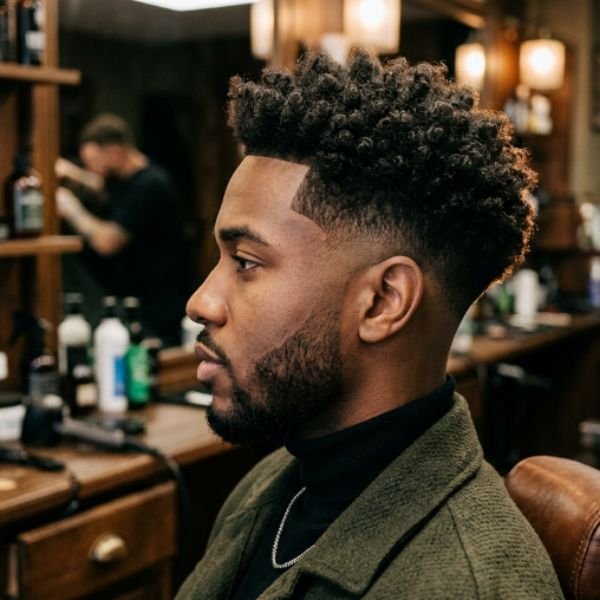
The original version: a mid-height fade that curves cleanly around the ear with medium-length curls left on top. It is the safest, most barbershop-friendly option if you are trying the style for the first time.
2. Modern Curly Burst Fade
A slightly sharper take with a crisper blend and more defined curl clumps on top, often finished with a light curl cream for shine and separation instead of a heavy, matte look.
3. Low Curly Burst Fade
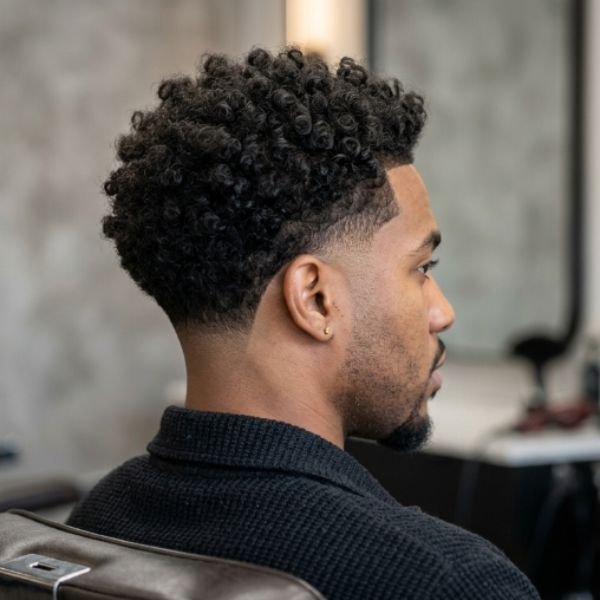
The fade starts just above the ear, so very little skin is exposed. It is the most conservative option, ideal for office settings or anyone easing into the style.
4. Mid Curly Burst Fade
Widely considered the best all-around choice, the mid fade shows off the burst shape clearly without looking too extreme. It also tends to grow out more evenly than higher fades.
5. High Curly Burst Fade
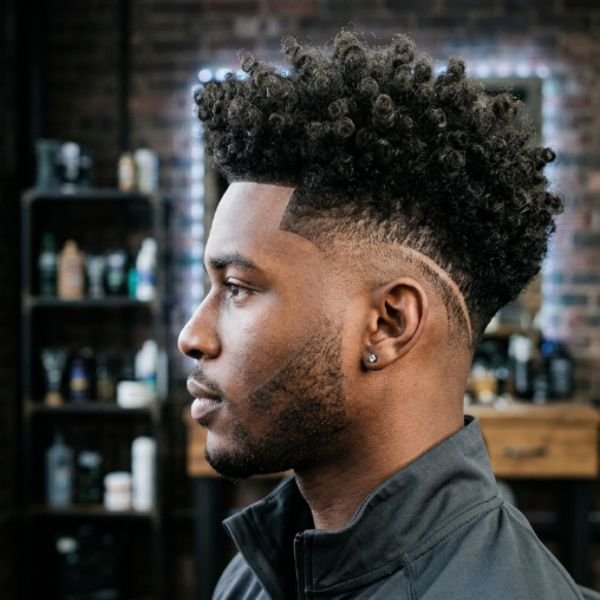
The fade climbs much higher up the sides, leaving more skin visible and pushing more visual weight onto the curly top. It is bold, and it needs more frequent touch-ups to stay sharp.
6. Skin Curly Burst Fade
Also called a bald burst fade, this version fades all the way down to bare skin at the bottom of the arc, creating the strongest possible contrast against the curls.
7. Taper Curly Burst Fade
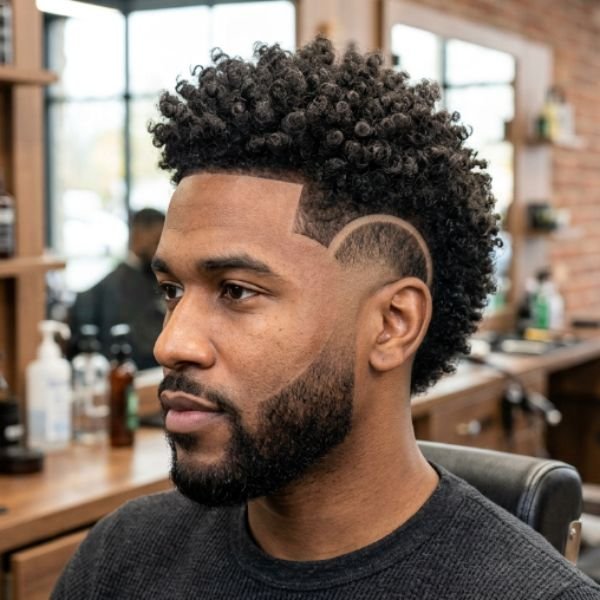
A softer, gradual blend replaces the sharper skin-to-hair transition. It is a good pick if you want the burst shape without a fully shaved section, and it grows out more forgivingly.
8. Curly Burst Fade Mullet
Tight, faded sides meet longer curls left at the back of the head. It is a retro silhouette with a modern edge, and it suits looser curl patterns best since tighter coils can look bulky at the nape.
9. Curly Burst Fade Mohawk
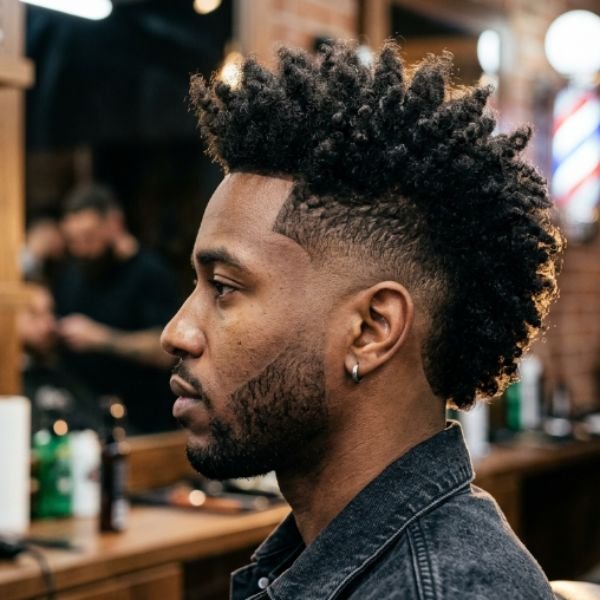
The sides are faded down close to the skin while a strip of curls runs down the center of the head. It is one of the boldest options on this list and works well for anyone who wants a statement look.
10. Curly Burst Fade with Beard
The fade blends directly into a well-groomed beard line, creating one continuous, tidy shape from the sideburns down. A medium-length beard usually pairs best with this combination.
11. Short Curly Burst Fade
Just an inch or two of curl is left on top, which keeps things low effort. Even a small amount of length is enough to show off curl texture against the faded sides.
12. Long Curly Burst Fade
Several inches of curl on top create a dramatic contrast against the tight sides. This version needs more product and more styling time but delivers the most volume.
13. Curly Burst Fade with Fringe
Curly bangs are left to fall forward over the forehead while the burst fade keeps the sides clean. It softens the face and works especially well with oval and long face shapes.
14. Curly Burst Fade with Textured Top
Rather than defined, separated curls, the top is styled for a tousled, piecey look using a texturizing spray or light mousse. It has a more relaxed, fashion-forward feel.
15. Messy Curly Burst Fade
Curls are left natural and slightly undone rather than shaped or combed. It pairs sharp, faded sides with a deliberately relaxed top for an easy, low-effort finish.
16. Curly Burst Fade with Design
A barber shaves a line, geometric shape, or pattern into the fade near the temple. It turns the haircut into a more personalized, artistic statement.
17. Curly Burst Fade with Line Up
A crisp, straight line is cut along the hairline and temples to sharpen the edges of the fade. It gives an otherwise soft, curly style a much more precise finish.
18. Curly Burst Fade with Side Part
A defined part is shaved or combed into the top section, adding structure to an otherwise loose, curly silhouette. It works well for medium-length curls.
19. Curly Burst Fade Afro
More volume and height are left on top to preserve a fuller afro shape, while the burst fade keeps the sides controlled and neat underneath.
20. Curly Burst Fade for Black Men
Tight coils (typically 4A to 4C) hold shape exceptionally well on top, making this one of the most popular combinations for coily hair textures, often finished with a curl-defining cream.
21. Curly Burst Fade for Teenagers
A simpler, lower-maintenance version with a modest fade height and natural curl texture on top, easy to keep looking neat for school or sports without much daily styling.
22. Curly Burst Fade for Thick Hair
The fade removes bulk and weight from the sides, which helps thick curly hair sit more naturally on top instead of pushing outward.
23. Curly Burst Fade for Thin Hair
A slightly longer top length and a softer, taper-style fade add the illusion of extra volume, since a very high skin fade can make thin curls look sparse by comparison.
24. Tight Curly Burst Fade
Best suited to tighter curl patterns (3B to 4B), this version keeps the top compact and well defined rather than loose or flowing.
25. Loose Curly Burst Fade
Loose, beachy waves on top pair with the fade for a relaxed, effortless look. It suits naturally wavy hair (2B to 3A) more than tightly coiled textures.
26. Curly Burst Fade with Highlights
Subtle highlights or balayage add dimension to the curls on top, catching the light and making individual curl clumps stand out more.
27. Curly Burst Fade with Blonde Curls
A full or partial blonde dye job creates a striking contrast against darker faded sides, though it does require more upkeep to maintain the color.
28. Curly Burst Fade Undercut
The sides are cut dramatically shorter than a standard fade, almost like a disconnected undercut, then blended into a burst curve near the ear for a high-contrast, edgy look.
29. Curly Burst Fade Faux Hawk
Similar to the mohawk version but softer, with the curls styled upward and inward at the center rather than left completely loose, for a look that still works in professional settings.
30. Curly Burst Fade with Hard Part
A shaved line separates the top section from the fade instead of a gradual blend, adding a sharp, graphic detail to the overall shape.
31. Curly Burst Fade with Volume
Extra length and diffusing during styling maximize height and fullness on top, making the most of naturally voluminous curl types.
32. Curly Burst Fade with Natural Curls
No heat, no heavy gel, just the curl pattern as it naturally falls. It is the lowest-effort version and tends to look the most authentic day to day.
33. Curly Burst Fade with Defined Curls
A curl cream or gel is used to separate and define individual curls, giving the top a crisper, more sculpted look than the natural or messy versions.
34. Temple Curly Burst Fade
The burst shape is concentrated tightly around the temple area rather than sweeping further back, which keeps more length and coverage everywhere else.
35. Curly Burst Fade with Curly Top
A generously long, fully curly top is left almost untouched by the clippers, so the fade only shapes the very bottom edge, maximizing the amount of natural curl on display.
How to Ask Your Barber for a Curly Burst Fade
Clear communication is the difference between walking out happy and walking out disappointed. Here is how to set expectations before the clippers come out.
1. Show Reference Photos
Curl patterns and fade heights are hard to describe in words alone. Bring two or three photos of styles from this list that match what you want, ideally on hair texture close to your own.
2. Choose the Right Fade Height
Decide ahead of time whether you want a low, mid, or high fade, and mention it directly. “Mid burst fade” gives your barber a much clearer starting point than simply asking for “a fade.”
3. Discuss Curl Length on Top
Tell your barber exactly how much curl length you want to keep, and be specific about whether you want it shaped, natural, or textured. This affects how they cut and thin the top section.
Step-by-Step Curly Burst Fade Haircut Tutorial
Whether you are watching your barber work or attempting a touch-up yourself, this is the general order of operations.
Step 1: Start with Clean Curly Hair
Wash and fully dry the hair before cutting. Curls shrink significantly when wet, so cutting damp hair often leads to an uneven, unpredictable result once it dries.
Step 2: Create the Burst Fade Around the Ear
Using clippers with a guard, the barber begins shaping the semicircular arc around and behind the ear, working from the shortest point outward.
Step 3: Blend the Fade Smoothly
Guard sizes are gradually increased while moving up the head, removing any visible lines between sections so the transition from short to long looks seamless.
Step 4: Shape and Define the Curls
The top is cut with shears or a combination of clippers and scissors, following the natural curl pattern rather than cutting straight across, which helps avoid a boxy, unnatural shape.
Step 5: Apply Styling Products
A curl cream, gel, or leave-in conditioner is worked through the top section to define curls, reduce frizz, and help the finished cut hold its shape.
Best Face Shapes for a Curly Burst Fade
Oval Face Shape
Considered the most balanced face shape, oval faces suit nearly every version of this cut, from low and conservative to high and dramatic.
Round Face Shape
A higher fade with extra height on top helps elongate the face and avoid adding width at the sides.
Square Face Shape
A mid fade with softer, rounded curls on top helps balance out strong, angular jawlines.
Diamond Face Shape
Fuller curls at the temples help balance a narrower forehead and chin, while a mid or low fade keeps the overall shape proportionate.
Best Hair Types for a Curly Burst Fade
Tight Curly Hair
Curl types in the 3B to 3C range hold shape well and show off the burst fade’s arc especially clearly, since the curls stay compact and defined.
Loose Curly Hair
Types 2B to 3A move more freely and pair naturally with softer, taper-style fades rather than a hard skin fade, since the looser texture already provides enough contrast.
Coily Hair
4A to 4C coily hair holds volume exceptionally well on top, which makes higher fades and mohawk-style variations especially striking.
Thick Curly Hair
Regardless of curl pattern, thick hair benefits from the fade removing bulk at the sides, which keeps the overall silhouette from looking too heavy.
How to Style a Curly Burst Fade Haircut
Use a Curl Cream
Apply to damp hair to define individual curls, reduce frizz, and add light hold without weighing the curls down.
Apply a Leave-In Conditioner
A leave-in helps keep curls hydrated throughout the day, which reduces frizz and keeps the pattern looking healthy rather than dry or brittle.
Diffuse for Extra Volume
Using a diffuser attachment on low heat speeds up drying time while encouraging natural volume, instead of flattening curls the way regular blow drying can.
Maintain Curl Definition
Avoid brushing dry curls, since this breaks up the natural clumping. Use fingers or a wide-tooth comb only while the hair is wet and coated in product.
How to Maintain a Curly Burst Fade
Trim Every 2–4 Weeks
The faded section grows out faster than the curly top, so most people need a touch-up every two to four weeks to keep the arc looking sharp.
Keep Curls Hydrated
Curly hair tends to be drier than straight hair, so regular conditioning and leave-in products help prevent frizz and breakage.
Avoid Excessive Heat Styling
Heat tools can loosen or damage the natural curl pattern over time. Air drying or diffusing on low heat is gentler on curl structure.
Use Sulfate-Free Hair Products
Sulfates can strip natural oils from curly hair, leading to dryness and frizz. Sulfate-free shampoos and conditioners help preserve moisture and curl definition.
Curly Burst Fade vs Other Popular Fade Haircuts
Curly Burst Fade vs Taper Fade
A taper fade shortens the hair gradually in a straight line down toward the neck, while a burst fade curves outward in an arc around the ear. The burst fade generally creates a bolder, more distinct shape.
Curly Burst Fade vs Drop Fade
A drop fade curves downward and dips lower behind the ear, following the shape of the skull, while a burst fade stays focused in a tighter semicircle. Both work well with curls, but the drop fade tends to look softer.
Curly Burst Fade vs Mohawk Fade
A mohawk fade removes nearly all the hair on both sides, leaving only a center strip, while a standard burst fade leaves more length across the whole top. The burst fade mohawk variation combines both.
Curly Burst Fade vs Skin Fade
Skin fade simply refers to how close the fade is cut to the scalp at its shortest point, it is a finish, not a shape. A burst fade can be done as a skin fade or with a softer taper finish.
Curly Burst Fade vs High Burst Fade
A standard burst fade sits at a low or mid height, while a high burst fade climbs much further up the sides. The high version is bolder but requires more frequent maintenance.
Best Products for Styling a Curly Burst Fade
Curl Creams
Lightweight curl creams define individual curls and add light hold without leaving hair stiff or greasy, making them a good daily option.
Leave-In Conditioners
These help lock in moisture after washing, which is especially important for curly hair since it tends to dry out faster than straight hair.
Curl Defining Mousses
Mousse adds volume and hold while helping separate curl clumps, making it a solid choice for longer or thicker curly tops.
Hair Diffusers
A diffuser attachment for a blow dryer speeds up drying time while enhancing natural curl shape and volume, instead of loosening or flattening it.
Mistakes That Ruin a Curly Burst Fade
- Waiting too long between trims, which lets the fade grow out unevenly
- Cutting or judging the shape of the haircut while the hair is still wet
- Using heavy pomades meant for straight hair, which weigh curls down instead of defining them
- Brushing dry curls, which breaks up natural clumping and creates frizz
- Skipping regular conditioning, which leads to dry, brittle, and less defined curls
- Choosing a fade height that does not match face shape or curl density
- Going to a barber with no curly hair cutting experience
FAQs
Does a burst fade work with curly hair?
Yes. The circular shape of the fade complements curl texture particularly well, since it removes bulk at the sides while leaving the natural pattern intact on top.
How often should I get my curly burst fade trimmed?
Most people need a touch-up every two to four weeks, since the faded section grows out faster than the curly top.
Can I get a curly burst fade with short hair on top?
Yes. Even half an inch to an inch of curl length is enough to create a noticeable, attractive contrast against the faded sides.
Does a curly burst fade suit all face shapes?
Yes. Oval, round, square, and diamond face shapes can all wear this cut, with the fade height and top volume adjusted to fit each shape.
Is a curly burst fade high maintenance?
It is moderate maintenance. Regular trims keep the fade sharp, but curly hair generally needs less daily styling effort than straight hair.
Can I add a design to a curly burst fade?
Yes. Lines, shapes, and patterns can be shaved into the faded section near the temple for a more personalized look.
What is the best fade height for curly hair?
A mid fade is usually the safest, most versatile choice, offering a clear burst shape without the maintenance demands of a high fade.
Does a curly burst fade work on thick curly hair?
Yes. It actually helps thick curly hair look more manageable by removing weight and bulk from the sides and redirecting volume upward.
Final Thoughts
The curly burst fade earns its popularity by doing something most haircuts cannot: giving curly hair a genuinely sharp, structured edge without asking you to fight your natural texture. Whether you go low and subtle or high and bold, the key is choosing a fade height and top length that actually fits your curl pattern and face shape, then keeping up with trims every few weeks. Bring a couple of reference photos from this list to your next appointment, and you will have a much easier time getting the exact look you want.