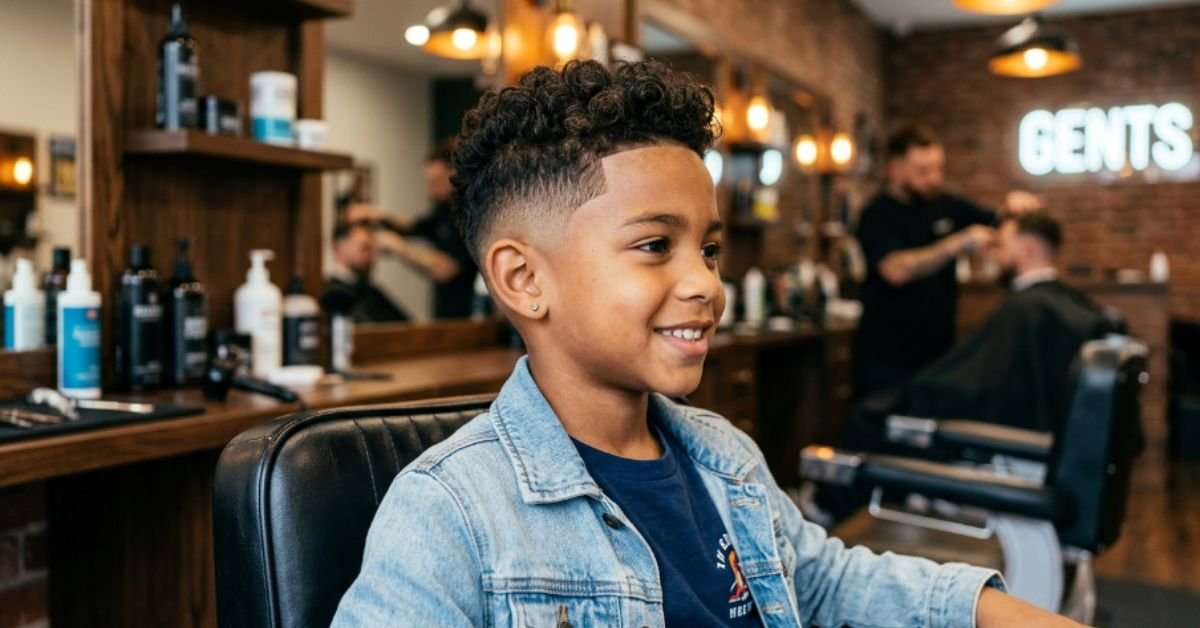
Picking a haircut for your son can feel harder than it should be. You want something sharp enough for photo day, easy enough to survive a Tuesday morning rush, and fun enough that your kid actually wants to sit in the chair. That combination is exactly why burst fade haircuts for kids have become one of the most requested styles at barbershops this year.
A burst fade is playful, low maintenance once it’s dialed in, and flexible enough to work on toddlers, tweens, and teenagers alike. In this guide, you’ll find a clear explanation of what a burst fade actually is, 33 of the best burst fade haircuts for kids to bring to your next barber visit, and practical advice on styling, upkeep, and avoiding the most common mistakes parents make with this cut.
What Is a Burst Fade Haircut?
A burst fade is a fade that curves in a half circle around the ear instead of running in a straight line across the side of the head. The clippers “burst” outward from the ear like a small sunburst, blending short hair near the skin into longer hair on top and at the back.
Because the fade wraps the ear rather than cutting straight across, more length can be left through the nape and back of the head. That’s why a burst fade pairs so naturally with mullets, mohawks, and other styles that need extra length behind the ears. It’s a more technical cut than a standard taper, so it’s worth choosing a barber who has real experience shaping the curve cleanly.
Why Burst Fade Haircuts for Kids Are So Popular
Parents keep coming back to this style for a handful of practical reasons, not just because it looks good in photos.
Works with Almost Any Hair Type
Straight, wavy, curly, and coily hair all take a burst fade well. The curved shape flatters the head without needing a specific hair texture to look sharp.
Easy to Maintain
Because the fade line sits close to the ear rather than running the full length of the head, regrowth is less noticeable day to day, so parents aren’t booking a barber every single week.
Great for School and Special Events
A burst fade reads as neat and put together, which makes it an easy pick for school photo day, birthdays, or family events where you want your kid looking sharp without an extreme style.
Kids Love the Cool Factor
The visible shape and contrast give kids something they’re genuinely excited about, especially when it’s paired with a design, a mohawk, or dyed tips.
Pairs Well with Other Trends
Burst fades combine easily with mullets, faux hawks, spiky tops, and hard parts, so the same base cut can be restyled several different ways between trims.
Flexible for Different Ages
The fade height and top length can be adjusted for a toddler’s first haircut or scaled up into a bolder look for a teenager, which makes it one of the few styles that genuinely grows with a kid.
Which Burst Fade Is Right for Your Kid’s Age?
Age matters more than most parents expect when choosing a fade. Toddlers generally do best with a soft, low burst fade and minimal contrast, since their scalp is more sensitive and a gentle first haircut helps them stay calm in the chair. Grade schoolers can usually handle a mid burst fade with a bit more top length for styling, giving parents room to brush it, part it, or leave it naturally textured for school. Tweens and teens tend to ask for higher contrast, such as a high burst fade, added designs, or a burst fade mohawk, since they’re old enough to have a real say in their own style and often want something closer to what they see online. Whatever the age, it helps to bring a photo and let the barber judge how much contrast the hair type and head shape can comfortably support.
Burst Fade vs. Other Kid-Friendly Fades
It’s easy to mix up a burst fade with a taper fade or a standard skin fade, but the three aren’t interchangeable. A taper simply shortens the hair gradually at the sideburns and neckline without ever reaching bare skin, so it stays subtle and grows out softly, which is why many barbers recommend it for younger toddlers. A skin fade blends the hair all the way down to the skin in a straight line around the head, creating the boldest contrast but also the fastest visible regrowth. A burst fade sits in between: it fades toward the skin, but only in a curved arc around the ear, which lets more length stay through the back and nape. That extra length is exactly why burst fades work so well with mullets and mohawks, while a plain skin fade or taper wouldn’t leave enough hair behind the ear to style that way. If you’re unsure which to ask for, describe what you want the back and sides to look like rather than relying on the name alone, since barbershop terminology for fades can vary quite a bit from one shop to the next.
33 Trendy Burst Fade Haircuts for Kids That Parents Love in 2026
1. Classic Burst Fade for Kids
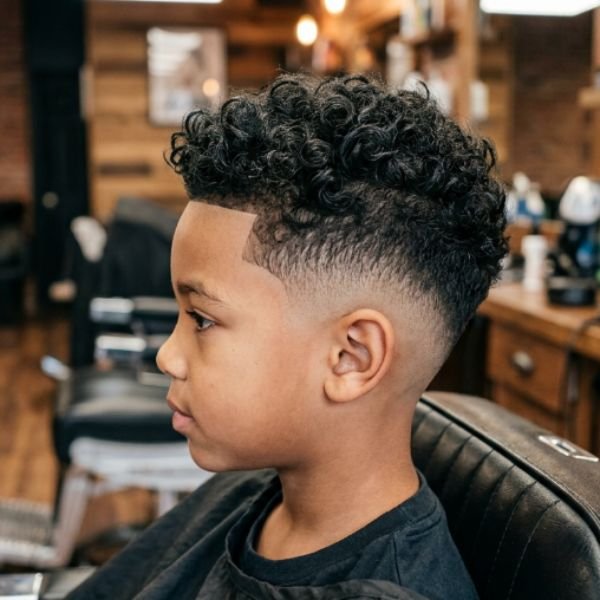
The simplest version of the cut: a clean curved fade around the ear with a slightly longer top that can be brushed forward or left natural. A safe, versatile starting point for any first-time burst fade.
2. Low Burst Fade for Kids
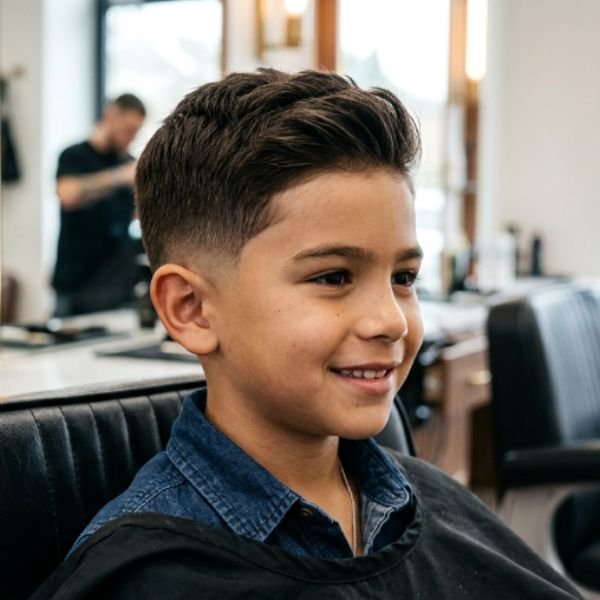
The fade starts closer to the bottom of the head, keeping more length and less contrast overall. A gentle option for younger kids or for parents who want a subtler look for school.
3. Mid Burst Fade for Kids
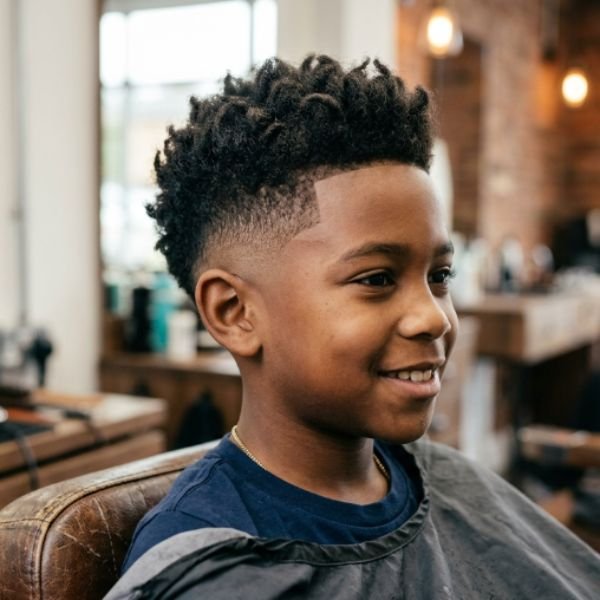
A balanced choice that starts around the temple, giving noticeable contrast without looking too extreme. This is one of the most requested heights because it suits almost any face shape.
4. High Burst Fade for Kids
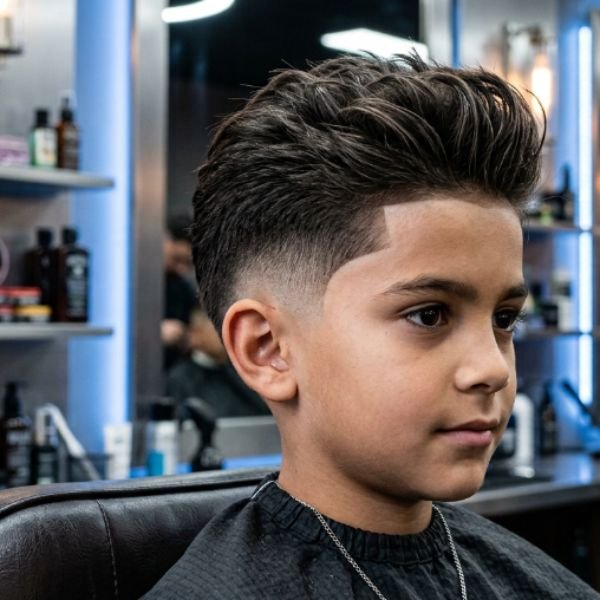
The fade begins higher up the head, creating a bold, sharp contrast between the short sides and the longer top. Best suited to older kids and teens who want a statement look.
5. Curly Burst Fade for Kids
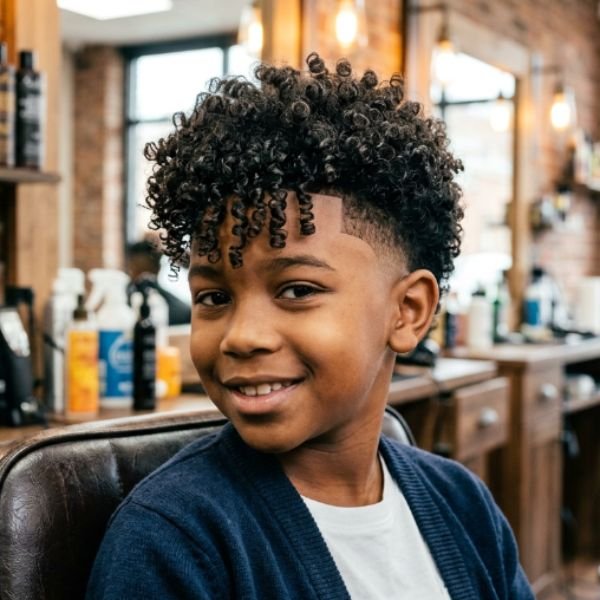
Curly hair on top is left full and bouncy while the sides fade cleanly into the curve around the ear. The contrast between the tight fade and loose curls makes this one of the most eye-catching options on the list.
6. Straight Hair Burst Fade
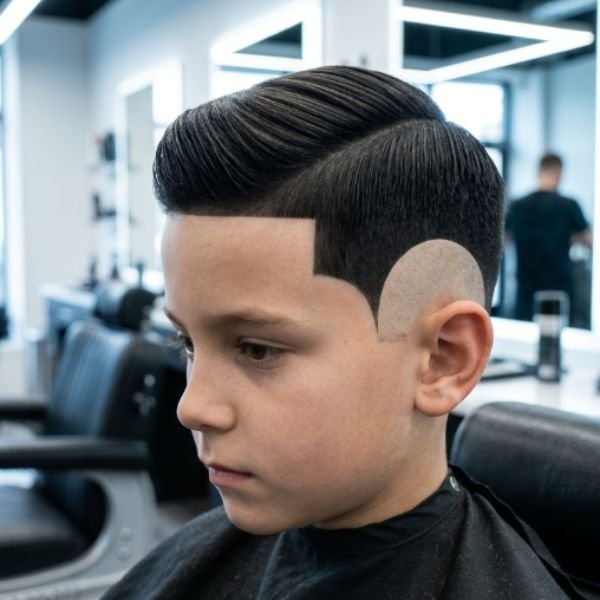
Straight, fine hair is kept smooth and slightly longer on top, which pairs cleanly with the curved fade line and holds a side part or brushed-forward style well.
7. Textured Crop Burst Fade
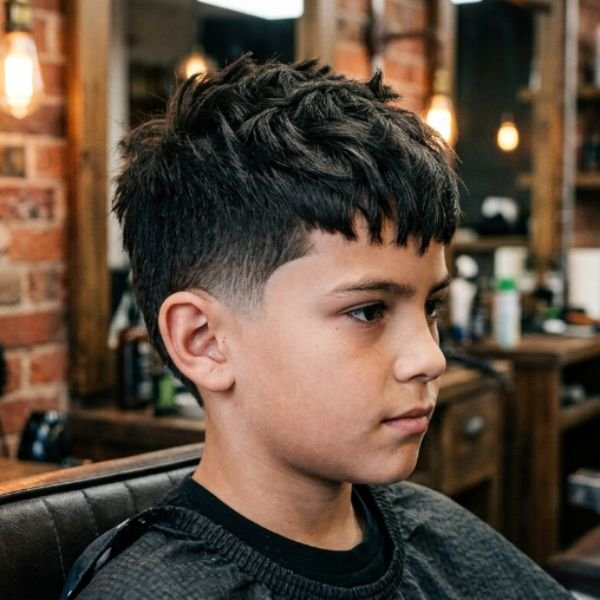
A textured, choppy top with a burst fade underneath gives a naturally messy, effortless finish. It’s a low-fuss option since the texture hides small styling imperfections between washes.
8. Fluffy Burst Fade
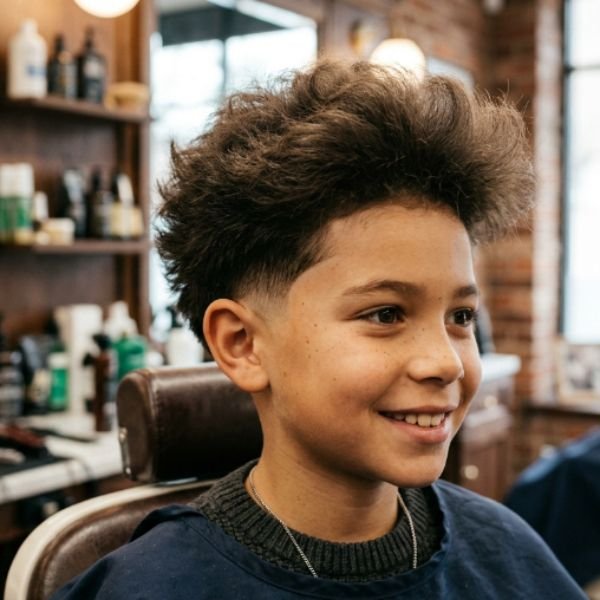
Longer, airy layers on top are left unstyled or lightly tousled for a relaxed, fluffy finish above a crisp burst fade. Great for kids who don’t want to fuss with product every morning.
9. Burst Fade with Side Part
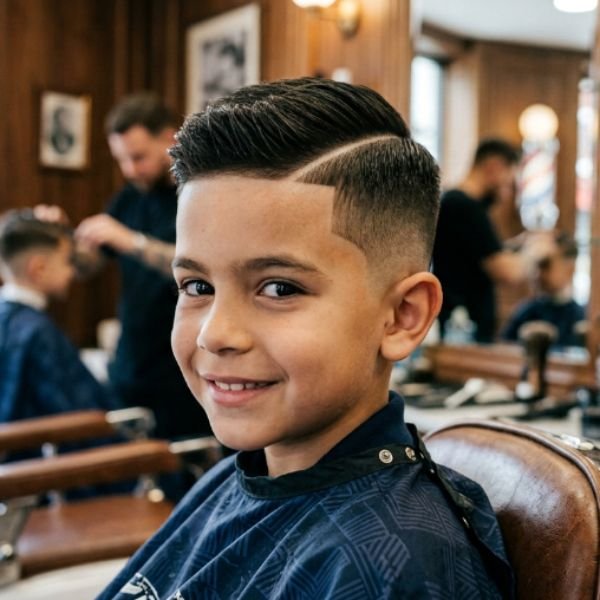
A defined side part adds a slightly more polished, dressed-up feel, making this a solid pick for school pictures, weddings, or other events where a neater look is preferred.
10. Burst Fade with Hard Part
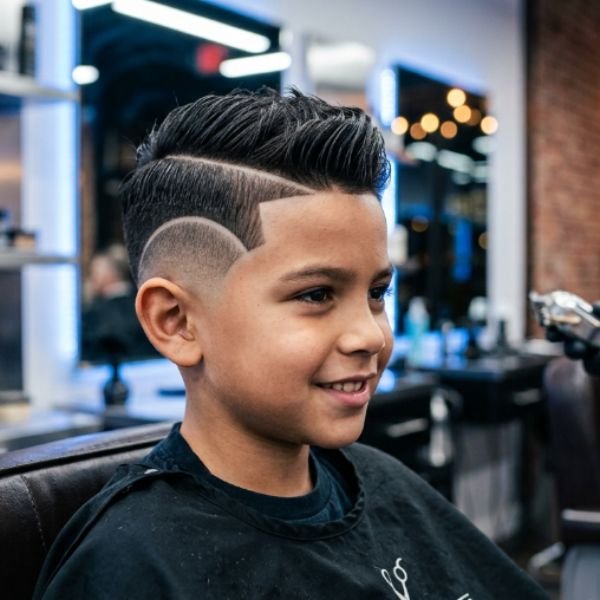
A shaved line marks the part instead of a comb part, giving the style extra definition and a sharper, more graphic finish that photographs especially well.
11. Burst Fade Faux Hawk
The center section of hair is left longer and styled upward while the sides fade away, creating a faux hawk shape without committing to a full mohawk.
12. Burst Fade Mohawk
A true mohawk strip runs down the center with the burst fade curving around the ears on both sides. Bold and attention-grabbing, this one is popular with kids who want to stand out.
13. Burst Fade Mullet for Kids
Short, faded sides meet longer hair left at the back and nape. This combination has become one of the biggest kids’ hair trends recently, and the burst fade is what makes the mullet look clean rather than shaggy.
14. Burst Fade with Design
A shaved line, star, or shape is cut directly into the fade for a personalized, playful touch. Great for birthdays or a kid who wants a haircut that’s genuinely their own.
15. Lightning Design Burst Fade
A lightning bolt shaved into the side of the fade adds a fun, energetic detail that’s simple for most barbers to execute cleanly without much added maintenance.
16. Burst Fade with Spiky Hair
Short top hair is styled upward into spikes using a light styling product, pairing a playful, energetic top with a clean faded base.
17. Messy Top Burst Fade
The top is left slightly longer and worked with fingers rather than a comb for a natural, undone texture that still looks intentional against the sharp fade underneath.
18. Brush Up Burst Fade
Hair on top is brushed straight up and slightly back using a light pomade or cream, creating height and volume above the curved fade line.
19. Short Fringe Burst Fade
A short, straight-across fringe sits above the eyebrows while the sides taper into the burst fade, giving a neat, structured finish that’s simple to maintain.
20. French Crop Burst Fade
A textured fringe brushed forward pairs with a burst fade on the sides for a modern take on the classic French crop, popular with both younger boys and teens.
21. Crew Cut Burst Fade
A short, uniform top length blends into the fade for one of the lowest-maintenance versions on this list, ideal for active kids or parents who prefer minimal styling.
22. Buzz Cut Burst Fade
Very short hair on top fades directly into the burst pattern at the sides, giving a clean, sporty finish that needs almost no daily styling at all.
23. Taper Burst Fade
A softer taper blends into the burst curve rather than a sharp skin line, giving a gentler transition that’s a good middle ground for parents unsure about high-contrast fades.
24. Thick Hair Burst Fade
Thick, dense hair on top is thinned and shaped to reduce bulk while the fade removes weight from the sides, keeping the whole cut looking structured rather than heavy.
25. Wavy Hair Burst Fade
Natural waves are left on top to move freely while the burst fade keeps the sides controlled, striking a nice balance between texture and tidiness.
26. School-Friendly Burst Fade
A moderate mid or low burst fade with a simple top length that meets most school dress code policies while still looking current and well groomed.
27. Athlete-Inspired Burst Fade
Short all over with a clean, tight burst fade, this version is built to hold up through practice, games, and sweat without needing constant restyling.
28. Burst Fade with Line Up
A crisp line-up along the hairline and edges adds extra sharpness to the fade, giving the whole cut a fresh-from-the-barber look for longer between trims.
29. Burst Fade with Quiff
Top hair is styled upward and slightly back into a soft quiff shape, adding height at the front while the burst fade keeps the sides clean.
30. Modern Edgar Burst Fade
The trending Edgar cut, a blunt fringe with squared-off sides, is combined with a burst fade instead of a straight fade for a fresher, rounder finish around the ear.
31. Burst Fade with Dyed Tips
Subtle color placed only at the tips of the top hair adds a bold, personal touch without committing to a full color change, and it grows out easily.
32. Clean Cut Burst Fade
A tidy, symmetrical burst fade with a simple, well-groomed top length, best suited for formal occasions, family photos, or parents who prefer a more traditional finish.
33. Trendy Kids Burst Fade for 2026
A slightly longer, textured top paired with a sharp mid or high burst fade and a subtle line-up, combining several of this year’s most requested details into one versatile style.
How to Ask Your Barber for a Burst Fade (Step by Step Tutorial)
Walking in with the right words makes a real difference in how the cut turns out. Here’s a simple approach to follow.
Step 1: Show a Picture
Bring a clear photo, ideally from the side and back, since burst fades are defined by the curve around the ear and that detail is easy to miss from the front.
Step 2: Explain the Fade Height
Tell the barber whether you want a low, mid, or high burst fade so they know exactly where the shortest point of the fade should begin.
Step 3: Describe the Top Length
Let the barber know roughly how much length you want left on top, whether that’s a short crop, a longer textured style, or enough for a mullet or mohawk.
Step 4: Mention Any Extra Details
Speak up early about designs, a hard part, a line-up, or dyed tips, since these are easier to plan for at the start of the cut than to add in afterward.
Step 5: Ask About Maintenance
Ask how often the style needs a trim to stay sharp, especially if this is a first burst fade, so you know what to expect before the next visit.
Step 6: Speak Up During the Cut
Kids can be shy in the chair, so it helps for a parent to check in partway through, especially before the barber commits to a fade height that’s hard to undo.
How to Style Burst Fade Haircuts for Kids
Styling a burst fade day to day is usually quick. For shorter tops, a small amount of lightweight cream or matte clay worked through damp hair and shaped by hand is often all that’s needed. For longer tops, a comb or brush helps direct the hair into a side part, quiff, or brushed-up style before the product sets. Curly and wavy hair generally look best left mostly natural, with a curl cream used to define texture rather than flatten it. It’s worth keeping styling simple for younger kids, since a five-minute morning routine is far more realistic than a multi-step one, and the fade itself does most of the visual work regardless of how the top is styled.
Maintenance Tips for Burst Fade Haircuts for Kids
Schedule Regular Trims
Most burst fades need a touch-up every two to four weeks, depending on the fade height, since higher-contrast fades show regrowth sooner than lower ones.
Wash Hair Regularly
A gentle, kid-friendly shampoo two to three times a week keeps the scalp clean and helps styling products work the way they’re supposed to.
Use the Right Hair Products
Lightweight, kid-safe formulas are worth prioritizing over strong adult styling products, which can be too heavy or harsh for a child’s hair and scalp.
Protect Hair at Night
A satin pillowcase or a loose head covering can help reduce friction while your child sleeps, keeping the top of the style from getting flattened or frizzy overnight.
Avoid Overwashing
Washing hair every single day can dry out both the hair and scalp, so spacing washes out a little actually helps the style and the hair itself stay healthier.
Brush Hair Gently
A soft brush or wide-tooth comb prevents unnecessary breakage, especially for curly or wavy hair types that tend to be more delicate than straight hair.
Best Hair Products for Burst Fade Haircuts for Kids
Lightweight Styling Cream
A good all-purpose option for most hair types, giving light hold and a natural finish without stiffness.
Matte Clay for Texture
Ideal for adding definition to textured crops and messy tops without leaving behind any shine.
Pomade for Sleek Styles
Best suited for side parts, hard parts, and slicked-back looks that need a smoother, more polished finish.
Curl Cream for Curly Hair
Helps define natural curls and waves on top while keeping frizz under control between washes.
Leave-In Conditioner
Useful for keeping hair soft and manageable, especially for curly or thick hair types that dry out easily.
Hair Spray for Extra Hold
Handy for keeping spikes, quiffs, or faux hawks in place through an active school day or a special event.
Product Tips for Parents
Start with a small amount of product, since it’s always easier to add more than to fix hair that’s been overloaded. Look for formulas labeled as kid-safe or tear-free where possible, and avoid strong-hold gels or waxes on very young children, since these can be harder to wash out and may irritate sensitive skin.
Is a Burst Fade School-Friendly?
In most cases, yes. A low or mid burst fade with a moderate top length is generally considered neat and appropriate by most school dress codes. Where schools tend to draw the line is on extreme contrast, shaved designs, or bright dye colors, so it’s worth checking your specific school’s grooming policy before booking anything beyond a straightforward classic or mid burst fade.
Common Mistakes to Avoid
One of the most common mistakes is not bringing a reference photo, which often leads to a mismatch between what a parent pictured and what the barber delivers. Choosing a fade height that’s too high for a first burst fade is another frequent issue, since higher contrast is harder to grow out gracefully and shows regrowth faster. Skipping regular trims is also a common misstep, since a burst fade that’s overdue for a touch-up quickly loses its clean shape. Finally, going to a barber without specific fade experience can be a gamble, since the curved shape around the ear takes more skill than a straight fade and is easy to get wrong.
Tips for a Toddler’s First Burst Fade
For a toddler’s first cut, aim for a low, gentle fade with minimal contrast, and consider a barber experienced with young kids who can work quickly and calmly. Bringing a favorite toy or short video to hold their attention, scheduling the appointment when your toddler is well rested, and choosing a shop with a kid-friendly chair or seat can all make the first visit much smoother.
Benefits and Drawbacks of a Burst Fade
Benefits
A burst fade suits nearly every hair type, grows out more gracefully than a straight skin fade, pairs well with mullets and mohawks, and gives parents plenty of room to adjust the top length and contrast level as their child gets older.
Drawbacks
The curved shape takes more barber skill than a basic fade, so results can vary between shops. Higher-contrast versions need more frequent trims, and very young kids may find the clipper work around the ear ticklish or uncomfortable at first.
Frequently Asked Questions
What age is best for a burst fade haircut?
Most barbers recommend waiting until a child can sit still for several minutes, generally around age three or older, though a gentle low burst fade can work for younger toddlers too.
How often should a kid’s burst fade be trimmed?
Every two to four weeks, depending on the fade height, with higher-contrast fades needing more frequent touch-ups than lower ones.
Does a burst fade work on curly hair?
Yes, curly hair is one of the best textures for a burst fade, since the contrast between the tight fade and the natural curl pattern really stands out.
Is a burst fade the same as a taper fade?
No, a taper never reaches bare skin and stays subtle, while a burst fade curves around the ear and can fade closer to the skin for more contrast.
Can a burst fade be done at home?
It’s possible with clippers and practice, but the curved shape around the ear is technical, so most parents get more consistent results from a barber, especially for a first attempt.
Is a burst fade appropriate for school?
A low or mid burst fade with a moderate top length is generally school-appropriate, though it’s worth checking your school’s specific grooming policy first.
What products are safe for a kid’s burst fade?
Lightweight, kid-safe styling creams, clays, or curl creams are generally the safest choice, while strong-hold adult gels and waxes are best avoided on younger children.
Conclusion
A burst fade is one of the most versatile, kid-friendly haircuts you can bring into 2026, whether your child is getting their very first trim or asking for something bolder as they get older. With 33 styles to choose from and simple guidance on how to talk to your barber, style the cut at home, and keep it looking sharp between visits, you have everything you need to walk into your next appointment with confidence. Save this guide, pick your favorite look from the list, and let your kid’s next haircut be one they’re genuinely excited about.