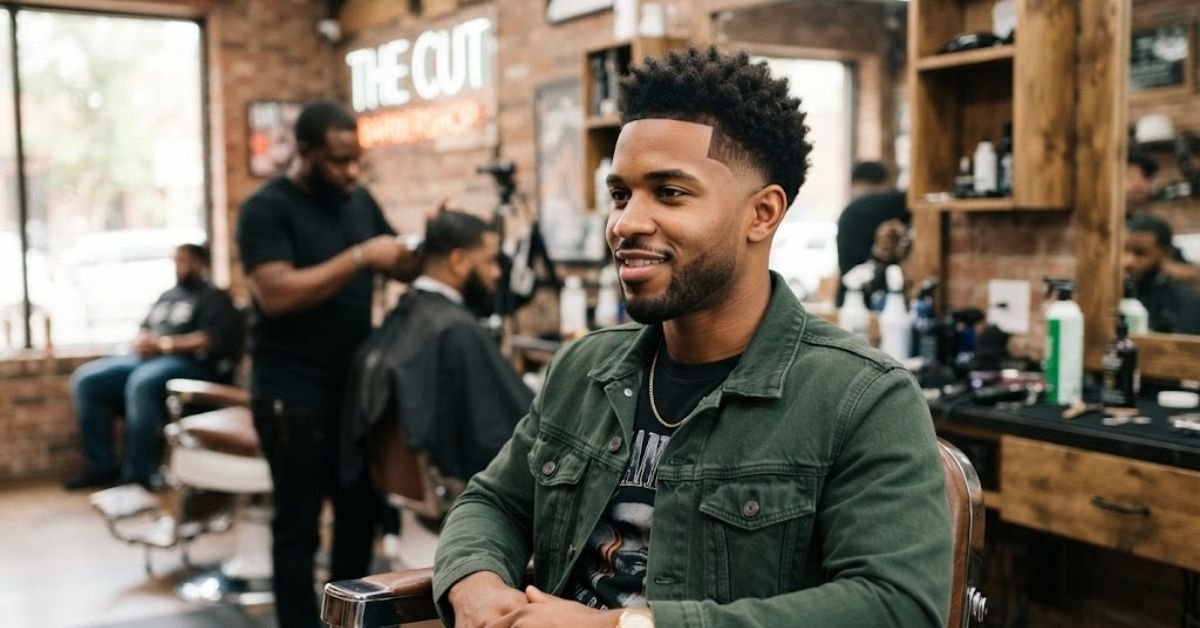
A fresh cut can change how you carry yourself for the next three weeks, and for most Black men, no style delivers that feeling as consistently as the low taper fade. It works with 360 waves, natural coils, a full afro, locs, braids, or a simple buzz cut, because it shapes the sides and neckline without fighting the texture on top.
This guide breaks down what a low taper fade actually is, how it compares to other fades, which variations suit different hair types and face shapes, exactly what to say in the barber chair, and how to keep the cut sharp between visits. Everything here reflects current 2026 barbershop trends and real client requests, not generic filler.
What Is a Low Taper Fade for Black Men?
A low taper fade is a haircut where the hair gradually shortens near the sideburns, ears, and neckline, then blends smoothly into a fuller length on top. The fade line sits low, close to the hairline, instead of climbing up toward the temple.
Unlike a skin fade, a low taper rarely exposes bare scalp. The barber uses clippers to blend length gradually, so the transition from short to long feels soft rather than sudden. This makes it one of the most versatile and forgiving cuts available to Black men, regardless of hair density or curl pattern.
The style traces back to military grooming standards of the mid-20th century, and it was later adopted and reshaped by Black barbershop culture through the 1980s and 1990s. Hip-hop era icons helped push the taper into mainstream fashion, and it has stayed a staple ever since because it looks equally sharp in a boardroom or on a basketball court.
Low Taper Fade vs Other Fades on Black Hair
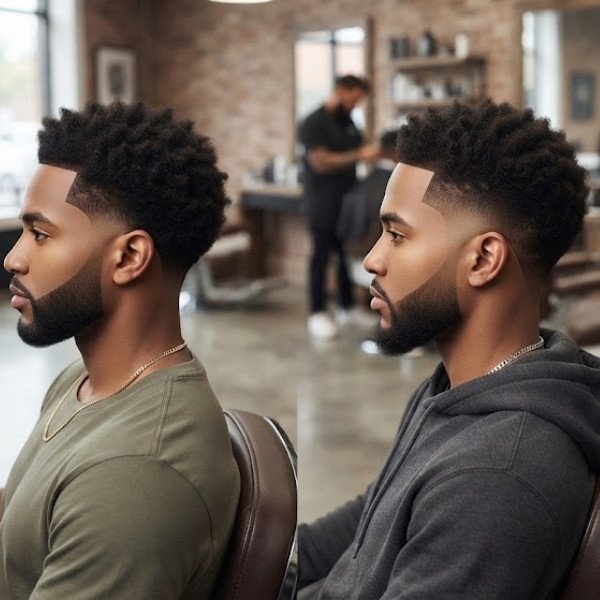
Choosing between fade types comes down to how much contrast you want and how much hair you’re comfortable losing on the sides. Here’s how the low taper stacks up against its closest relatives:
- Low taper fade: Fade starts near the ear and neckline. Minimal contrast, subtle finish, easiest to grow out.
- Mid taper fade: Fade starts around the temple. More visible contrast while keeping decent length on the sides.
- High taper fade: Fade starts higher on the head, close to the crown. Sharp, bold contrast that draws more attention.
- Skin fade (bald fade): Clippers go all the way down to bare skin at some point in the blend, regardless of where it starts. Can be combined with low, mid, or high placement.
- Taper (no fade): Hair gets shorter toward the neckline and ears but never blends into a distinct fade line.
For Black men specifically, the low taper is often the safest starting point. It keeps more natural volume intact, which matters when you’re working with coils, curls, or waves that need enough length to hold their shape.
Why Low Taper Fades Work So Well for Black Hair
Black hair, especially in the 3C to 4C curl pattern range, has natural shrinkage, density, and coil definition that a low taper actually showcases instead of hiding. A few reasons this cut has stayed dominant in barbershops:
- It respects natural texture. The low fade line leaves enough length on top for curls, coils, and waves to keep their pattern instead of getting cut into a flat, undefined shape.
- It grows out gracefully. Because the fade starts low, regrowth blends in naturally for two to three extra weeks compared to a mid or high fade.
- It works across ages and settings. From school-age boys to grandfathers, the same base cut adapts to a formal office, a casual weekend, or a night out.
- It pairs with almost any top style. Waves, afros, twists, braids, and locs all sit comfortably above a low taper without clashing.
- It’s low-maintenance. Fewer trips to the barber and simpler daily upkeep compared to high-contrast fades that show growth quickly.
Top Variations of Low Taper Fade Black Male Hairstyles
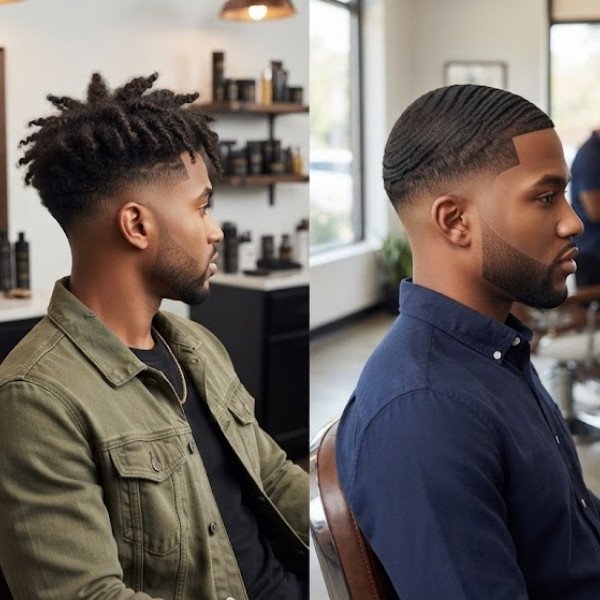
The low taper is a base, not a fixed look. What you put on top is where personal style comes in. Below are the most requested variations in 2026.
Short & Buzz-Cut Low Taper Fades
A uniform buzz on top, usually a number one or two guard, blending into a low taper on the sides. This is the lowest-maintenance option on this list, ideal for men with busy mornings, receding hairlines, or thinning edges, since the short length minimizes the appearance of gaps. Touch-ups every two weeks keep the line sharp.
Waves, 360 Waves & Coils
360 waves paired with a low taper create one of the most requested looks in Black barbershops. The short sides make the wave pattern on top more visible from every angle. To build and maintain waves:
- Brush in the direction of your natural wave pattern for 15 to 20 minutes daily.
- Use a light wave pomade or grease, applied sparingly to avoid buildup.
- Sleep in a durag or silk wave cap to compress the pattern overnight.
- Get the taper refreshed every two weeks so the fade doesn’t grow out and disrupt the frame around your waves.
Coils follow a similar routine but usually need slightly more length on top so each strand can hold its spring rather than lying flat.
Afro Tops & Shaped Afros
The afro paired with a low taper is arguably the most iconic Black male hairstyle. Sides stay tapered and clean while the top is left full, rounded, or shaped into a boxier silhouette depending on preference. Options range from a short cropped afro at one to two inches, to a bold three to five inch afro that creates dramatic contrast against the tight sides. An afro pick helps define the shape, and a light leave-in cream or oil keeps strands moisturized without weighing them down.
Long Hair, Braids, Locs & Dreads
For men growing out their hair, a low taper keeps the sides and neckline tidy while braids, twists, or locs take center stage on top. Popular combinations include:
- Locs styled in a bun, ponytail, or left loose over a tapered base.
- Cornrows or box braids with tapered sides for a cleaner, more polished frame.
- Two-strand twists that transition into locs over time, paired with regular taper touch-ups.
This combination is popular because it lets hair grow and mature on top while the sides never look unkempt.
Sponge Twists & Hybrid Textures
Sponge twists use a specialized brush or sponge tool to create defined, coily texture on shorter hair, and they pair extremely well with a low taper because both elements stay compact and structured. Texturizers or light curl creams are also used by some men to loosen tightly coiled hair into a softer wave pattern that lies closer to the scalp, though this is a chemical process worth discussing thoroughly with your barber or stylist before committing.
Beards, Line-Ups & Designs
A low taper fade looks more intentional when it’s finished with a crisp line-up and, where applicable, a blended beard. A few finishing touches barbers commonly add:
- A straight or slightly curved hairline shape-up at the front.
- Temple blending so the beard connects smoothly into the sideburn.
- Subtle hair designs, such as a single part line or small geometric shape, cut into the taper for extra detail.
These finishing details take a simple cut and make it look custom without adding much extra time in the chair.
Mohawk, FRO hawk & Mid Low Taper
For men who want more contrast without jumping to a mid or high fade, a few hybrid options exist:
- Frohawk: An afro shaped into a raised strip down the center of the head, with the sides tapered low.
- Mohawk: Shorter, sharper sides with a defined strip of length on top, blended into a low taper base.
- Mid low taper: The fade sits slightly higher than a classic low placement, adding a touch more visible contrast around the temple while still keeping most of the side bulk intact.
These options bridge the gap between a subtle low taper and a bolder, higher-contrast fade.
Best Low Taper Fade Black Male for Different Face Shapes
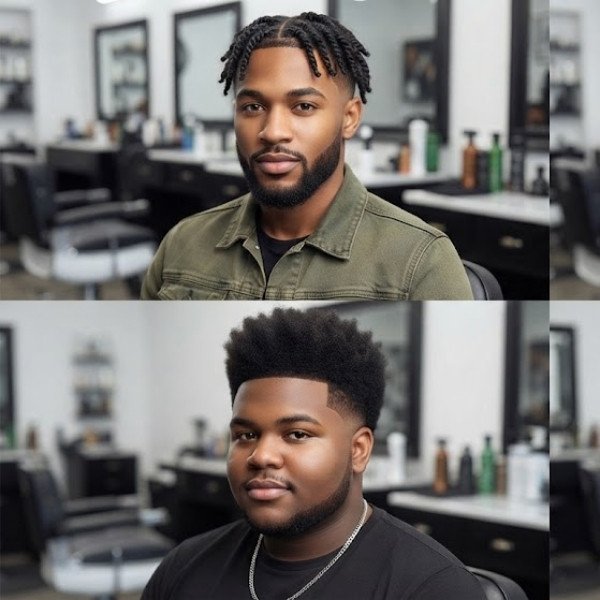
Your face shape determines how much height and width your top style needs to look balanced. A skilled barber will adjust the taper’s starting point and top length based on your proportions rather than applying a one-size-fits-all approach.
- Round face: Add height on top with a shaped afro, sponge curls, or textured waves. Avoid rounding out the sides too much, since that can make the face look wider.
- Square face: The strong jawline pairs well with a low taper, especially with a clean line-up and blended beard that make the whole look feel intentional.
- Oval face: The most balanced shape, so almost any top length or style works. Choose based on your hair texture and how much contrast you want.
- Long face: Keep the top slightly shorter or wider rather than tall, so the cut doesn’t visually stretch the face further.
- Heart-shaped face: Keep some fullness near the temples. A very tight taper combined with a tall top can make the forehead appear wider than it is.
- Diamond face: Softer, rounded top shapes balance the sharper cheekbones typical of this face shape.
Quick rule of thumb: round faces need vertical height, long faces need side fullness, and oval faces have the most flexibility with a low taper fade.
How to Ask for Low Taper Fade Black Male at the Barber
Clear communication in the chair prevents most bad haircut experiences. Bring a reference photo if possible, and use specific language rather than vague terms. A solid barber script looks like this:
“Low taper fade starting near the ear and neckline, number one and a half or two blend on the sides, leave [your desired length] on top for [waves, curls, afro, or twists]. Clean line-up on the hairline, and blend my beard into the sideburn.”
A few extra tips:
- Specify guard numbers when you know them, since “short” and “long” mean different things to different barbers.
- Mention your hair type (coily, curly, wavy) so the barber leaves the right amount of length to preserve texture.
- Ask for the fade to start “low, near the ear” specifically, since “taper” alone can be interpreted as mid or high by some barbers.
- If you want a design, line-up style, or beard blend, say so before the clippers start, not halfway through.
How to Maintain Low Taper Fade Black Male Cuts
A low taper’s biggest advantage is that it grows out gracefully, but a bit of routine care keeps it looking freshly cut for longer.
- Get touch-ups every two to three weeks. This keeps the fade line crisp without needing a full haircut each time.
- Moisturize the scalp daily. Close-cut sides can dry out quickly, especially in colder months, so a light scalp oil or moisturizer prevents flaking.
- Use lightweight products on top. Creams and light pomades work better than heavy gels for most curl patterns, since gels and heavy products can cause buildup and dull the texture.
- Brush or pick daily depending on your style. Waves need consistent brushing, afros need occasional picking to maintain shape, and twists or locs need periodic re-twisting or palm rolling.
- Protect your cut at night. A silk or satin durag, bonnet, or pillowcase reduces frizz and helps preserve wave patterns and curl definition while you sleep.
- Trim your beard alongside the fade. Keeping both in sync prevents the overall look from feeling unbalanced between barber visits.
Common Mistakes & How to Avoid Them
Even a great haircut can look off if a few small details are missed. Watch out for these common issues:
- Waiting too long between touch-ups. Letting a low taper grow out past four weeks can blur the line between the fade and the top, making the whole cut look messy rather than intentionally grown out.
- Using heavy products on top. Overusing gels or thick pomades weighs down curls and coils, flattening texture that a low taper is supposed to highlight.
- Skipping scalp moisture. Dry, ashy-looking skin on freshly tapered sides undercuts an otherwise sharp cut.
- Being too vague with your barber. Saying “just clean it up” without guard numbers or reference photos often leads to a fade that’s higher or tighter than intended.
- Ignoring face shape. Copying a style straight from a photo without accounting for your own proportions can throw off the overall balance of the cut.
- Neglecting nighttime protection. Skipping a durag or bonnet undoes a lot of the daytime styling effort, especially for waves and curls.
Low Taper Fade Black Male: Frequently Asked Questions
Does a low taper fade work with 4C hair?
Yes. A low taper is one of the best fade options for 4C hair because it keeps enough length on top to preserve coil definition while still framing the sides cleanly.
How often should I get my low taper fade touched up?
Most men need a touch-up every two to three weeks to keep the fade line sharp and prevent it from blending into an undefined grow-out.
Is a low taper fade good for a receding hairline?
Yes. Because the fade sits low near the ear rather than at the temple, it draws less attention to a receding or thinning hairline than a mid or high fade would.
Can I combine a low taper fade with locs or braids?
Absolutely. Many Black men keep locs or braids on top while maintaining a tapered, clean neckline and sideline underneath.
What’s the difference between a low taper and a low fade?
A low taper blends gradually without necessarily reaching bare skin, while a low fade typically tapers all the way down to skin at the lowest point near the hairline.
Which face shapes suit a low taper fade best?
Oval and square face shapes have the most flexibility, though every face shape can wear a low taper when the top length and shape are adjusted correctly.
Conclusion
The low taper fade remains one of the most reliable, versatile haircuts available to Black men because it adapts to nearly any hair texture, face shape, and lifestyle. Whether you’re rocking crisp 360 waves, a full round afro, twisted locs, or a simple low-maintenance buzz cut, the same tapered foundation keeps everything looking sharp and intentional.
The key to getting it right is clear communication with your barber, a maintenance routine that matches your hair type, and small adjustments based on your own face shape and proportions. Walk into your next appointment with the right words, a reference photo, and a clear idea of the top style you want, and you’ll walk out with a cut that holds up for weeks, not days.